Buy roadstoculture.eu ?
We are moving the project
roadstoculture.eu .
Are you interested in purchasing the domain
roadstoculture.eu ?
domain@kv-gmbh.de · 0541-91531010
Buy roadstoculture.eu ?
Can the arts and crafts course still be completed?
Yes, the arts and crafts course can still be completed as long as the necessary materials and instructions are provided. Participants can follow along with video tutorials, written instructions, or attend virtual classes to learn and create art projects. Online platforms and resources make it possible for individuals to continue their artistic pursuits from the comfort of their own homes. With dedication and practice, participants can successfully complete the arts and crafts course and develop their skills. **
Should the religious heritage and Christian tradition of Europe be more clearly included in the European constitutional treaty?
The inclusion of religious heritage and Christian tradition in the European constitutional treaty is a complex and sensitive issue. While Europe has a rich history of Christian influence, it is also a diverse and secular society. Therefore, any inclusion of religious heritage should be done in a way that respects the diversity of beliefs and values within Europe. It is important to strike a balance that acknowledges the historical significance of Christianity while also upholding the principles of secularism and religious freedom. Ultimately, the decision should be made through careful consideration and dialogue among the diverse communities and stakeholders in Europe. **


Similar search terms for Barolo-Sarmassa-Vigna-Merenda
Top-Angebote
Products related to Barolo-Sarmassa-Vigna-Merenda:
-
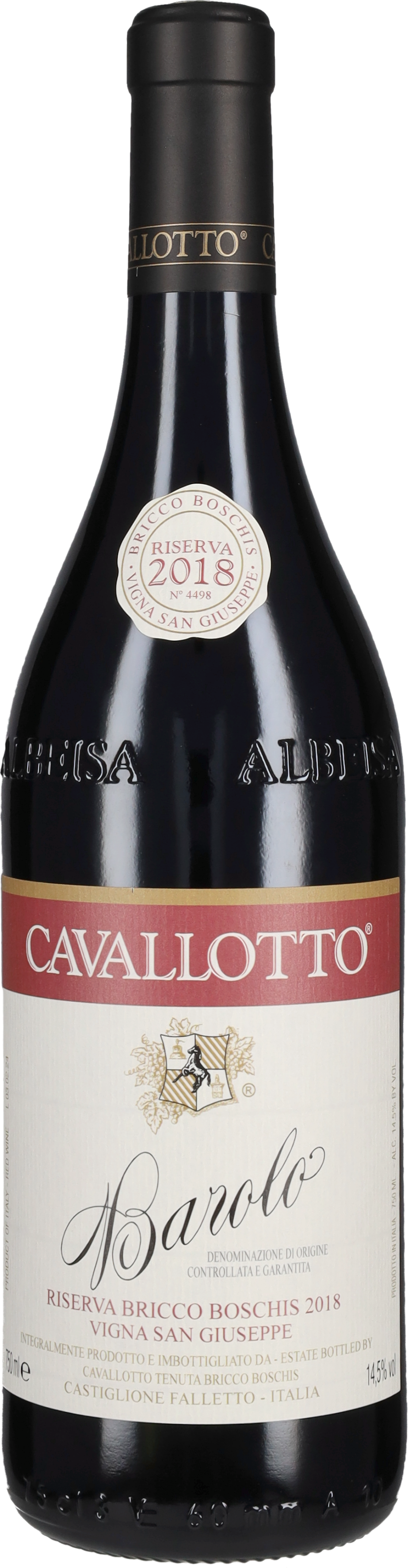
Barolo Riserva 'Bricco Boschis Vigna San Giuseppe' Cavallotto 2018Cavallotto's Barolo Riserva "Bricco Boschis Vigna San Giuseppe" is one of the stainless icons of Barolo Classico, a multifaceted and granitic wine capable of defying the decades by coming out renewed. While it is true that often when we talk about great reds, we take into account their evolutionary potential, the Barolo bottled by the Cavallotto family is a wine that is literally surprising and unbreakable. 23 hectares planted with vines in that of Castiglione Falletto, divided among local indigenous varieties but obviously catalogued according to the nobility of the plots, the best of which is obviously destined for the production of Nebbiolo suitable to become Barolo. The agricultural credo is unchanged since the winery was founded as early as 1948 and did not involve the use of substances other than copper and a little sulfur. The winery's style is a benchmark for lovers of rigour and classicism, as well as of compact and incorruptible wines, capable of unfolding over time, fully revealing their immense class. Barolo Riserva "Bricco Boschis Vigna San Giuseppe" is made, of course, from pure Nebbiolo grapes, from vineyards located on limestone-clay soil and with southwest exposure. In the vineyard, the dictates of organic farming are followed, excluding the use of any chemical or synthetic substance and helping only with copper and sulfur. In the cellar, spontaneous alcoholic fermentation and long maceration on the skins between 22 and 38 days is continued. The liquid ages for at least 48 months in Slavonian oak barrels, followed by 12 months in a glass before release. The Riserva "Bricco Boschis Vigna San Giuseppe" presents itself in the glass with the typical intense garnet-red guise. A true star nose, compressed and detailed at the same time, capable of revealing itself with great calmness. The hints are obviously those typical of the great Nebbiolos and range from dog rose to violets, from liquorice to morello cherry, the same ones found on the sip, although on tasting, the liquid has many other arrows to its bow. Power, depth, interminable length: indisputable!175,00 £*Shipping: 48,00 £Secure redirect to the provider
-
Barolo 'Perno Vigna Santo Stefano' Borgogno e Carbone 2020Barolo 'Perno Vigna Santo Stefano' from the small artisanal winery Borgogno e Carbone represents arefined and spicy interpretation of the Monforte d'Alba terroir. The Additional Geographical Mention of Perno, where the Vigna Santo Stefano is located, takes its name from the hamlet of the same name located at the northern end of the municipality of Monforte d'Alba, on the border between the areas of Castiglione Falletto and Serralunga d'Alba, with which, moreover, the wines share several characteristics. This is the third largest cru in the entire Barolo area, a highly prestigious plot from which expressions capable of combining power and elegance are born.Borgogno and Carbone Barolo 'Perno Vigna Santo Stefano' is a pure Nebbiolo from old vines raised within the Vigna Santo Stefano, in the Additional Geographical Mention of Perno, on sandy, clay and limestone soils. The vines are located at an altitude of 300 meters above sea level and, in addition, benefit from excellent southwest exposure. After manual harvesting, the grapes are melded in stainless steel tanks for alcoholic fermentation in contact with the skins entrusted to the intervention of only indigenous yeasts. This is followed by aging for 24 months in large oak barrels and then a further rest of at least 6 months in the bottle before final release.In the glass, Borgogno and Carbone's Barolo 'Perno Vigna Santo Stefano' reveals a luminous garnet-red coat. The olfactory panorama is complex and deep, described by scents of small red fruits, cherries under spirits, rose petals, dried violets, balsamic herbs, cocoa, leather and dark spices. The progression on the palate shows good warmth and roundness, elements that combine with bright freshness and intense, well-integrated tannins in an austere and elegant development of great persistence.69,00 £*Shipping: 48,00 £Secure redirect to the provider
-
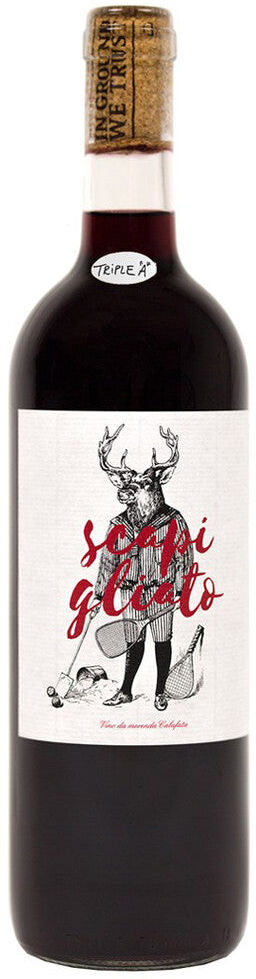
Agricola Calafata Scapigliato 'Vino da merenda' Calafata 2025"Scapigliato" is a young and carefree red, with fragrant fruity aromas, fresh and immediate in its direct expressive simplicity. It is the producers of the Calatafa Winery themselves who call it a "snack wine," precisely to emphasize this convivial vocation and its extraordinary ability to accompany with extreme pleasantness a board of cold cuts or cheese, focaccia, pizzas and appetizers. It is an easy-drinking wine that gives the joy and pleasure of the taste of wine cheerful, healthy and genuine. The red wine "Scapigliato" comes from the beautiful territory in the hills of Lucca, from old vineyards of Ciliegiolo, Aleatico and other native vines of the area, which in some cases are over 70 years old. The vineyards are organically farmed on gentle hillsides with north-south exposure, characterized by clay and limestone marl soils rich in skeleton. The vines are trained by spurred cordon with a planting density of 3,000 vines per hectare and a yield of only 40 quintals/ha. Harvests are done manually and the grapes are fermented in steel tanks using only indigenous yeasts and a 7-day maceration on the skins. The wine matures for 6 months, partly in steel and partly in cement, to preserve the freshness of the primary aromas of the grapes and completes its aging with a few months in bottle before release for sale. Calafata "Scapigliato" is a red wine that calls to mind the great tradition of fresh, simple and drinkable wines to be enjoyed while still young, rich in the scents and aromas of ripe grapes. A sincere wine, to be drunk in company to share spontaneous moments of joy, being won over by its extraordinary ease of drinking. It has a light ruby red color, almost tending to rosé. The bouquet is fragrant with floral scents and fruity aromas, simple and immediate. The sip is smooth and very pleasant, with juicy, satisfying fruit, barely noticeable tannins and a refreshing finish.17,00 £*Shipping: 48,00 £Secure redirect to the provider


-
What can you make in the first arts and crafts class with 5th and 6th grade students?
In the first arts and crafts class with 5th and 6th grade students, you can make simple and fun projects such as friendship bracelets, paper mache masks, or painted rock art. These projects are engaging and allow students to express their creativity while also learning basic crafting skills. Additionally, these projects can be completed within the class period and are suitable for students of varying skill levels. **
-
Is East Asian cuisine more varied than European cuisine?
Both East Asian and European cuisines are incredibly varied, with each region offering a wide range of flavors, ingredients, and cooking techniques. East Asian cuisine encompasses the diverse culinary traditions of countries such as China, Japan, Korea, and Thailand, each with its own unique dishes and flavors. Similarly, European cuisine is incredibly varied, with distinct culinary traditions in countries like Italy, France, Spain, and Greece. Ultimately, the variety of both East Asian and European cuisines is a result of the rich diversity of ingredients, cooking methods, and cultural influences found within each region. **
-
On which Jewish festivals are the Christian festivals based?
The Christian festivals of Easter and Pentecost are based on the Jewish festivals of Passover and Shavuot, respectively. Easter is linked to the Jewish Passover, as it commemorates the crucifixion and resurrection of Jesus, which occurred during the time of Passover. Pentecost, on the other hand, is based on the Jewish festival of Shavuot, which celebrates the giving of the Torah at Mount Sinai. Christians believe that the Holy Spirit descended upon the apostles on the day of Pentecost, which is why the Christian festival is based on this Jewish holiday. **
-
Are traditional crafts disappearing?
Traditional crafts are indeed at risk of disappearing due to various factors such as modernization, globalization, and changing consumer preferences. Many younger generations are not pursuing these crafts as careers, leading to a decline in the number of skilled artisans. Additionally, mass production and cheaper alternatives are making it difficult for traditional crafts to compete in the market. Efforts are being made to preserve and promote these crafts through initiatives like cultural heritage programs and artisan cooperatives. **
Are festivals dangerous?
Festivals can pose certain risks due to large crowds, potential for accidents, and sometimes excessive alcohol consumption. However, with proper planning, security measures, and responsible behavior, the risks can be minimized. It is important for festival-goers to stay aware of their surroundings, look out for each other, and follow safety guidelines to ensure a fun and safe experience. **
What is the colonial heritage?
The colonial heritage refers to the lasting impact of colonization on a region or country. It includes the cultural, social, political, and economic influences left behind by the colonizers. This heritage can manifest in various ways, such as language, religion, legal systems, and societal structures. The colonial heritage often shapes the identity and development of a nation long after the colonizers have left. **
Top-Angebote
Products related to Barolo-Sarmassa-Vigna-Merenda:
-
Barolo 'Sarmassa Vigna Merenda' Scarzello 2022Il Barolo Sarmassa “Vigna Merenda" di Scarzello è la pura ed essenziale espressione di uno tra i più rinomati cru del territorio del comune di Barolo. La Menzione Geografica Aggiuntiva Sarmassa si trova proprio a nord del piccolo borgo di Barolo e da sempre è conosciuta per il carattere elegante, armonioso e longevo dei suoi vini. L’affinamento in botti grandi conferisce all’etichetta un volto classico, particolarmente adatto a chi ama il grande Barolo della tradizione, senza troppe concessioni alle tendenze moderniste. Il Sarmassa Barolo “Vigna Merenda" di Scarzello nasce nell’omonimo cru, che confina con la vicina zona di La Morra. Il suolo è prevalentemente costituito dalle pregiate Marne di Sant’Agata. Si tratta di terreni ricchi di scheletro, con componenti di calcare, argille limo e arenaria, che si sono dimostrati nei secoli molto adatti al Nebbiolo. Le uve per produrre questa etichetta, provengono da cinque piccole parcelle di Vigna Merenda, che ha un‘estensione complessiva di 2 ettari e si trova a un’altitudine di circa 300 metri sul livello del mare, nel territorio del cru Sarmassa. La fermentazione si svolge in vasche d’acciaio con macerazione sulle bucce di circa 30-40 giorni. Secondo le più antiche tradizioni, il vino matura per 30 mesi in grandi botti di rovere di Slavonia da 30 ettolitri e termina il periodo d’affinamento in bottiglia. Il Barolo Sarmassa “Vigna Merenda" di Scarzello è un vino dal volto nobile, frutto di una vigna particolarmente vocata e di un’accurata selezione delle uve. È un’etichetta dedicata a chi vuole scoprire le caratteristiche dei vari cru della denominazione e come i diversi suoli, altitudine ed esposizione, possano influenzare il vino. Nel calice ha un colore rosso tendente al granato luminoso e brillante. Il profilo olfattivo è molto elegante, con aromi di fiori secchi, sottobosco, piccoli frutti a bacca rossa, eucalipto ed erbe officinali. Il sorso è profondo e austero, con aromi complessi, una tessitura tannica fitta e sottile. Il finale è di buona persistenza e va a chiudere su rinfrescanti sensazioni balsamiche.65,00 £*Shipping: 48,00 £Secure redirect to the provider
-
Barolo Riserva 'Vigna Rionda' Magnum Massolino 2017Massolino even carries the name Vigna Rionda in its corporate sign, underscoring the importance that the most coveted Cru in Serralunga holds within the family history. A vineyard of choice, referred to by some as the "Grand Cru of Italy," it is mentioned in local historical documents as part of the Marquisate of Saluzzo until 1340 when it became the property of the Falletti family, protagonists in the invention of Barolo. Upon Juliette Colbert's death in 1860, the vineyard came under the care of the Opera Pia Barolo. Subsequent changes of ownership led up to acquisitions by the Massolino family, beginning in 1956: new plots were added in 1967, 1985 and 1987, coming to unite the largest extension in hillside ownership, about 3 hectares out of the MGA's total 10.24. "Vigna Rionda Etichetta Nera" is Massolino's most exclusive creation, a celebration of a mythical terroir in an amazing vintage. The rounded-shaped vineyard offers exposures that move from west to full south and is characterized by the distinctive soils of the Lequio Formation, which is a complex stratification of arenaceous sand alternating with grey marls. The estate plots are elevated at an altitude of around 300 meters above sea level: the vines count ages close to or over 45 years and, benefiting from a perfect thermal and water balance, bring the Nebbiolo to perfect ripeness through a decidedly long vegetative cycle, enjoying considerable and constant temperature ranges. Fermentation and long maceration take place in oak vats, where malo-lactic fermentation also proceeds at around 30 °C temperature. Maturation proceeds traditionally in large Slavonian barrels for 42 months, followed by a further 24-month bottle ageing. "Vigna Rionda Etichetta Nera" from Massolino is a unique Riserva, offering its deep garnet red to the eye. Fascinating, constantly evolving facets gratify the nose: from red fruits and floral notes to damp, earthy and lymphatic underbrush to hints of spice and tobacco. The sip is a declaration of complexity, structure, elegance and longevity: a mighty Barolo that entrusts the long finish to tell the full story of the development of its sensory charge.570,00 £*Shipping: 48,00 £Secure redirect to the provider
-
Barolo Riserva 'Bricco Boschis Vigna San Giuseppe' Cavallotto 2018Cavallotto's Barolo Riserva "Bricco Boschis Vigna San Giuseppe" is one of the stainless icons of Barolo Classico, a multifaceted and granitic wine capable of defying the decades by coming out renewed. While it is true that often when we talk about great reds, we take into account their evolutionary potential, the Barolo bottled by the Cavallotto family is a wine that is literally surprising and unbreakable. 23 hectares planted with vines in that of Castiglione Falletto, divided among local indigenous varieties but obviously catalogued according to the nobility of the plots, the best of which is obviously destined for the production of Nebbiolo suitable to become Barolo. The agricultural credo is unchanged since the winery was founded as early as 1948 and did not involve the use of substances other than copper and a little sulfur. The winery's style is a benchmark for lovers of rigour and classicism, as well as of compact and incorruptible wines, capable of unfolding over time, fully revealing their immense class. Barolo Riserva "Bricco Boschis Vigna San Giuseppe" is made, of course, from pure Nebbiolo grapes, from vineyards located on limestone-clay soil and with southwest exposure. In the vineyard, the dictates of organic farming are followed, excluding the use of any chemical or synthetic substance and helping only with copper and sulfur. In the cellar, spontaneous alcoholic fermentation and long maceration on the skins between 22 and 38 days is continued. The liquid ages for at least 48 months in Slavonian oak barrels, followed by 12 months in a glass before release. The Riserva "Bricco Boschis Vigna San Giuseppe" presents itself in the glass with the typical intense garnet-red guise. A true star nose, compressed and detailed at the same time, capable of revealing itself with great calmness. The hints are obviously those typical of the great Nebbiolos and range from dog rose to violets, from liquorice to morello cherry, the same ones found on the sip, although on tasting, the liquid has many other arrows to its bow. Power, depth, interminable length: indisputable!175,00 £*Shipping: 48,00 £Secure redirect to the provider
-
Barolo 'Perno Vigna Santo Stefano' Borgogno e Carbone 2020Barolo 'Perno Vigna Santo Stefano' from the small artisanal winery Borgogno e Carbone represents arefined and spicy interpretation of the Monforte d'Alba terroir. The Additional Geographical Mention of Perno, where the Vigna Santo Stefano is located, takes its name from the hamlet of the same name located at the northern end of the municipality of Monforte d'Alba, on the border between the areas of Castiglione Falletto and Serralunga d'Alba, with which, moreover, the wines share several characteristics. This is the third largest cru in the entire Barolo area, a highly prestigious plot from which expressions capable of combining power and elegance are born.Borgogno and Carbone Barolo 'Perno Vigna Santo Stefano' is a pure Nebbiolo from old vines raised within the Vigna Santo Stefano, in the Additional Geographical Mention of Perno, on sandy, clay and limestone soils. The vines are located at an altitude of 300 meters above sea level and, in addition, benefit from excellent southwest exposure. After manual harvesting, the grapes are melded in stainless steel tanks for alcoholic fermentation in contact with the skins entrusted to the intervention of only indigenous yeasts. This is followed by aging for 24 months in large oak barrels and then a further rest of at least 6 months in the bottle before final release.In the glass, Borgogno and Carbone's Barolo 'Perno Vigna Santo Stefano' reveals a luminous garnet-red coat. The olfactory panorama is complex and deep, described by scents of small red fruits, cherries under spirits, rose petals, dried violets, balsamic herbs, cocoa, leather and dark spices. The progression on the palate shows good warmth and roundness, elements that combine with bright freshness and intense, well-integrated tannins in an austere and elegant development of great persistence.69,00 £*Shipping: 48,00 £Secure redirect to the provider
-
Can the arts and crafts course still be completed?
Yes, the arts and crafts course can still be completed as long as the necessary materials and instructions are provided. Participants can follow along with video tutorials, written instructions, or attend virtual classes to learn and create art projects. Online platforms and resources make it possible for individuals to continue their artistic pursuits from the comfort of their own homes. With dedication and practice, participants can successfully complete the arts and crafts course and develop their skills. **
-
Should the religious heritage and Christian tradition of Europe be more clearly included in the European constitutional treaty?
The inclusion of religious heritage and Christian tradition in the European constitutional treaty is a complex and sensitive issue. While Europe has a rich history of Christian influence, it is also a diverse and secular society. Therefore, any inclusion of religious heritage should be done in a way that respects the diversity of beliefs and values within Europe. It is important to strike a balance that acknowledges the historical significance of Christianity while also upholding the principles of secularism and religious freedom. Ultimately, the decision should be made through careful consideration and dialogue among the diverse communities and stakeholders in Europe. **
-
What can you make in the first arts and crafts class with 5th and 6th grade students?
In the first arts and crafts class with 5th and 6th grade students, you can make simple and fun projects such as friendship bracelets, paper mache masks, or painted rock art. These projects are engaging and allow students to express their creativity while also learning basic crafting skills. Additionally, these projects can be completed within the class period and are suitable for students of varying skill levels. **
-
Is East Asian cuisine more varied than European cuisine?
Both East Asian and European cuisines are incredibly varied, with each region offering a wide range of flavors, ingredients, and cooking techniques. East Asian cuisine encompasses the diverse culinary traditions of countries such as China, Japan, Korea, and Thailand, each with its own unique dishes and flavors. Similarly, European cuisine is incredibly varied, with distinct culinary traditions in countries like Italy, France, Spain, and Greece. Ultimately, the variety of both East Asian and European cuisines is a result of the rich diversity of ingredients, cooking methods, and cultural influences found within each region. **
Similar search terms for Barolo-Sarmassa-Vigna-Merenda
-
Agricola Calafata Scapigliato 'Vino da merenda' Calafata 2025"Scapigliato" is a young and carefree red, with fragrant fruity aromas, fresh and immediate in its direct expressive simplicity. It is the producers of the Calatafa Winery themselves who call it a "snack wine," precisely to emphasize this convivial vocation and its extraordinary ability to accompany with extreme pleasantness a board of cold cuts or cheese, focaccia, pizzas and appetizers. It is an easy-drinking wine that gives the joy and pleasure of the taste of wine cheerful, healthy and genuine. The red wine "Scapigliato" comes from the beautiful territory in the hills of Lucca, from old vineyards of Ciliegiolo, Aleatico and other native vines of the area, which in some cases are over 70 years old. The vineyards are organically farmed on gentle hillsides with north-south exposure, characterized by clay and limestone marl soils rich in skeleton. The vines are trained by spurred cordon with a planting density of 3,000 vines per hectare and a yield of only 40 quintals/ha. Harvests are done manually and the grapes are fermented in steel tanks using only indigenous yeasts and a 7-day maceration on the skins. The wine matures for 6 months, partly in steel and partly in cement, to preserve the freshness of the primary aromas of the grapes and completes its aging with a few months in bottle before release for sale. Calafata "Scapigliato" is a red wine that calls to mind the great tradition of fresh, simple and drinkable wines to be enjoyed while still young, rich in the scents and aromas of ripe grapes. A sincere wine, to be drunk in company to share spontaneous moments of joy, being won over by its extraordinary ease of drinking. It has a light ruby red color, almost tending to rosé. The bouquet is fragrant with floral scents and fruity aromas, simple and immediate. The sip is smooth and very pleasant, with juicy, satisfying fruit, barely noticeable tannins and a refreshing finish.17,00 £*Shipping: 48,00 £Secure redirect to the provider
-
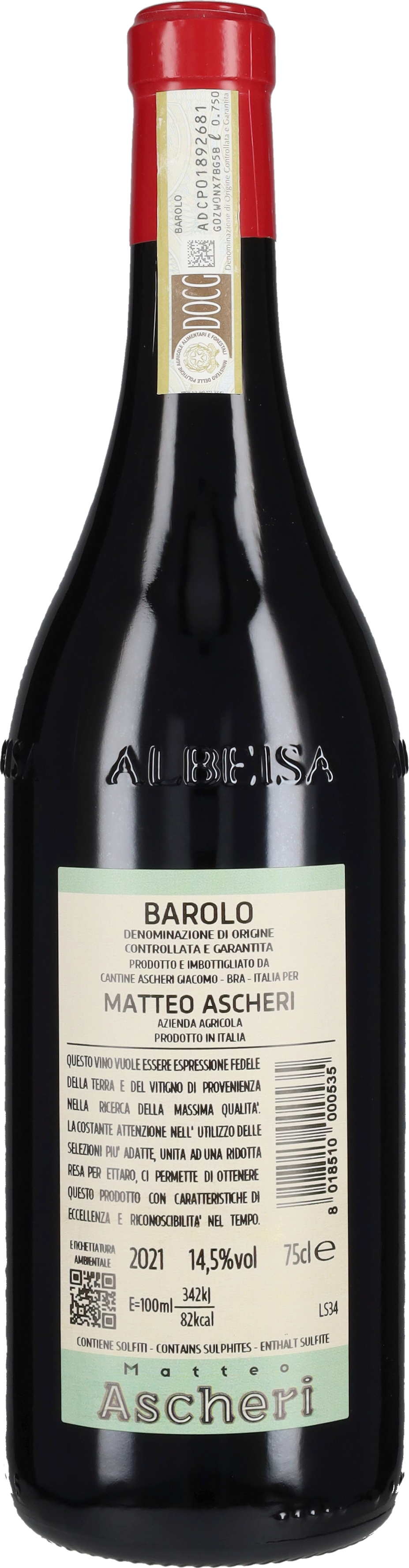
Barolo Ascheri 2021The Barolo from the historic Piedmontese estate Ascheri is a label of high prestige that originates from a production approach halfway between tradition and modernity. The bond between the Ascheri family and Barolo has ancient origins dating back to the early 19th century when the family began winemaking production in the homonymous locality of Ascheri, located in the municipality of La Morra. Over the centuries, the winery has undergone a progressive expansion of the vineyard estate and modernization of industry technologies, while still maintaining that connection with the territory that has always characterized the Ascheri family. Ascheri Barolo is produced solely from Nebbiolo grapes sourced from various vineyards scattered throughout the area, mostly planted on limestone soils at altitudes ranging from 280 to 370 meters above sea level. Harvest typically takes place in October and is followed by a traditional red vinification with alcoholic fermentation in contact with the skins for approximately 15 days at a temperature of 28°C. The subsequent aging period extends for 20 months, with 60% taking place in used oak barrels and the remaining 40% in new barrels. This is followed by a further extended period of bottle aging before final commercialization. Ascheri's Barolo is an intense garnet red in color. The broad and refined olfactory profile is composed of varied aromas of dried flowers, wild berries, sweet spices, and leather, enhanced by evocative undertones of the forest floor. On the palate, it reveals harmony, complexity, and excellent balance, as well as good structure and an elegant tannic texture. It is a Barolo capable of combining power and gustatory dynamism, to be enjoyed in its youth after adequate aeration or to be stored for many years.43,00 £*Shipping: 48,00 £Secure redirect to the provider
-
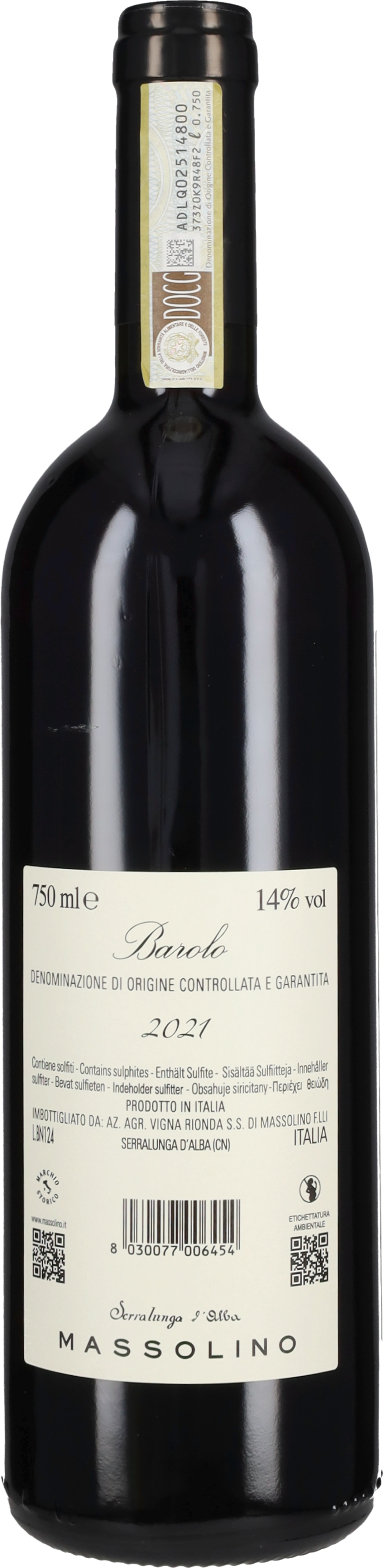
Barolo Massolino 2022The Barolo by Massolino is one of the most beautiful expressions of the Serralunga d'Alba territory; an expression skillfully crafted by one of the wineries with the most history, recognition, and experience in the Langhe. A story indissolubly linked to the vineyards of Serralunga d'Alba, since 1896 when Giovanni decided to found his winemaking business; enterprising, tenacious, stubborn, and creative, Giovanni managed to realize his dream in just a few years, filling his family's history with pride and a heritage that has only grown over the years, becoming one of the most recognized langaroli in Italy and around the world. The Barolo Massolino is produced from Nebbiolo grapes grown in the wonderful vineyards of the Serralunga d'Alba territory: gentle hills, with an altitude ranging from 320 to 360 meters above sea level, on soils rich in limestone, exposed to the midday sun, from vines aged between 10 and 55 years. Fermentation occurs on the skins in steel for about 15 days and aging in oak barrels for 30 months.At the end of this production process, the wine presents a classic and traditional profile, characterized by a severe elegance that is entirely Piedmontese. The Barolo by Massolino is one of the most beautiful expressions of the Serralunga d'Alba territory, subzones that provide a wide range of aromas ranging from fruity notes to floral ones, combining a truly intense and complex spiciness. The taste is austere, structured, and persistent. It does not fear aging and is capable of representing with all its personality the true character of the Langhe.31,00 £*Shipping: 48,00 £Secure redirect to the provider
-
On which Jewish festivals are the Christian festivals based?
The Christian festivals of Easter and Pentecost are based on the Jewish festivals of Passover and Shavuot, respectively. Easter is linked to the Jewish Passover, as it commemorates the crucifixion and resurrection of Jesus, which occurred during the time of Passover. Pentecost, on the other hand, is based on the Jewish festival of Shavuot, which celebrates the giving of the Torah at Mount Sinai. Christians believe that the Holy Spirit descended upon the apostles on the day of Pentecost, which is why the Christian festival is based on this Jewish holiday. **
-
Are traditional crafts disappearing?
Traditional crafts are indeed at risk of disappearing due to various factors such as modernization, globalization, and changing consumer preferences. Many younger generations are not pursuing these crafts as careers, leading to a decline in the number of skilled artisans. Additionally, mass production and cheaper alternatives are making it difficult for traditional crafts to compete in the market. Efforts are being made to preserve and promote these crafts through initiatives like cultural heritage programs and artisan cooperatives. **
-
Are festivals dangerous?
Festivals can pose certain risks due to large crowds, potential for accidents, and sometimes excessive alcohol consumption. However, with proper planning, security measures, and responsible behavior, the risks can be minimized. It is important for festival-goers to stay aware of their surroundings, look out for each other, and follow safety guidelines to ensure a fun and safe experience. **
-
What is the colonial heritage?
The colonial heritage refers to the lasting impact of colonization on a region or country. It includes the cultural, social, political, and economic influences left behind by the colonizers. This heritage can manifest in various ways, such as language, religion, legal systems, and societal structures. The colonial heritage often shapes the identity and development of a nation long after the colonizers have left. **
* All prices are inclusive of VAT and, if applicable, plus shipping costs. The offer information is based on the details provided by the respective shop and is updated through automated processes. Real-time updates do not occur, so deviations can occur in individual cases. ** Note: Parts of this content were created by AI.