Buy roadstoculture.eu ?
We are moving the project
roadstoculture.eu .
Are you interested in purchasing the domain
roadstoculture.eu ?
domain@kv-gmbh.de · 0541-91531010
Buy roadstoculture.eu ?
How do you calculate the braking distance, the braking process, and the braking deceleration?
The braking distance can be calculated using the formula: braking distance = (initial velocity^2) / (2 * deceleration), where the deceleration is the rate at which the vehicle slows down. The braking process involves the driver applying the brakes, which causes friction between the brake pads and the wheels, leading to a decrease in the vehicle's speed. The braking deceleration can be calculated by dividing the change in velocity by the time it takes for the vehicle to come to a complete stop. **
How do you calculate the braking time and braking distance?
Braking time and braking distance can be calculated using the formula: Braking distance = (initial velocity^2) / (2 * deceleration) Where initial velocity is the speed of the vehicle before braking, and deceleration is the rate at which the vehicle slows down. Braking time can be calculated by dividing the braking distance by the initial velocity. These calculations are based on the assumption of constant deceleration, and may vary depending on factors such as road conditions and the vehicle's braking system. **


Similar search terms for Braking
Top-Angebote
Products related to Braking:
-
William Morris Arts & Crafts Willow Large Handle TrayThe Arts & Crafts William Morris Willow Large Handle Tray is a stylish addition to any home, designed to elevate your serving experience with its practical features. This large handle tray not only looks great but also makes serving drinks and snacks a breeze. Its sturdy design ensures it can handle your needs, while the easy-to-clean surface means less time tidying up and more time enjoying your gatherings. Care instructions: Wipe clean with a damp cloth. Dimensions: 6(H) x 39(dia) cm.40,50 £*Shipping: 3,50 £Secure redirect to the provider
-
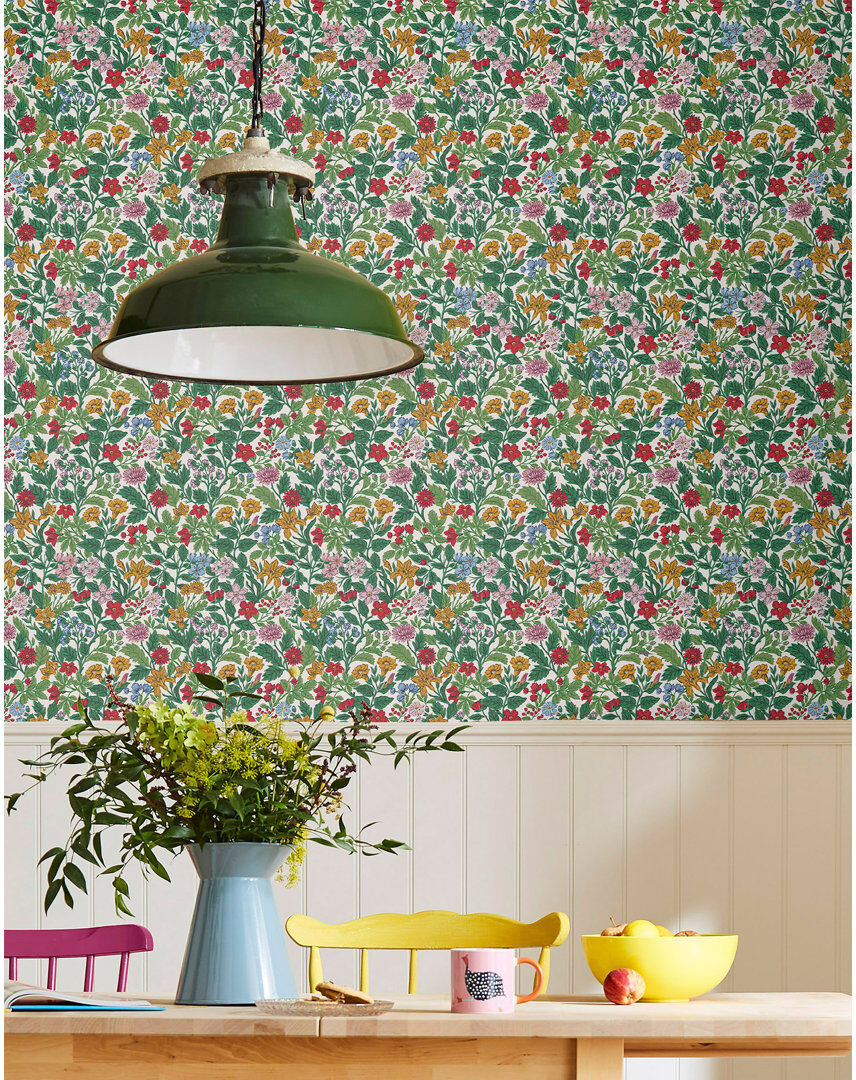
Joules Arts and Crafts Floral Rainbow Wallpaper Green 10cm LA timeless yet contemporary wallpaper, this classic, wide stripe is an iconic print pattern. Harborough stripe is brought to life in a coastal, classic blue tone which brings a fresh feel when contrasted against the off-white tone. Printed on a matt substrate for a contemporary look and feel. This wallpaper is also paste-the-wall, making it easy to hang. Design Match: Straight. Application Method: Paste the Wall. Care Instruction - Clean with a dry soft cloth. Please note the colours on screen may vary from the actual product. This product is not available for British Forces Post Office Deliveries.. Brand Name: JOULES.41,60 £*Shipping: 4,99 £Secure redirect to the provider
-
William Morris Arts & Crafts Marigold Set of 3 Square CaddiesIntroducing the Arts & Crafts William Morris Marigold Set of 3 Square Caddies, ideal for adding a touch of charm to your home while keeping your space organised. This delightful set features a beautiful marigold design, making them not only functional but also a stylish addition to your decor. Perfect for storing a variety of items, these caddies help you declutter and maintain a tidy environment. Dimensions: 10.5(H) x 10.5(W) x 10.5(L)cm.22,50 £*Shipping: 3,50 £Secure redirect to the provider



-
What are the differences between braking to walking speed and braking?
Braking to walking speed typically involves gradually reducing speed until coming to a complete stop, whereas braking refers to the act of slowing down a moving vehicle. When braking to walking speed, the goal is to smoothly decelerate without any sudden stops, while braking may involve more forceful actions to slow down quickly. Additionally, braking to walking speed is often used in situations where a vehicle needs to stop at a precise location, such as at a crosswalk or intersection. **
-
How do you calculate braking time and braking distance in physics?
In physics, braking time and braking distance can be calculated using the equations of motion and the principles of kinematics. The braking time can be calculated using the equation t = v/u, where t is the braking time, v is the final velocity, and u is the initial velocity. The braking distance can be calculated using the equation d = (v^2 - u^2) / (2a), where d is the braking distance and a is the deceleration. These equations take into account the initial and final velocities, as well as the deceleration of the object to determine the braking time and distance. **
-
Is braking a reflex?
Braking can be considered a reflex in certain situations. When a driver reacts to a sudden obstacle or hazard on the road by immediately pressing the brake pedal, it can be seen as a reflexive action. This is because the response is automatic and occurs without conscious thought. However, braking can also be a learned behavior, as drivers are trained to use their brakes in specific situations through practice and experience. Therefore, while braking can be a reflex in some cases, it can also be a learned and intentional action. **
-
What is the difference between a full braking and an emergency braking?
Full braking refers to applying the brakes with maximum force in a controlled manner to slow down or stop the vehicle. This can be done in response to normal traffic conditions or when approaching a stop sign or traffic light. On the other hand, emergency braking is a sudden and forceful application of the brakes in response to an unexpected hazard or danger, such as a pedestrian stepping into the road or a vehicle suddenly stopping in front. Emergency braking is typically done to avoid a collision and requires quick reflexes and a strong, immediate response from the driver. **


What is the formula for braking acceleration and braking time in physics?
The formula for braking acceleration is given by \( a = \frac{v_f - v_i}{t} \), where \( a \) is the braking acceleration, \( v_f \) is the final velocity, \( v_i \) is the initial velocity, and \( t \) is the time taken to come to a stop. The formula for braking time can be calculated using the equation \( t = \frac{v_f - v_i}{a} \), where \( t \) is the braking time. These formulas are used to calculate the rate at which an object slows down when braking. **
What is the difference between braking with a clutch and braking without?
Braking with a clutch involves pressing the clutch pedal while simultaneously applying the brakes, which disengages the engine from the transmission and allows the vehicle to coast to a stop. This method is often used in manual transmission vehicles to prevent stalling. On the other hand, braking without using the clutch means simply applying the brakes without disengaging the engine from the transmission, which can cause the vehicle to stall if the engine speed drops too low. In summary, the main difference is that braking with a clutch allows the vehicle to coast to a stop without stalling, while braking without the clutch can potentially lead to stalling if not done properly. **
Top-Angebote
Products related to Braking:
-
All Categories Goods Wheel Speed Sensor Right & Left, Enhance Steering & Braking Stability, Long Lasting Performance Wheel Speed Sensor Right & Left, Enhance Steering & Braking Stability, Long Lasting PerformanceImprove your vehicle's braking and steering performance with 2 pcs Wheel Speed Sensors Right & Left, designed to enhance your driving experience. These 100% factorytested sensors offer stable, longlasting performance, providing you with the...46,97 $*Shipping: 0,00 $Secure redirect to the provider
-
Uplift Essentials Titanium Brake Lever Piston MTB Hydraulic Seal Repair Kit High Yield Braking Interaction Hub 1 SetAchieve deceleration optimization with this Precision Titanium Alloy Brake Piston. Specifically engineered for mechanical transparency, this highperformance technical tool acts as a vital tool for actuation efficiency, neutralizing the limitations...57,97 $*Shipping: 0,00 $Secure redirect to the provider
-
William Morris Arts & Crafts Willow Large Handle TrayThe Arts & Crafts William Morris Willow Large Handle Tray is a stylish addition to any home, designed to elevate your serving experience with its practical features. This large handle tray not only looks great but also makes serving drinks and snacks a breeze. Its sturdy design ensures it can handle your needs, while the easy-to-clean surface means less time tidying up and more time enjoying your gatherings. Care instructions: Wipe clean with a damp cloth. Dimensions: 6(H) x 39(dia) cm.40,50 £*Shipping: 3,50 £Secure redirect to the provider
-
Joules Arts and Crafts Floral Rainbow Wallpaper Green 10cm LA timeless yet contemporary wallpaper, this classic, wide stripe is an iconic print pattern. Harborough stripe is brought to life in a coastal, classic blue tone which brings a fresh feel when contrasted against the off-white tone. Printed on a matt substrate for a contemporary look and feel. This wallpaper is also paste-the-wall, making it easy to hang. Design Match: Straight. Application Method: Paste the Wall. Care Instruction - Clean with a dry soft cloth. Please note the colours on screen may vary from the actual product. This product is not available for British Forces Post Office Deliveries.. Brand Name: JOULES.41,60 £*Shipping: 4,99 £Secure redirect to the provider
-
How do you calculate the braking distance, the braking process, and the braking deceleration?
The braking distance can be calculated using the formula: braking distance = (initial velocity^2) / (2 * deceleration), where the deceleration is the rate at which the vehicle slows down. The braking process involves the driver applying the brakes, which causes friction between the brake pads and the wheels, leading to a decrease in the vehicle's speed. The braking deceleration can be calculated by dividing the change in velocity by the time it takes for the vehicle to come to a complete stop. **
-
How do you calculate the braking time and braking distance?
Braking time and braking distance can be calculated using the formula: Braking distance = (initial velocity^2) / (2 * deceleration) Where initial velocity is the speed of the vehicle before braking, and deceleration is the rate at which the vehicle slows down. Braking time can be calculated by dividing the braking distance by the initial velocity. These calculations are based on the assumption of constant deceleration, and may vary depending on factors such as road conditions and the vehicle's braking system. **
-
What are the differences between braking to walking speed and braking?
Braking to walking speed typically involves gradually reducing speed until coming to a complete stop, whereas braking refers to the act of slowing down a moving vehicle. When braking to walking speed, the goal is to smoothly decelerate without any sudden stops, while braking may involve more forceful actions to slow down quickly. Additionally, braking to walking speed is often used in situations where a vehicle needs to stop at a precise location, such as at a crosswalk or intersection. **
-
How do you calculate braking time and braking distance in physics?
In physics, braking time and braking distance can be calculated using the equations of motion and the principles of kinematics. The braking time can be calculated using the equation t = v/u, where t is the braking time, v is the final velocity, and u is the initial velocity. The braking distance can be calculated using the equation d = (v^2 - u^2) / (2a), where d is the braking distance and a is the deceleration. These equations take into account the initial and final velocities, as well as the deceleration of the object to determine the braking time and distance. **
Similar search terms for Braking
-
William Morris Arts & Crafts Marigold Set of 3 Square CaddiesIntroducing the Arts & Crafts William Morris Marigold Set of 3 Square Caddies, ideal for adding a touch of charm to your home while keeping your space organised. This delightful set features a beautiful marigold design, making them not only functional but also a stylish addition to your decor. Perfect for storing a variety of items, these caddies help you declutter and maintain a tidy environment. Dimensions: 10.5(H) x 10.5(W) x 10.5(L)cm.22,50 £*Shipping: 3,50 £Secure redirect to the provider
-
William Morris Arts & Crafts Marigold Set of 3 Round Cake TinsDiscover the Arts & Crafts William Morris Marigold Set of 3 Round Cake Tins, perfect for your baking adventures and stylish storage solutions. These tins not only keep your cakes fresh but also add a touch of elegance to your kitchen. With a beautiful marigold design, these cake tins are ideal for both baking and showcasing your creations. Their sturdy construction ensures they can be used time and again, making them a practical choice for any baking enthusiast. Care instructions: Hand wash only.Dimensions: Small - 10.5(H) x 19.2(dia) cm, Medium - 12(H) x 22.3(dia) cm, Large - 15(H) x 25(dia) cm.40,50 £*Shipping: 3,50 £Secure redirect to the provider
-
William Morris Arts & Crafts Strawberry Thief Set of 3 Square CaddiesIntroducing the Arts & Crafts William Morris Strawberry Thief Set of 3 Square Caddies, a charming addition to your home that effortlessly combines style and functionality. These delightful caddies are perfect for storing your favourite treats or crafting supplies, helping you keep your space organised and beautiful. The stunning strawberry thief design adds a touch of elegance to any room, making these caddies not just practical but also a lovely decorative piece. Ideal for those who appreciate both art and utility, they are perfect for anyone looking to enhance their storage solutions with a stylish flair. Dimensions: 10.5(H) x 10.5(W) x 10.5(L)cm.22,50 £*Shipping: 3,50 £Secure redirect to the provider
-
Is braking a reflex?
Braking can be considered a reflex in certain situations. When a driver reacts to a sudden obstacle or hazard on the road by immediately pressing the brake pedal, it can be seen as a reflexive action. This is because the response is automatic and occurs without conscious thought. However, braking can also be a learned behavior, as drivers are trained to use their brakes in specific situations through practice and experience. Therefore, while braking can be a reflex in some cases, it can also be a learned and intentional action. **
-
What is the difference between a full braking and an emergency braking?
Full braking refers to applying the brakes with maximum force in a controlled manner to slow down or stop the vehicle. This can be done in response to normal traffic conditions or when approaching a stop sign or traffic light. On the other hand, emergency braking is a sudden and forceful application of the brakes in response to an unexpected hazard or danger, such as a pedestrian stepping into the road or a vehicle suddenly stopping in front. Emergency braking is typically done to avoid a collision and requires quick reflexes and a strong, immediate response from the driver. **
-
What is the formula for braking acceleration and braking time in physics?
The formula for braking acceleration is given by \( a = \frac{v_f - v_i}{t} \), where \( a \) is the braking acceleration, \( v_f \) is the final velocity, \( v_i \) is the initial velocity, and \( t \) is the time taken to come to a stop. The formula for braking time can be calculated using the equation \( t = \frac{v_f - v_i}{a} \), where \( t \) is the braking time. These formulas are used to calculate the rate at which an object slows down when braking. **
-
What is the difference between braking with a clutch and braking without?
Braking with a clutch involves pressing the clutch pedal while simultaneously applying the brakes, which disengages the engine from the transmission and allows the vehicle to coast to a stop. This method is often used in manual transmission vehicles to prevent stalling. On the other hand, braking without using the clutch means simply applying the brakes without disengaging the engine from the transmission, which can cause the vehicle to stall if the engine speed drops too low. In summary, the main difference is that braking with a clutch allows the vehicle to coast to a stop without stalling, while braking without the clutch can potentially lead to stalling if not done properly. **
* All prices are inclusive of VAT and, if applicable, plus shipping costs. The offer information is based on the details provided by the respective shop and is updated through automated processes. Real-time updates do not occur, so deviations can occur in individual cases. ** Note: Parts of this content were created by AI.