Buy roadstoculture.eu ?
We are moving the project
roadstoculture.eu .
Are you interested in purchasing the domain
roadstoculture.eu ?
domain@kv-gmbh.de · 0541-91531010
Buy roadstoculture.eu ?
Can the arts and crafts course still be completed?
Yes, the arts and crafts course can still be completed as long as the necessary materials and instructions are provided. Participants can follow along with video tutorials, written instructions, or attend virtual classes to learn and create art projects. Online platforms and resources make it possible for individuals to continue their artistic pursuits from the comfort of their own homes. With dedication and practice, participants can successfully complete the arts and crafts course and develop their skills. **
Should the religious heritage and Christian tradition of Europe be more clearly included in the European constitutional treaty?
The inclusion of religious heritage and Christian tradition in the European constitutional treaty is a complex and sensitive issue. While Europe has a rich history of Christian influence, it is also a diverse and secular society. Therefore, any inclusion of religious heritage should be done in a way that respects the diversity of beliefs and values within Europe. It is important to strike a balance that acknowledges the historical significance of Christianity while also upholding the principles of secularism and religious freedom. Ultimately, the decision should be made through careful consideration and dialogue among the diverse communities and stakeholders in Europe. **

Similar search terms for Buttafuoco-Storico-Vigna-Montarzolo
Top-Angebote
Products related to Buttafuoco-Storico-Vigna-Montarzolo:
-
Quaquarini Francesco Buttafuoco 'Vigna la Guasca' Quaquarini 2021The wine reality of Oltrepò Pavese Francesco Quaquarini presents the Buttafuoco ‘Vigna La Guasca’, a direct and fruity red wine that shows the most accessible face of the denomination. It seems that the origin of the name “Buttafuoco” comes from the Milanese poet Carlo Porta, who when he first tasted this wine exclaimed in dialect “butafeug”, alluding to its body and structure that almost burned his palate. Vigna La Guasca, the vineyard from which the grapes for this label come, owes its name to the homonymous farmhouse located in the area of Rocca di Stradella, which marks the northernmost point of the Apennines. The Buttafuoco ‘Vigna La Guasca’ from the winery Francesco Quaquarini is made from a blend of Croatina (60%), Barbera (30%), and Ughetta di Canneto (10%), grape varieties grown in certified organic farming on clayey-sandy soils rich in limestone, with a southwest exposure. In the winery, the alcoholic fermentation takes place in stainless steel tanks while the subsequent maturation phase takes place in oak barriques of several passes for 6 months before the final bottling. Visually, the ‘Vigna La Guasca’ Buttafuoco from Oltrepò Pavese by Francesco Quaquarini presents itself with a dark and bright ruby red color. Direct and vivid aromatic spectrum in its fruity descriptors of sour cherry, plum, and cherry that meet spicy perceptions of tobacco and vanilla. Excellent dynamism and intensity on the palate, where the soft warmth and significant structure are supported by good freshness and light tannins. The Buttafuoco ‘Vigna La Guasca’ represents an excellent pairing with aged cheeses, grilled meats, and pasta with ragù.12,00 £*Shipping: 48,00 £Secure redirect to the provider
-
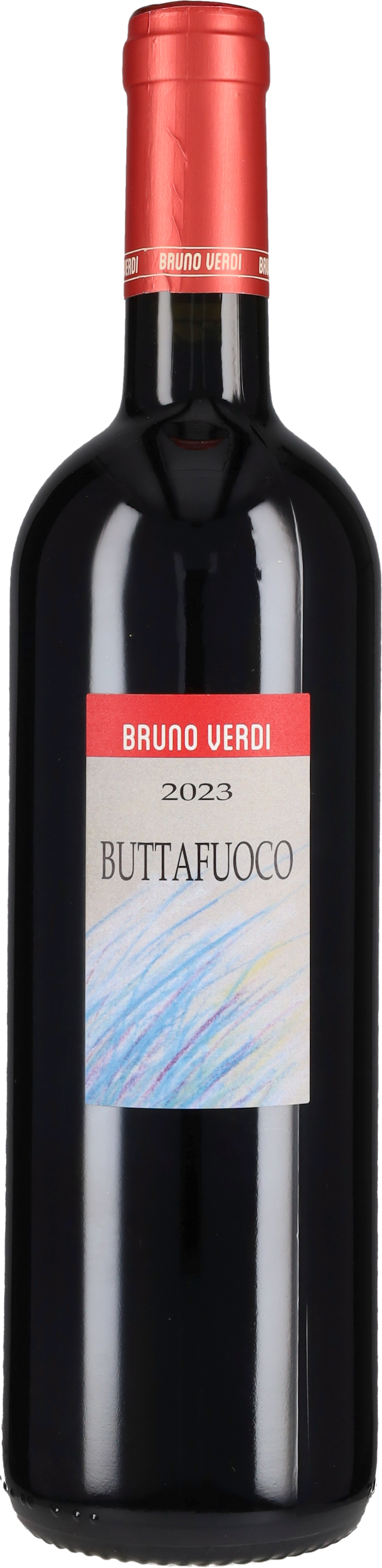
Verdi Bruno Buttafuoco Bruno Verdi 2024Buttafuoco is the name of a red wine produced by the Bruno Verdi winery, currently led by Paolo, a member of the seventh generation of the family present in the Oltrepò Pavese area. We are faced with a label that originates from an artisanal production philosophy, aiming to provide a sincere and enjoyable territorial profile both on the nose and palate. To further strengthen the connection with the original terroir, Buttafuoco takes shape from the desire to blend grape varieties that have always thrived in these areas - namely Croatina, Barbera, and Uva Rara - outlining a balanced and linear label. This Buttafuoco is made by the Bruno Verdi winery starting from a blend of grapes that adapt well to the terroir of Oltrepò Pavese; alongside 60% Croatina, we find percentages of Barbera and Uva Rara. The grapes, after harvesting, are gently crushed and destemmed; a cold prefermentative maceration is then carried out for 2 days, and the subsequent alcoholic fermentation takes place in steel. The malolactic fermentation occurs later, in concrete tanks. The maturation phase takes place for several months both in concrete and in steel. The Lombard red wine Buttafuoco from the Bruno Verdi winery presents itself to the eye with an intense and concentrated color reminiscent of ruby, slightly influenced by purplish reflections. The soul that gradually emerges on the nose tells a story made of deep fruity notes, from which light hints of underbrush and balsamic touches emerge. On the palate, it is light-bodied, tasty, with a sip that relies on a pronounced freshness and a fruity flavor. An identity label, strongly linked to the Oltrepò Pavese area, that surprises with its great quality-price ratio.12,00 £*Shipping: 48,00 £Secure redirect to the provider
-
Picchioni Andrea Buttafuoco 'Solinghino' Picchioni 2024The Buttafuoco "Solinghino" from the Picchioni winery is the excellent result of a blend of historical grape varieties from Oltrepò Pavese and a clear and environmentally respectful production philosophy, where the conversion to organic farming testifies to this. A wine with a quirky, lively character that best describes the hills where Croatina, Barbera, and Vespolina take root and draw the best from a loose, gravelly soil. The label partially anticipates what we will find inside the bottle, where the absolute protagonists will be floral notes with a light character but of acute courtesy. The "Solinghino" from Picchioni is therefore a Buttafuoco that comes from vineyards located in a hilly context with steep slopes facing south, allowing it to take advantage of the endless sunny days and absorb the necessary energy to bring the juicy grapes to proper ripeness. The strictly manual harvest begins only at full polyphenolic ripeness of the fruits, which are transferred to the winery to proceed with fermentation. The must remains in contact with the skins for about 8 days and is then racked into steel tanks to rest for 6 months. The "Solinghino" Buttafuoco Picchioni colors the glass with an intense ruby red with violet reflections. Brought to the nose, one is overwhelmed by a wave of floral aromas and red fruit that only serve as a prelude to the sweet delicate notes of blackberry and sour cherries. The sip is delicate and has a gentle softness; the tannin is indeed light and shy but still supports a persistence that makes this wine's drinkability magnetic. Delicious and joyful, this Buttafuoco is truly an excellent companion for a dinner among friends, a partner that does not keep you waiting and can be fully enjoyed when paired with dishes of medium structure.14,00 £*Shipping: 48,00 £Secure redirect to the provider
-
Picchioni Andrea Buttafuoco 'Riva Bianca' Picchioni 2021Il Buttafuoco “Bricco Riva Bianca” della cantina Picchioni è una delle etichette di punta di questa interessante realtà dell’Oltrepò Pavese, che ha saputo imporsi nel panorama del vino nazionale grazie a una produzione di alto livello qualitativo e grande fedeltà alle tradizioni del territorio. È una bottiglia che viene prodotta solo nelle migliori annate, con varietà presenti in queste terre da secoli, Croatina, Barbera e Ughetta di Solinga. Le diverse uve trovano un’armoniosa sintesi in un rosso strutturato, intenso e ricco, che acquista complessità e profondità espressiva grazie a un lungo affinamento in legno. Un grande vino di terroir assolutamente da provare. Il “Bricco Riva Bianca” è un Buttafuoco prodotto da Picchioni, che possiede una tenuta di dieci ettari in Valle Soliga, nei pressi di Canneto Pavese. È proprio nel cuore dell’Oltrepò Pavese, terra da secoli vocata alla coltivazione della vite, che nascono i grandi rossi di questa cantina dal volto artigianale. Le ripide colline caratterizzate da terreni sciolti, ricchi di sabbie e ciottoli, e il clima mite e soleggiato, sono un habitat ideale per le varietà a bacca rossa. La vendemmia si svolge manualmente e dopo la diraspatura, si procede alla fermentazione con una macerazione sulle bucce di circa tre settimane. Il vino invecchia per 12 mesi in botti di legno di varie dimensioni e completa l’affinamento con ulteriori 6 mesi in bottiglia. Il vino Buttafuoco “Bricco Riva Bianca” di Picchioni è un grande rosso del territorio, che si adatta perfettamente ad accompagnare i piatti di carne della cucina locale, come stracotti di manzo o selvaggina in umido. Alla vista ha un colore rosso rubino molto scuro. Il quadro olfattivo è intenso e ricco, con cenni di sottobosco e humus, aromi di mora selvatica, ribes nero, prugna rossa, cenni di cioccolato fondente, tabacco, cacao, note di torrefazione, sfumature di erbe balsamiche e di morbide spezie. Al palato mette in luce una notevole struttura con tannini fitti e vivi, e un frutto denso e succoso, che accompagnano verso un finale equilibrato e molto persistente. È un vino da invecchiamento, che raggiunge la piena maturità espressiva dopo una decina d’anni d’affinamento.37,00 £*Shipping: 48,00 £Secure redirect to the provider



-
What can you make in the first arts and crafts class with 5th and 6th grade students?
In the first arts and crafts class with 5th and 6th grade students, you can make simple and fun projects such as friendship bracelets, paper mache masks, or painted rock art. These projects are engaging and allow students to express their creativity while also learning basic crafting skills. Additionally, these projects can be completed within the class period and are suitable for students of varying skill levels. **
-
Is East Asian cuisine more varied than European cuisine?
Both East Asian and European cuisines are incredibly varied, with each region offering a wide range of flavors, ingredients, and cooking techniques. East Asian cuisine encompasses the diverse culinary traditions of countries such as China, Japan, Korea, and Thailand, each with its own unique dishes and flavors. Similarly, European cuisine is incredibly varied, with distinct culinary traditions in countries like Italy, France, Spain, and Greece. Ultimately, the variety of both East Asian and European cuisines is a result of the rich diversity of ingredients, cooking methods, and cultural influences found within each region. **
-
On which Jewish festivals are the Christian festivals based?
The Christian festivals of Easter and Pentecost are based on the Jewish festivals of Passover and Shavuot, respectively. Easter is linked to the Jewish Passover, as it commemorates the crucifixion and resurrection of Jesus, which occurred during the time of Passover. Pentecost, on the other hand, is based on the Jewish festival of Shavuot, which celebrates the giving of the Torah at Mount Sinai. Christians believe that the Holy Spirit descended upon the apostles on the day of Pentecost, which is why the Christian festival is based on this Jewish holiday. **
-
Are traditional crafts disappearing?
Traditional crafts are indeed at risk of disappearing due to various factors such as modernization, globalization, and changing consumer preferences. Many younger generations are not pursuing these crafts as careers, leading to a decline in the number of skilled artisans. Additionally, mass production and cheaper alternatives are making it difficult for traditional crafts to compete in the market. Efforts are being made to preserve and promote these crafts through initiatives like cultural heritage programs and artisan cooperatives. **


Are festivals dangerous?
Festivals can pose certain risks due to large crowds, potential for accidents, and sometimes excessive alcohol consumption. However, with proper planning, security measures, and responsible behavior, the risks can be minimized. It is important for festival-goers to stay aware of their surroundings, look out for each other, and follow safety guidelines to ensure a fun and safe experience. **
What is the colonial heritage?
The colonial heritage refers to the lasting impact of colonization on a region or country. It includes the cultural, social, political, and economic influences left behind by the colonizers. This heritage can manifest in various ways, such as language, religion, legal systems, and societal structures. The colonial heritage often shapes the identity and development of a nation long after the colonizers have left. **
Top-Angebote
Products related to Buttafuoco-Storico-Vigna-Montarzolo:
-
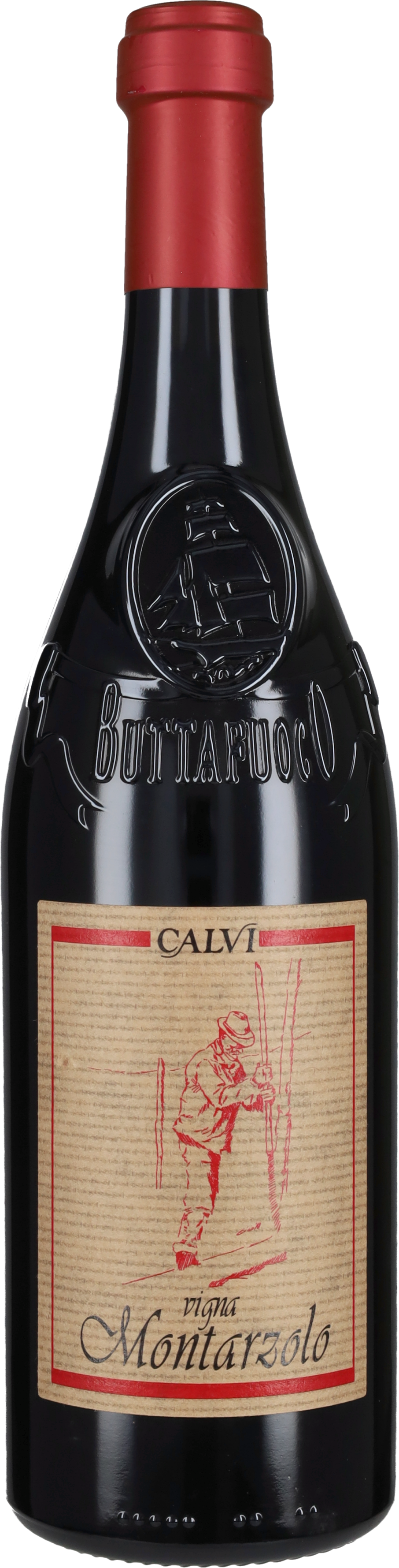
Buttafuoco Storico 'Vigna Montarzolo' Calvi 2019Il “Vigna Montarzolo” Buttafuoco Storico di Calvi è una vera e propria chicca lombarda. Già, perché proprio questo particolare vigneto è da sempre riconosciuto come situato nella zona geografica qualitativamente migliore dell’intera denominazione del Buttafuoco dell’Oltrepò Pavese. Un blend di uve che si annuncia ricco e potente sin dai primi sorsi, conquistando il palato con una personalità spiccata, che si ritrova anche nel bouquet olfattivo. Un’etichetta legata al territorio, in cui il millesimo riesce a esprimersi con forte autenticità. Questo Calvi “Vigna Montarzolo” Buttafuoco Storico ha origine da un blend in cui accanto a un 50% di Croatina, possiamo trovare percentuali di Barbera Ughetta di Canneto e Uva Rara. Queste varietà crescono tutte in un’unica vigna, quella di Montarzolo, che si caratterizza per il fondo di arenaria stratificata nel suo terreno. Il terreno è magro, povero di acqua e le radici delle uve sono costrette ad andare molto in profondità per ritrovare i sali minerali necessari alla loro crescita. La vendemmia è manuale e viene praticata nello stesso giorno per tutti i varietali. La fermentazione del mosto avviene in acciaio inox a una temperatura controllata e la seguente fase di affinamento finale ha una durata di 36 mesi, ed è svolta in barrique di rovere. Il Buttafuoco Storico “Vigna Montarzolo” Calvi si annuncia all’occhio con un colore rosso rubino concentrato, attraversato da lievi riflessi più tendenti al granato nell’unghia del vino. La trama olfattiva si muove su note profonde di frutta matura, arricchite da tocchi di spezie ed effluvi balsamici, che rinfrescano il naso. In bocca è di ottimo corpo, potente ed energico, con un sorso fermo, rigido e fasciante, da cui emerge un gusto sapido. Un vino in cui la buona struttura polifenolica gli consente di poter essere assaggiato anche fra più di cinque anni, dimostrando quindi capacità di esprimersi anche a distanza di più di un decennio dalla vendemmia.34,00 £*Shipping: 48,00 £Secure redirect to the provider
-
Quaquarini Francesco Buttafuoco Storico 'Vigna Pregana' Quaquarini 2019The Buttafuoco Storico 'Vigna Pregana' from the Franceso Quaquarini winery in Pavia is an interpretation of extraordinary typicality, faithfully reflecting the characteristics of the Buttafuoco dell'Oltrepò Pavese appellation. The Club Buttafuoco Storico was founded by a group of local producers with the intention of protecting and promoting the historic area traditionally most suited to the production of this red wine, also imposing more restrictive regulations. Among these producers is the family-run Quaquarini winery, which has been the guardian of the territory and its traditions for over a century.Quaquarini Buttafuoco Storico 'Vigna Pregana' is a blend of Croatina (50%), Barbera (35%) and Ughetta di Canneto (15%), varieties grown organically on mainly clayey soils with some silt and limestone. The vines were planted in 1986 in the Vigna Pregana vineyard, located at an altitude of 260 metres between the municipalities of Castana, Montescano and Canneto Pavese. The grapes are harvested by hand and carefully selected, then pressed in stainless steel tanks for alcoholic fermentation, followed by ageing in barriques for 12 months.Francesco Quaquarini's 'Vigna Pregana' Buttafuoco Storico has a deep ruby red colour. The nose reveals vivid hints of cherry and plum, supported by hints of liquorice and spices and mineral notes. The palate is structured, warm and well-balanced, with pleasant freshness, integrated tannins and dynamic persistence. Thanks to its organoleptic attributes, 'Vigna Pregana' pairs well with various meat dishes and long-aged cured meats.23,00 £*Shipping: 48,00 £Secure redirect to the provider
-
Quaquarini Francesco Buttafuoco 'Vigna la Guasca' Quaquarini 2021The wine reality of Oltrepò Pavese Francesco Quaquarini presents the Buttafuoco ‘Vigna La Guasca’, a direct and fruity red wine that shows the most accessible face of the denomination. It seems that the origin of the name “Buttafuoco” comes from the Milanese poet Carlo Porta, who when he first tasted this wine exclaimed in dialect “butafeug”, alluding to its body and structure that almost burned his palate. Vigna La Guasca, the vineyard from which the grapes for this label come, owes its name to the homonymous farmhouse located in the area of Rocca di Stradella, which marks the northernmost point of the Apennines. The Buttafuoco ‘Vigna La Guasca’ from the winery Francesco Quaquarini is made from a blend of Croatina (60%), Barbera (30%), and Ughetta di Canneto (10%), grape varieties grown in certified organic farming on clayey-sandy soils rich in limestone, with a southwest exposure. In the winery, the alcoholic fermentation takes place in stainless steel tanks while the subsequent maturation phase takes place in oak barriques of several passes for 6 months before the final bottling. Visually, the ‘Vigna La Guasca’ Buttafuoco from Oltrepò Pavese by Francesco Quaquarini presents itself with a dark and bright ruby red color. Direct and vivid aromatic spectrum in its fruity descriptors of sour cherry, plum, and cherry that meet spicy perceptions of tobacco and vanilla. Excellent dynamism and intensity on the palate, where the soft warmth and significant structure are supported by good freshness and light tannins. The Buttafuoco ‘Vigna La Guasca’ represents an excellent pairing with aged cheeses, grilled meats, and pasta with ragù.12,00 £*Shipping: 48,00 £Secure redirect to the provider
-
Verdi Bruno Buttafuoco Bruno Verdi 2024Buttafuoco is the name of a red wine produced by the Bruno Verdi winery, currently led by Paolo, a member of the seventh generation of the family present in the Oltrepò Pavese area. We are faced with a label that originates from an artisanal production philosophy, aiming to provide a sincere and enjoyable territorial profile both on the nose and palate. To further strengthen the connection with the original terroir, Buttafuoco takes shape from the desire to blend grape varieties that have always thrived in these areas - namely Croatina, Barbera, and Uva Rara - outlining a balanced and linear label. This Buttafuoco is made by the Bruno Verdi winery starting from a blend of grapes that adapt well to the terroir of Oltrepò Pavese; alongside 60% Croatina, we find percentages of Barbera and Uva Rara. The grapes, after harvesting, are gently crushed and destemmed; a cold prefermentative maceration is then carried out for 2 days, and the subsequent alcoholic fermentation takes place in steel. The malolactic fermentation occurs later, in concrete tanks. The maturation phase takes place for several months both in concrete and in steel. The Lombard red wine Buttafuoco from the Bruno Verdi winery presents itself to the eye with an intense and concentrated color reminiscent of ruby, slightly influenced by purplish reflections. The soul that gradually emerges on the nose tells a story made of deep fruity notes, from which light hints of underbrush and balsamic touches emerge. On the palate, it is light-bodied, tasty, with a sip that relies on a pronounced freshness and a fruity flavor. An identity label, strongly linked to the Oltrepò Pavese area, that surprises with its great quality-price ratio.12,00 £*Shipping: 48,00 £Secure redirect to the provider
-
Can the arts and crafts course still be completed?
Yes, the arts and crafts course can still be completed as long as the necessary materials and instructions are provided. Participants can follow along with video tutorials, written instructions, or attend virtual classes to learn and create art projects. Online platforms and resources make it possible for individuals to continue their artistic pursuits from the comfort of their own homes. With dedication and practice, participants can successfully complete the arts and crafts course and develop their skills. **
-
Should the religious heritage and Christian tradition of Europe be more clearly included in the European constitutional treaty?
The inclusion of religious heritage and Christian tradition in the European constitutional treaty is a complex and sensitive issue. While Europe has a rich history of Christian influence, it is also a diverse and secular society. Therefore, any inclusion of religious heritage should be done in a way that respects the diversity of beliefs and values within Europe. It is important to strike a balance that acknowledges the historical significance of Christianity while also upholding the principles of secularism and religious freedom. Ultimately, the decision should be made through careful consideration and dialogue among the diverse communities and stakeholders in Europe. **
-
What can you make in the first arts and crafts class with 5th and 6th grade students?
In the first arts and crafts class with 5th and 6th grade students, you can make simple and fun projects such as friendship bracelets, paper mache masks, or painted rock art. These projects are engaging and allow students to express their creativity while also learning basic crafting skills. Additionally, these projects can be completed within the class period and are suitable for students of varying skill levels. **
-
Is East Asian cuisine more varied than European cuisine?
Both East Asian and European cuisines are incredibly varied, with each region offering a wide range of flavors, ingredients, and cooking techniques. East Asian cuisine encompasses the diverse culinary traditions of countries such as China, Japan, Korea, and Thailand, each with its own unique dishes and flavors. Similarly, European cuisine is incredibly varied, with distinct culinary traditions in countries like Italy, France, Spain, and Greece. Ultimately, the variety of both East Asian and European cuisines is a result of the rich diversity of ingredients, cooking methods, and cultural influences found within each region. **
Similar search terms for Buttafuoco-Storico-Vigna-Montarzolo
-
Picchioni Andrea Buttafuoco 'Solinghino' Picchioni 2024The Buttafuoco "Solinghino" from the Picchioni winery is the excellent result of a blend of historical grape varieties from Oltrepò Pavese and a clear and environmentally respectful production philosophy, where the conversion to organic farming testifies to this. A wine with a quirky, lively character that best describes the hills where Croatina, Barbera, and Vespolina take root and draw the best from a loose, gravelly soil. The label partially anticipates what we will find inside the bottle, where the absolute protagonists will be floral notes with a light character but of acute courtesy. The "Solinghino" from Picchioni is therefore a Buttafuoco that comes from vineyards located in a hilly context with steep slopes facing south, allowing it to take advantage of the endless sunny days and absorb the necessary energy to bring the juicy grapes to proper ripeness. The strictly manual harvest begins only at full polyphenolic ripeness of the fruits, which are transferred to the winery to proceed with fermentation. The must remains in contact with the skins for about 8 days and is then racked into steel tanks to rest for 6 months. The "Solinghino" Buttafuoco Picchioni colors the glass with an intense ruby red with violet reflections. Brought to the nose, one is overwhelmed by a wave of floral aromas and red fruit that only serve as a prelude to the sweet delicate notes of blackberry and sour cherries. The sip is delicate and has a gentle softness; the tannin is indeed light and shy but still supports a persistence that makes this wine's drinkability magnetic. Delicious and joyful, this Buttafuoco is truly an excellent companion for a dinner among friends, a partner that does not keep you waiting and can be fully enjoyed when paired with dishes of medium structure.14,00 £*Shipping: 48,00 £Secure redirect to the provider
-
Picchioni Andrea Buttafuoco 'Riva Bianca' Picchioni 2021Il Buttafuoco “Bricco Riva Bianca” della cantina Picchioni è una delle etichette di punta di questa interessante realtà dell’Oltrepò Pavese, che ha saputo imporsi nel panorama del vino nazionale grazie a una produzione di alto livello qualitativo e grande fedeltà alle tradizioni del territorio. È una bottiglia che viene prodotta solo nelle migliori annate, con varietà presenti in queste terre da secoli, Croatina, Barbera e Ughetta di Solinga. Le diverse uve trovano un’armoniosa sintesi in un rosso strutturato, intenso e ricco, che acquista complessità e profondità espressiva grazie a un lungo affinamento in legno. Un grande vino di terroir assolutamente da provare. Il “Bricco Riva Bianca” è un Buttafuoco prodotto da Picchioni, che possiede una tenuta di dieci ettari in Valle Soliga, nei pressi di Canneto Pavese. È proprio nel cuore dell’Oltrepò Pavese, terra da secoli vocata alla coltivazione della vite, che nascono i grandi rossi di questa cantina dal volto artigianale. Le ripide colline caratterizzate da terreni sciolti, ricchi di sabbie e ciottoli, e il clima mite e soleggiato, sono un habitat ideale per le varietà a bacca rossa. La vendemmia si svolge manualmente e dopo la diraspatura, si procede alla fermentazione con una macerazione sulle bucce di circa tre settimane. Il vino invecchia per 12 mesi in botti di legno di varie dimensioni e completa l’affinamento con ulteriori 6 mesi in bottiglia. Il vino Buttafuoco “Bricco Riva Bianca” di Picchioni è un grande rosso del territorio, che si adatta perfettamente ad accompagnare i piatti di carne della cucina locale, come stracotti di manzo o selvaggina in umido. Alla vista ha un colore rosso rubino molto scuro. Il quadro olfattivo è intenso e ricco, con cenni di sottobosco e humus, aromi di mora selvatica, ribes nero, prugna rossa, cenni di cioccolato fondente, tabacco, cacao, note di torrefazione, sfumature di erbe balsamiche e di morbide spezie. Al palato mette in luce una notevole struttura con tannini fitti e vivi, e un frutto denso e succoso, che accompagnano verso un finale equilibrato e molto persistente. È un vino da invecchiamento, che raggiunge la piena maturità espressiva dopo una decina d’anni d’affinamento.37,00 £*Shipping: 48,00 £Secure redirect to the provider
-
'Capofoco Vigna Macchiolo' Madrevite 2016The ‘Capofoco Vigna Il Macchiolo’ from the artisanal winery Madrevite is a pure Montepulciano with a proud and powerful personality. The Chiucchiurlotto family, at the helm of the Madrevite estate, has entrusted the technical management of the winemaking to the renowned Tuscan oenologist Emiliano Falsini, who has already consulted for numerous important wineries in Italy. The name Madrevite comes from the ancient tool of the same name used by Umbrian winemakers of the past to secure the bung in barrels filled with wine, chosen as the winery's name to symbolize the connection with tradition. Madrevite ‘Capofoco Vigna Il Macchiolo’ originates from only Montepulciano grapes from the Il Macchiolo vineyard, characterized by clayey-sandy soils and a southeast exposure. The vines, about 20 years old, are located at an altitude of 320 meters above sea level and are cultivated without the use of synthetic chemical products, respecting nature and its cycles. Following the harvest, the bunches are transferred to the winery and vinified in red through spontaneous alcoholic fermentation with 10 days of maceration on the skins. The subsequent aging phase takes place in French oak barriques and lasts for 12 months until the final bottling. In the glass, the ‘Capofoco Vigna Il Macchiolo’ from the Madrevite winery shows an intense ruby red cloak with violet reflections. Vivid and concentrated, the olfactory spectrum is articulated with aromas of black currant, blueberry, and wild strawberries, enriched by notes of ink, descriptors of sweet spices like vanilla, and balsamic hints. On the palate, it highlights a powerful structure, as well as great depth and intensity, with a fine tannic weave that accompanies the lively and savory finish, with long persistence.27,00 £*Shipping: 48,00 £Secure redirect to the provider
-
On which Jewish festivals are the Christian festivals based?
The Christian festivals of Easter and Pentecost are based on the Jewish festivals of Passover and Shavuot, respectively. Easter is linked to the Jewish Passover, as it commemorates the crucifixion and resurrection of Jesus, which occurred during the time of Passover. Pentecost, on the other hand, is based on the Jewish festival of Shavuot, which celebrates the giving of the Torah at Mount Sinai. Christians believe that the Holy Spirit descended upon the apostles on the day of Pentecost, which is why the Christian festival is based on this Jewish holiday. **
-
Are traditional crafts disappearing?
Traditional crafts are indeed at risk of disappearing due to various factors such as modernization, globalization, and changing consumer preferences. Many younger generations are not pursuing these crafts as careers, leading to a decline in the number of skilled artisans. Additionally, mass production and cheaper alternatives are making it difficult for traditional crafts to compete in the market. Efforts are being made to preserve and promote these crafts through initiatives like cultural heritage programs and artisan cooperatives. **
-
Are festivals dangerous?
Festivals can pose certain risks due to large crowds, potential for accidents, and sometimes excessive alcohol consumption. However, with proper planning, security measures, and responsible behavior, the risks can be minimized. It is important for festival-goers to stay aware of their surroundings, look out for each other, and follow safety guidelines to ensure a fun and safe experience. **
-
What is the colonial heritage?
The colonial heritage refers to the lasting impact of colonization on a region or country. It includes the cultural, social, political, and economic influences left behind by the colonizers. This heritage can manifest in various ways, such as language, religion, legal systems, and societal structures. The colonial heritage often shapes the identity and development of a nation long after the colonizers have left. **
* All prices are inclusive of VAT and, if applicable, plus shipping costs. The offer information is based on the details provided by the respective shop and is updated through automated processes. Real-time updates do not occur, so deviations can occur in individual cases. ** Note: Parts of this content were created by AI.