Buy roadstoculture.eu ?
We are moving the project
roadstoculture.eu .
Are you interested in purchasing the domain
roadstoculture.eu ?
domain@kv-gmbh.de · 0541-91531010
Buy roadstoculture.eu ?
Which TV channels can be received at Domaine Long Pré?
At Domaine Long Pré, guests can receive a variety of TV channels, including popular international channels such as CNN, BBC, and Eurosport. Additionally, there are channels available in different languages, catering to the diverse needs of the guests. The wide selection of TV channels ensures that guests can stay updated with news, sports, and entertainment during their stay at Domaine Long Pré. **
Can the arts and crafts course still be completed?
Yes, the arts and crafts course can still be completed as long as the necessary materials and instructions are provided. Participants can follow along with video tutorials, written instructions, or attend virtual classes to learn and create art projects. Online platforms and resources make it possible for individuals to continue their artistic pursuits from the comfort of their own homes. With dedication and practice, participants can successfully complete the arts and crafts course and develop their skills. **

Similar search terms for Morgon-Corcelette-Domaine-Chasselay
Top-Angebote
Products related to Morgon-Corcelette-Domaine-Chasselay:
-
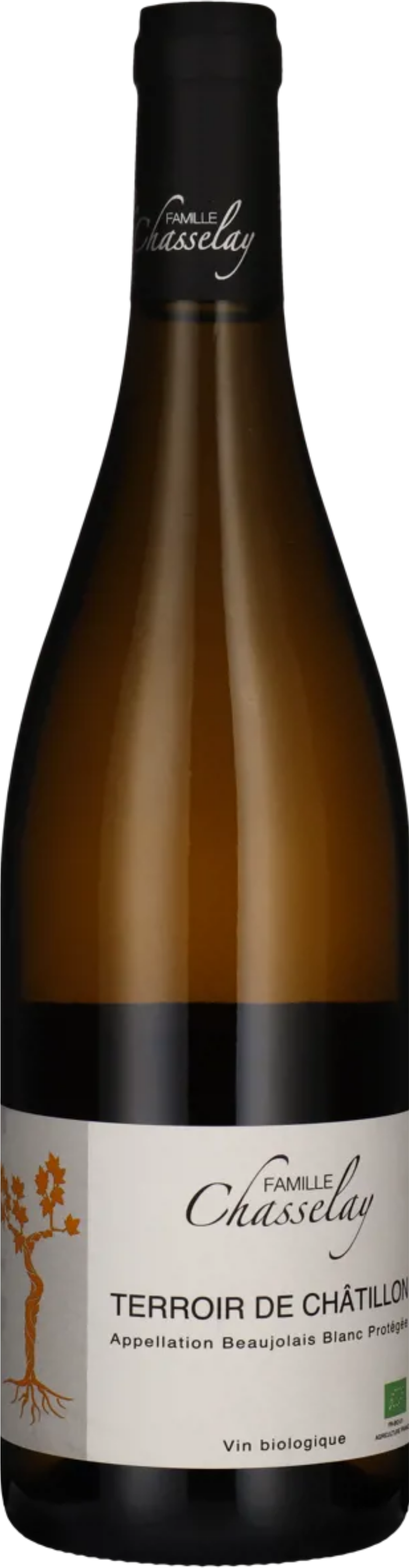
'Pourquoi Pas' Domaine Chasselay 2024Domaine Chasselay 'Pourquoi Pas' is a Beaujolais wine that plays on liveliness and smoothness, designed as an everyday wine. In keeping with the tradition of the region, 'Pourquoi Pas' is produced through carbonic maceration of Gamay grapes, a practice that consists of crushing whole bunches in an environment saturated with carbon dioxide in order to promote intracellular fermentation in the berries. This particular process, used for example in the production of new wines, enhances the fruity and floral aromas of the wine while giving it a softer and juicier body. The French expression 'pourquoi pas' means 'why not', a reference to the sign at the entrance to the estate. This bottle is also marketed in a series of three different labels.Domaine Chasselay's 'Pourquoi Pas' is a 100% Gamay grown in the 'Rouvière' lieu-dit in accordance with certified organic farming principles. Here, the vines have an average age of 60 years and grow on clay-limestone soils. After manual harvesting, the grapes are transferred to the cellar and vinified whole through 6 days of cold carbonic maceration and 10 days of spontaneous alcoholic fermentation. The maturation period is rather short and bottling usually takes place around February.The Gamay 'Pourquoi Pas' from Domaine Chasselay is purple-red in colour with ruby hues. Vivid and pleasant hints of blueberry, raspberry, cherry, wild strawberry and lavender emerge on the nose, while on the palate the wine is fresh, subtle and easy to drink, with remarkable liveliness and a juicy, fragrant finish that invites further tasting.18,00 £*Shipping: 48,00 £Secure redirect to the provider
-
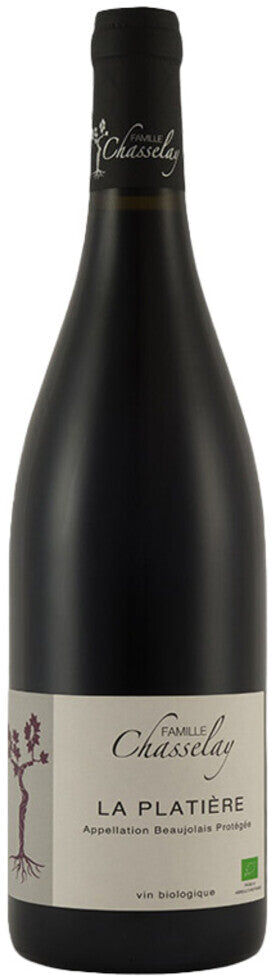
Beaujolais 'La Platiere' Domaine Chasselay 2024Beaujolais 'La Platiere' is a pure Gamay with a light and caressing taste, produced by Domaine Chasselay using sustainable agricultural and winemaking practices. The grapes used to make this wine come from the lieu-dit of 'La Platière', a term that refers to flat land at the foot of a hill. Like the entire vineyard area of the Domaine, this plot is also certified organic, reflecting the estate's great attention to the health of the environment. Furthermore, sulphites are not used during the entire winemaking process and are only added during bottling if necessary.Domaine Chasselay Beaujolais 'La Platiere' is produced exclusively from Gamay grapes grown in accordance with certified organic farming principles on clay-limestone soils. The vines have an average age of 55 years and, due to their advanced age and high planting density, naturally produce very low yields. After harvesting, 80% of the whole bunches are pressed in stainless steel tanks where spontaneous alcoholic fermentation takes place at a controlled temperature and in contact with the skins. The subsequent ageing phase takes place in oak barrels on fine lees for 12 months, and the wine is finally bottled without undergoing any clarification or filtration.The colour of Domaine Chasselay's Beaujolais 'La Platiere' is ruby red with violet reflections. The nose reveals intense fruity aromas of blackberry, raspberry and pomegranate, supported by earthy hints and spicy notes of vanilla and cinnamon. The palate is silky and enveloping, with soft tannins, good freshness and a fragrant finish. Like most Beaujolais wines, this Gamay is best served chilled, perhaps paired with a selection of cheeses.15,00 £*Shipping: 48,00 £Secure redirect to the provider
-
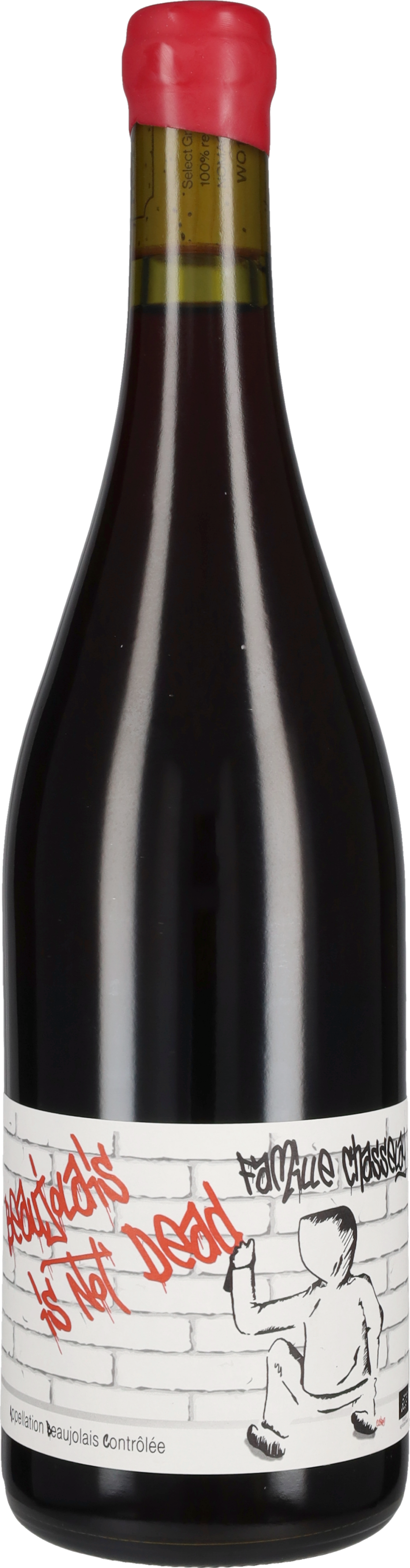
Beaujolais 'Is Not Dead' Domaine Chasselay 2023Domaine Chasselay's Beaujolais 'Is Not Dead' is a crisp and graceful red wine, remarkable in its simplicity. This label was launched with the 2016 vintage, following the idea of creating a delicious and accessible Gamay that would demonstrate that the true wine culture of Beaujolais is not dead. In fact, through its traditional artisan philosophy, Domaine Chasselay wants to highlight the lively vitality of Beaujolais, a unique and still somewhat underrated region that is certainly destined to grow.Domaine Chasselay Beaujolais 'Is Not Dead' is a pure Gamay grown in the lieu-dit of 'Les Grandes Terres', where the soils are mainly clay and limestone and the vines have an average age of 45 years. The vineyard is managed according to the principles of certified organic agriculture and once the grapes have reached the ideal stage of ripeness, they are harvested by hand, followed by red vinification of whole bunches with carbonic maceration and spontaneous alcoholic fermentation in temperature-controlled concrete tanks. Once the fermentation process is complete, the mass is left to mature for a short period, again in cement, and is finally bottled in January or February following the harvest without undergoing any clarification, only a light filtration.On the eye, the Beaujolais 'Is Not Dead' from Burgundy's Domaine Chasselay displays a purple-red colour with ruby hues. The bouquet evokes immediate and pleasant aromas of blackberry, violet, wild strawberry and orange peel, combined with a characteristic mineral note reminiscent of graphite. The palate is direct, smooth and fruity, characterised by a juicy freshness and gentle tannins.14,00 £*Shipping: 48,00 £Secure redirect to the provider

-
Should the religious heritage and Christian tradition of Europe be more clearly included in the European constitutional treaty?
The inclusion of religious heritage and Christian tradition in the European constitutional treaty is a complex and sensitive issue. While Europe has a rich history of Christian influence, it is also a diverse and secular society. Therefore, any inclusion of religious heritage should be done in a way that respects the diversity of beliefs and values within Europe. It is important to strike a balance that acknowledges the historical significance of Christianity while also upholding the principles of secularism and religious freedom. Ultimately, the decision should be made through careful consideration and dialogue among the diverse communities and stakeholders in Europe. **
-
What can you make in the first arts and crafts class with 5th and 6th grade students?
In the first arts and crafts class with 5th and 6th grade students, you can make simple and fun projects such as friendship bracelets, paper mache masks, or painted rock art. These projects are engaging and allow students to express their creativity while also learning basic crafting skills. Additionally, these projects can be completed within the class period and are suitable for students of varying skill levels. **
-
Is East Asian cuisine more varied than European cuisine?
Both East Asian and European cuisines are incredibly varied, with each region offering a wide range of flavors, ingredients, and cooking techniques. East Asian cuisine encompasses the diverse culinary traditions of countries such as China, Japan, Korea, and Thailand, each with its own unique dishes and flavors. Similarly, European cuisine is incredibly varied, with distinct culinary traditions in countries like Italy, France, Spain, and Greece. Ultimately, the variety of both East Asian and European cuisines is a result of the rich diversity of ingredients, cooking methods, and cultural influences found within each region. **
-
On which Jewish festivals are the Christian festivals based?
The Christian festivals of Easter and Pentecost are based on the Jewish festivals of Passover and Shavuot, respectively. Easter is linked to the Jewish Passover, as it commemorates the crucifixion and resurrection of Jesus, which occurred during the time of Passover. Pentecost, on the other hand, is based on the Jewish festival of Shavuot, which celebrates the giving of the Torah at Mount Sinai. Christians believe that the Holy Spirit descended upon the apostles on the day of Pentecost, which is why the Christian festival is based on this Jewish holiday. **
Are traditional crafts disappearing?
Traditional crafts are indeed at risk of disappearing due to various factors such as modernization, globalization, and changing consumer preferences. Many younger generations are not pursuing these crafts as careers, leading to a decline in the number of skilled artisans. Additionally, mass production and cheaper alternatives are making it difficult for traditional crafts to compete in the market. Efforts are being made to preserve and promote these crafts through initiatives like cultural heritage programs and artisan cooperatives. **
Are festivals dangerous?
Festivals can pose certain risks due to large crowds, potential for accidents, and sometimes excessive alcohol consumption. However, with proper planning, security measures, and responsible behavior, the risks can be minimized. It is important for festival-goers to stay aware of their surroundings, look out for each other, and follow safety guidelines to ensure a fun and safe experience. **
Top-Angebote
Products related to Morgon-Corcelette-Domaine-Chasselay:
-
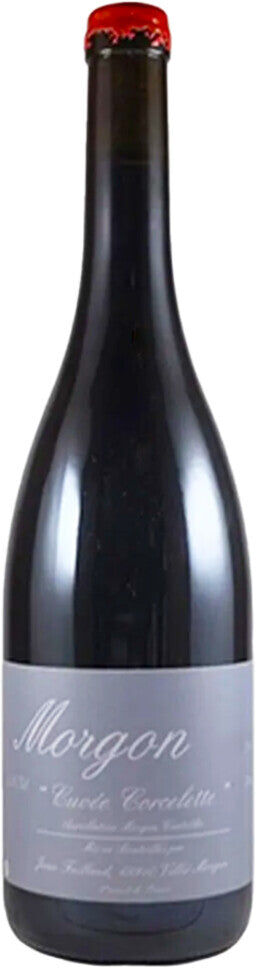
Morgon 'Corcelette' Domaine Chasselay 2021The Morgon 'Corcelette' from the Burgundian organic winery Domaine Chasselay is a Beaujolais that is soft, fine and structured, an authentic expression of the prized Morgon terroir. Among the 10 crus of Beaujolais, Morgon is considered one of the most prestigious, thanks in part to the more important structure and great longevity of the wines produced here. It is one of the largest sub-zones of Beaujolais, located on the eastern slope of the famous Py hill on soil composed of a combination of schist, granite and volcanic rock. Within the Morgon cru, there are six lieu-dits, including 'Corcelette'.Domaine Chasselay Morgon 'Corcelette' originates from pure Gamay grapes grown in the 'Corcelette' lieu-dit on alluvial soils rich in gravel and small pebbles. In particular, the grapes come from vines with an average age of 70 years, grown organically in the higher areas of the appellation, which are characterised by a cooler climate. The hand-picked bunches are 80% destemmed and then vinified in red with spontaneous alcoholic fermentation at a controlled temperature in contact with the skins for 15 days. This is followed by a maturation phase lasting at least 6 months in oak barrels on fine lees, and the wine is finally bottled without prior clarification or filtration.In the glass, the Morgon 'Corcelette' from Domaine Chasselay displays an intense ruby red colour. It has a fascinating bouquet, defined by aromas of raspberry and blackcurrant combined with floral notes of peony and dried lilac, as well as spicy and mineral tones of white pepper and flint. The palate reveals great finesse and elegance, with warmth perfectly balanced by soft tannins and freshness that contributes to its lively flavour.26,00 £*Shipping: 48,00 £Secure redirect to the provider
-
Foillard Jean Morgon 'Corcelette' Jean Foillard 2023The renowned artisan winemaker Jean Foillard presents the Morgon ‘Corcelette’, a label of rare expressive purity that perfectly reflects the traits of one of the most important crus in all of Beaujolais. Jean and Agnès Foillard made their first harvest in the early 1980s, but it was in 1985, following the influence of Marcel Lapierre and Jules Chauvet, that the Foillards firmly embraced a genuine production philosophy in strong contrast to the conventional approach. A return to the origins, with spontaneous fermentations and total exclusion of invasive and interventionist winemaking practices. Corcelette is one of the main lieu-dit of the Morgon cru, located northwest of the village of Villié-Morgon, where Domaine Jean Foillard operates. The ‘Corcelette’ Morgon by Jean Foillard is made from only Gamay grapes cultivated according to the principles of organic farming within the lieu-dit Corcelette, where the soil is sandy and rich in decomposed pink granite. After manual harvesting and careful selection of the grapes, the vinification of whole bunches follows, with the fermentation that occurs spontaneously thanks to the presence of only indigenous yeasts, accompanied by about 4 weeks of semi-carbonic maceration. Once the fermentation process is complete, the liquid spends at least 6 months maturing in used Burgundy oak barrels before bottling and subsequent resting in glass. The Morgon ‘Corcelette’ from the renowned artisan winemaker Jean Foillard has a ruby red hue with magenta highlights. From the glass, fruity and floral notes of violet and strawberry jam emerge, enriched by peculiar perceptions of petrichor and saline notes. The taste is gentle and agile, broad and energetic, characterized by silky tannins and a clear freshness.41,00 £*Shipping: 48,00 £Secure redirect to the provider
-
'Pourquoi Pas' Domaine Chasselay 2024Domaine Chasselay 'Pourquoi Pas' is a Beaujolais wine that plays on liveliness and smoothness, designed as an everyday wine. In keeping with the tradition of the region, 'Pourquoi Pas' is produced through carbonic maceration of Gamay grapes, a practice that consists of crushing whole bunches in an environment saturated with carbon dioxide in order to promote intracellular fermentation in the berries. This particular process, used for example in the production of new wines, enhances the fruity and floral aromas of the wine while giving it a softer and juicier body. The French expression 'pourquoi pas' means 'why not', a reference to the sign at the entrance to the estate. This bottle is also marketed in a series of three different labels.Domaine Chasselay's 'Pourquoi Pas' is a 100% Gamay grown in the 'Rouvière' lieu-dit in accordance with certified organic farming principles. Here, the vines have an average age of 60 years and grow on clay-limestone soils. After manual harvesting, the grapes are transferred to the cellar and vinified whole through 6 days of cold carbonic maceration and 10 days of spontaneous alcoholic fermentation. The maturation period is rather short and bottling usually takes place around February.The Gamay 'Pourquoi Pas' from Domaine Chasselay is purple-red in colour with ruby hues. Vivid and pleasant hints of blueberry, raspberry, cherry, wild strawberry and lavender emerge on the nose, while on the palate the wine is fresh, subtle and easy to drink, with remarkable liveliness and a juicy, fragrant finish that invites further tasting.18,00 £*Shipping: 48,00 £Secure redirect to the provider
-
Which TV channels can be received at Domaine Long Pré?
At Domaine Long Pré, guests can receive a variety of TV channels, including popular international channels such as CNN, BBC, and Eurosport. Additionally, there are channels available in different languages, catering to the diverse needs of the guests. The wide selection of TV channels ensures that guests can stay updated with news, sports, and entertainment during their stay at Domaine Long Pré. **
-
Can the arts and crafts course still be completed?
Yes, the arts and crafts course can still be completed as long as the necessary materials and instructions are provided. Participants can follow along with video tutorials, written instructions, or attend virtual classes to learn and create art projects. Online platforms and resources make it possible for individuals to continue their artistic pursuits from the comfort of their own homes. With dedication and practice, participants can successfully complete the arts and crafts course and develop their skills. **
-
Should the religious heritage and Christian tradition of Europe be more clearly included in the European constitutional treaty?
The inclusion of religious heritage and Christian tradition in the European constitutional treaty is a complex and sensitive issue. While Europe has a rich history of Christian influence, it is also a diverse and secular society. Therefore, any inclusion of religious heritage should be done in a way that respects the diversity of beliefs and values within Europe. It is important to strike a balance that acknowledges the historical significance of Christianity while also upholding the principles of secularism and religious freedom. Ultimately, the decision should be made through careful consideration and dialogue among the diverse communities and stakeholders in Europe. **
-
What can you make in the first arts and crafts class with 5th and 6th grade students?
In the first arts and crafts class with 5th and 6th grade students, you can make simple and fun projects such as friendship bracelets, paper mache masks, or painted rock art. These projects are engaging and allow students to express their creativity while also learning basic crafting skills. Additionally, these projects can be completed within the class period and are suitable for students of varying skill levels. **
Similar search terms for Morgon-Corcelette-Domaine-Chasselay
-
Beaujolais 'La Platiere' Domaine Chasselay 2024Beaujolais 'La Platiere' is a pure Gamay with a light and caressing taste, produced by Domaine Chasselay using sustainable agricultural and winemaking practices. The grapes used to make this wine come from the lieu-dit of 'La Platière', a term that refers to flat land at the foot of a hill. Like the entire vineyard area of the Domaine, this plot is also certified organic, reflecting the estate's great attention to the health of the environment. Furthermore, sulphites are not used during the entire winemaking process and are only added during bottling if necessary.Domaine Chasselay Beaujolais 'La Platiere' is produced exclusively from Gamay grapes grown in accordance with certified organic farming principles on clay-limestone soils. The vines have an average age of 55 years and, due to their advanced age and high planting density, naturally produce very low yields. After harvesting, 80% of the whole bunches are pressed in stainless steel tanks where spontaneous alcoholic fermentation takes place at a controlled temperature and in contact with the skins. The subsequent ageing phase takes place in oak barrels on fine lees for 12 months, and the wine is finally bottled without undergoing any clarification or filtration.The colour of Domaine Chasselay's Beaujolais 'La Platiere' is ruby red with violet reflections. The nose reveals intense fruity aromas of blackberry, raspberry and pomegranate, supported by earthy hints and spicy notes of vanilla and cinnamon. The palate is silky and enveloping, with soft tannins, good freshness and a fragrant finish. Like most Beaujolais wines, this Gamay is best served chilled, perhaps paired with a selection of cheeses.15,00 £*Shipping: 48,00 £Secure redirect to the provider
-
Beaujolais 'Is Not Dead' Domaine Chasselay 2023Domaine Chasselay's Beaujolais 'Is Not Dead' is a crisp and graceful red wine, remarkable in its simplicity. This label was launched with the 2016 vintage, following the idea of creating a delicious and accessible Gamay that would demonstrate that the true wine culture of Beaujolais is not dead. In fact, through its traditional artisan philosophy, Domaine Chasselay wants to highlight the lively vitality of Beaujolais, a unique and still somewhat underrated region that is certainly destined to grow.Domaine Chasselay Beaujolais 'Is Not Dead' is a pure Gamay grown in the lieu-dit of 'Les Grandes Terres', where the soils are mainly clay and limestone and the vines have an average age of 45 years. The vineyard is managed according to the principles of certified organic agriculture and once the grapes have reached the ideal stage of ripeness, they are harvested by hand, followed by red vinification of whole bunches with carbonic maceration and spontaneous alcoholic fermentation in temperature-controlled concrete tanks. Once the fermentation process is complete, the mass is left to mature for a short period, again in cement, and is finally bottled in January or February following the harvest without undergoing any clarification, only a light filtration.On the eye, the Beaujolais 'Is Not Dead' from Burgundy's Domaine Chasselay displays a purple-red colour with ruby hues. The bouquet evokes immediate and pleasant aromas of blackberry, violet, wild strawberry and orange peel, combined with a characteristic mineral note reminiscent of graphite. The palate is direct, smooth and fruity, characterised by a juicy freshness and gentle tannins.14,00 £*Shipping: 48,00 £Secure redirect to the provider
-
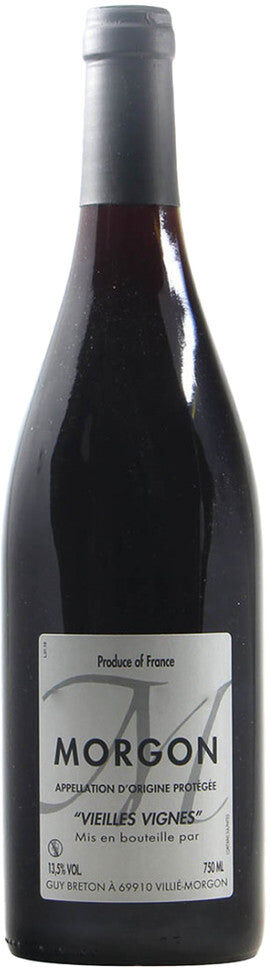
Morgon Vieilles Vignes Guy Breton 2023Guy Breton presents his Morgon ‘Vieilles Vignes’, a complex red wine with a fruity and delicately spicy aromatic profile. Guy Breton took over the family Domaine in the 1980s, adopting from the outset a craft production vision aimed at truly enhancing the territory of Beaujolais. This noble purpose has been and continues to be fueled by the finesse and grace of his wines, made with the utmost respect for nature and the singular expression of the terroir. Guy manages just 4 hectares of vineyards scattered around the winery, located in the municipality of Villié-Morgon. The term “Vieilles Vignes” refers to the advanced age of the vines from which the grapes come. The Morgon ‘Vieilles Vignes’ by Guy Breton is a 100% Gamay from old vines over 80 years old, rooted in soils predominantly made up of granite and sands in the subzones of Saint-Joseph and Grand Cras. After harvest, which is carried out strictly by hand, the grapes are vinified in red with spontaneous alcoholic fermentation. The subsequent aging period takes place for 10 months on fine lees in third passage oak barrels. The mass is finally bottled without undergoing any filtration. To the eye, the ‘Vieilles Vignes’ Guy Breton Morgon expresses a matte ruby red appearance. The olfactory panorama is a succession of fruity aromas of cherry and raspberry enriched with smoky and mineral notes. Savory and deep taste, refined and complex, characterized by juicy freshness and velvety tannins. Excellent interpretation of the appellation of Morgon, one of the most important denominations in all of Beaujolais. Due to its significant structure, which does not compromise on balance, this bottle can pair with a wide range of dishes.35,00 £*Shipping: 48,00 £Secure redirect to the provider
-
Is East Asian cuisine more varied than European cuisine?
Both East Asian and European cuisines are incredibly varied, with each region offering a wide range of flavors, ingredients, and cooking techniques. East Asian cuisine encompasses the diverse culinary traditions of countries such as China, Japan, Korea, and Thailand, each with its own unique dishes and flavors. Similarly, European cuisine is incredibly varied, with distinct culinary traditions in countries like Italy, France, Spain, and Greece. Ultimately, the variety of both East Asian and European cuisines is a result of the rich diversity of ingredients, cooking methods, and cultural influences found within each region. **
-
On which Jewish festivals are the Christian festivals based?
The Christian festivals of Easter and Pentecost are based on the Jewish festivals of Passover and Shavuot, respectively. Easter is linked to the Jewish Passover, as it commemorates the crucifixion and resurrection of Jesus, which occurred during the time of Passover. Pentecost, on the other hand, is based on the Jewish festival of Shavuot, which celebrates the giving of the Torah at Mount Sinai. Christians believe that the Holy Spirit descended upon the apostles on the day of Pentecost, which is why the Christian festival is based on this Jewish holiday. **
-
Are traditional crafts disappearing?
Traditional crafts are indeed at risk of disappearing due to various factors such as modernization, globalization, and changing consumer preferences. Many younger generations are not pursuing these crafts as careers, leading to a decline in the number of skilled artisans. Additionally, mass production and cheaper alternatives are making it difficult for traditional crafts to compete in the market. Efforts are being made to preserve and promote these crafts through initiatives like cultural heritage programs and artisan cooperatives. **
-
Are festivals dangerous?
Festivals can pose certain risks due to large crowds, potential for accidents, and sometimes excessive alcohol consumption. However, with proper planning, security measures, and responsible behavior, the risks can be minimized. It is important for festival-goers to stay aware of their surroundings, look out for each other, and follow safety guidelines to ensure a fun and safe experience. **
* All prices are inclusive of VAT and, if applicable, plus shipping costs. The offer information is based on the details provided by the respective shop and is updated through automated processes. Real-time updates do not occur, so deviations can occur in individual cases. ** Note: Parts of this content were created by AI.