Buy roadstoculture.eu ?
We are moving the project
roadstoculture.eu .
Are you interested in purchasing the domain
roadstoculture.eu ?
domain@kv-gmbh.de · 0541-91531010
Buy roadstoculture.eu ?
Why are island nations called islands?
Island nations are called islands because they are made up of one or more islands. An island is a piece of land that is completely surrounded by water, and when multiple islands are grouped together to form a nation, it is referred to as an island nation. These nations are often characterized by their unique geography, culture, and reliance on the surrounding ocean for resources and transportation. **
Why do Western nations get involved?
Western nations often get involved in international conflicts for a variety of reasons, including upholding democratic values, protecting human rights, promoting stability and security, and advancing their own strategic interests. Additionally, Western nations may intervene to prevent the spread of extremism or to fulfill international obligations and commitments. Economic considerations, such as access to resources or markets, can also play a role in their decision to get involved in conflicts around the world. **


Similar search terms for Profile-Books-Why-Nations
Top-Angebote
Products related to Profile-Books-Why-Nations:
-
Profile Books The Vital Question: Why Is Life The Way It Is Comprehensive Review - Non Fiction - PaperbackTitle:. The Vital Question: Why Is Life The Way It Is Format: Paperback Overview:. The Vital Question tackles one of biology’s most profound puzzles by tracing the relentless drive that shaped every living organism on Earth. Driven by the fundamental need to capture, convert, and distribute energy, life followed a rigid set of physical rules that determined whether species remained simple or grew in astonishing complexity. This accessible yet rigorous work explores cellular respiration, microbial ecosystems, and the ancient symbiotic events that gave rise to mitochondria, the tiny powerhouses governing animal, plant, and fungal development. By mapping how metabolic efficiency dictated evolutionary branching points, the narrative reveals why certain biological pathways flourished while others stalled. Readers gain a clear understanding of how microscopic chemical reactions echo far beyond the cell, influencing ecological balance, adaptation strategies, and even human health. The prose strips away dense jargon without diluting scientific accuracy, offering a cohesive framework that connects paleontology, modern physiology, and environmental science. Whether you are encountering these concepts for the first time or seeking a fresh perspective on established theories, this volume delivers a compelling case study of nature’s engineering. It serves as an essential guide for anyone craving meaningful context about where life began, how it transformed over billions of years, and what underlying mechanisms continue to sustain ecosystems today. What Makes This Book Stand Out:. What distinguishes this title from standard popular science releases is its unapologetic focus on energy as the primary currency of existence. Rather than relying solely on genetic mutations or natural selection as explanatory tools, the narrative centres on thermodynamic constraints and biochemical trading. This shift in perspective challenges conventional evolutionary models and encourages readers to reconsider how seemingly unrelated phenomena cell division, ageing, climate patterns, and resource competition are actually bound together by metabolic economics. The author successfully translates complex laboratory findings into vivid, logical argumentation, avoiding speculative leaps in favour of evidence-backed reasoning. Rich historical context surrounds the discovery of endosymbiosis, while contemporary research keeps the material firmly grounded in current academic discourse. Strategic visual aids and structural breaks clarify intricate biological processes without overwhelming the page layout. The result is a tightly constructed volume that rewards careful reading, offering sustained intellectual engagement rather than fleeting entertainment. By framing biological history as a continuous quest for energy efficiency, the book transforms abstract scientific theory into a tangible story of survival and adaptation that feels remarkably relevant to modern environmental and health...12,99 £*Shipping: 2,99 £Secure redirect to the provider
-
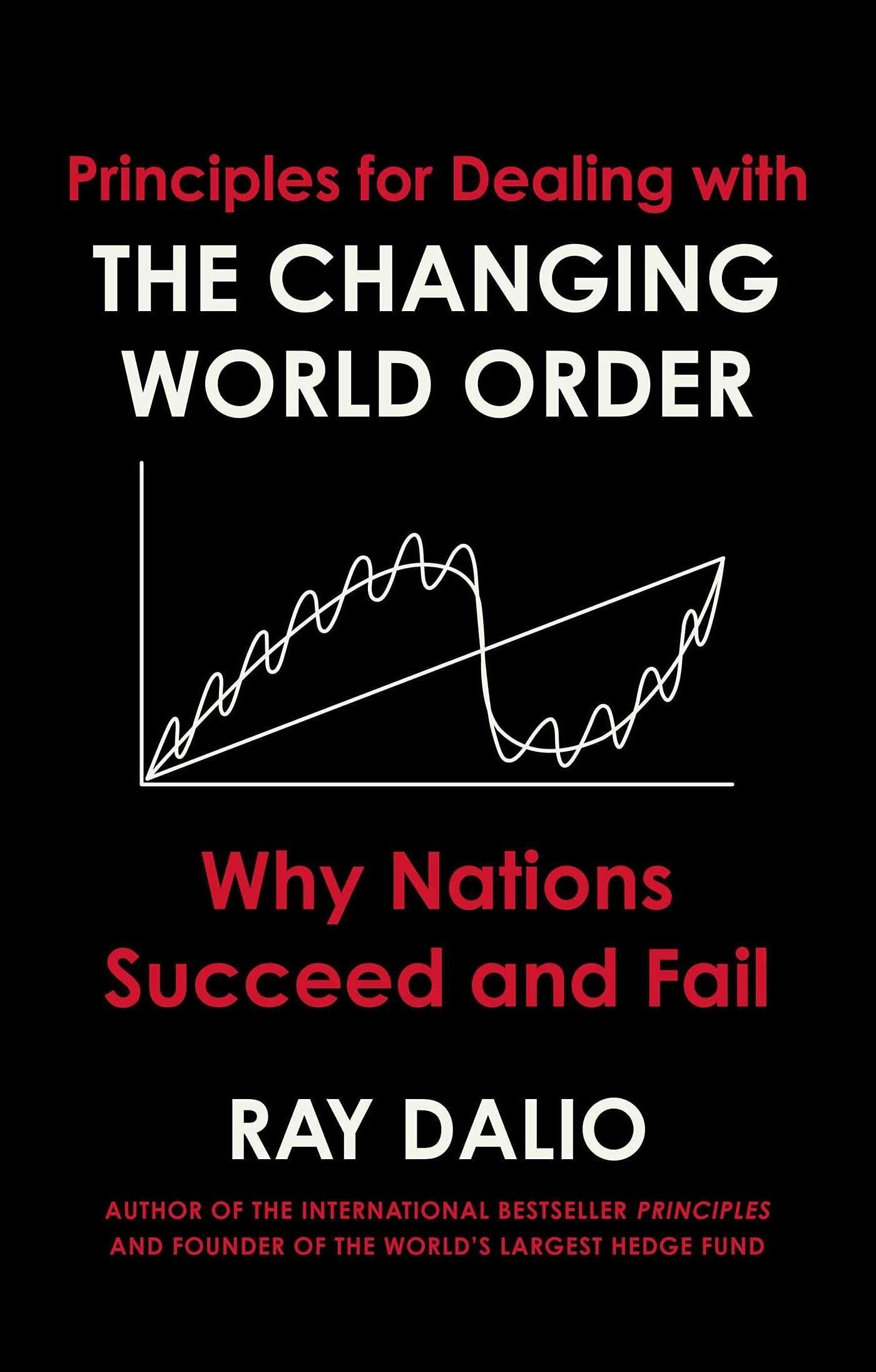
Simon & Schuster UK Principles for Dealing with the Changing World Order: Why Nations Succeed or Fail by Ray DalioFrom legendary investor Ray Dalio, author of the international bestseller Principles, who has spent half a century studying global economies and markets, Principles for Dealing with the Changing World Order examines history’s most turbulent economic and political periods to reveal why the times ahead will likely be radically different from those we’ve experienced in our lifetimes - but similar to those that have happened many times before. A few years ago, Ray Dalio noticed a confluence of political and economic conditions he hadn’t encountered before. They included huge debts and zero or near-zero interest rates that led to massive printing of money in the world’s three major reserve currencies; big political and social conflicts within countries, especially the US, due to the largest wealth, political and values disparities in more than 100 years; and the rising of a world power (China) to challenge the existing world power (US) and the existing world order. The last time that this confluence occurred was between 1930 and 1945. This realisation sent Dalio on a search for the repeating patterns and cause/effect relationships underlying all major changes in wealth and power over the last 500 years. In this remarkable and timely addition to his Principles series, Dalio brings readers along for his study of the major empires - including the Dutch, the British and the American - putting into perspective the 'Big Cycle' that has driven the successes and failures of all the world’s major countries throughout history. Dalio reveals the timeless and universal forces behind these shifts and uses them to look into the future, offering practical principles for positioning oneself for what’s ahead.13,99 £*Shipping: 2,99 £Secure redirect to the provider


-
Why do the Western nations get involved?
Western nations often get involved in international conflicts for a variety of reasons. These may include protecting their own national interests, such as access to resources or trade routes, promoting democracy and human rights, or fulfilling international obligations and alliances. Additionally, Western nations may also intervene in conflicts to prevent the spread of extremism or to maintain stability in regions that are strategically important to them. Overall, the motivations for Western involvement in international conflicts are complex and can vary depending on the specific circumstances of each situation. **
-
United Nations subsidiary
A United Nations subsidiary is an organization that operates under the umbrella of the United Nations but has a specific focus or mandate. These subsidiaries are established to address specific issues such as health, education, or human rights. They work in coordination with the United Nations to achieve common goals and objectives, while also having a degree of autonomy to carry out their specialized work. **
-
United Nations subsidiaries
United Nations subsidiaries are specialized agencies, funds, and programs that operate under the umbrella of the United Nations to address specific issues such as health, education, and humanitarian assistance. These subsidiaries have their own governing bodies and budgets, but work in coordination with the UN to achieve common goals. Some well-known UN subsidiaries include UNICEF, the World Health Organization (WHO), and the World Food Programme (WFP). These entities play a crucial role in implementing UN initiatives and providing assistance to countries in need around the world. **
-
Why do almost all nations hate their government?
Almost all nations may have some level of dissatisfaction or criticism towards their government due to various reasons. This could include corruption, lack of transparency, ineffective policies, unequal distribution of resources, and failure to address the needs of the people. Additionally, political polarization, broken promises, and abuse of power can also contribute to the negative sentiment towards the government. Ultimately, when citizens feel that their government is not serving their best interests or upholding democratic values, it can lead to widespread discontent and a lack of trust in the government. **


What are seafaring nations?
Seafaring nations are countries that have a strong historical or current connection to the sea and maritime activities. These nations often have a long tradition of exploration, trade, and naval power. They rely on the sea for transportation, trade, fishing, and sometimes defense. Seafaring nations typically have a significant portion of their population living in coastal areas and have developed a strong maritime culture. **
Which nations are popular?
Some of the most popular nations in the world include the United States, China, India, and Russia. These nations are popular due to their large populations, strong economies, and significant influence on global politics and culture. Additionally, countries like France, Germany, and Japan are also popular due to their rich history, cultural contributions, and economic power. **
Top-Angebote
Products related to Profile-Books-Why-Nations:
-
Daron Acemoglu, Simon Johnson, Daron Acemoglu, James A. Robinson Daron Acemoglu Collection 2 Books Set Power and Progress, Why Nations FailDescription. Condition: BRAND NEW. Format: Paperback. Power and Progress: Our Thousand-Year Struggle Over Technology and Prosperity. 'A breathtaking tour of the history and future of technology' Abhijit Banerjee and Esther Duflo A bold new interpretation of why technology benefits the elites - and how we must reshape the path of innovation to create true shared prosperity. A thousand years of history make one thing clear: progress is not automatic but depends on the choices we make. Much of the wealth generated by agricultural advances during the Middle Ages was captured by the Church while the peasants starved. The first hundred years of industrialization delivered stagnant incomes for workers, while making a few people rich. Throughout the world today, digital technologies and artificial intelligence increase inequality and undermine democracy. It doesn't have to be this way.. Why Nations Fail: FROM THE WINNERS OF THE NOBEL PRIZE IN ECONOMICS. Why are some nations more prosperous than others? Why Nations Fail sets out to answer this question, with a compelling and elegantly argued new theory: that it is not down to climate, geography or culture, but because of institutions. Drawing on an extraordinary range of contemporary and historical examples, from ancient Rome through the Tudors to modern-day China, leading academics Daron Acemoglu and James A. Robinson show that to invest and prosper, people need to know that if they work hard, they can make money and actually keep it - and this means sound institutions that allow virtuous circles of innovation, expansion and peace. Based on fifteen years of research, and answering the competing arguments of authors ranging from Max Weber to Jeffrey Sachs and Jared Diamond.... Title. Daron Acemoglu Collection 2 Books Set Power and Progress, Why Nations Fail. Delivery. Content. Reviews20,49 £*Shipping: 2,99 £Secure redirect to the provider
-
Profile Books The Vital Question: Why Is Life The Way It Is Comprehensive Review - Non Fiction - PaperbackTitle:. The Vital Question: Why Is Life The Way It Is Format: Paperback Overview:. The Vital Question tackles one of biology’s most profound puzzles by tracing the relentless drive that shaped every living organism on Earth. Driven by the fundamental need to capture, convert, and distribute energy, life followed a rigid set of physical rules that determined whether species remained simple or grew in astonishing complexity. This accessible yet rigorous work explores cellular respiration, microbial ecosystems, and the ancient symbiotic events that gave rise to mitochondria, the tiny powerhouses governing animal, plant, and fungal development. By mapping how metabolic efficiency dictated evolutionary branching points, the narrative reveals why certain biological pathways flourished while others stalled. Readers gain a clear understanding of how microscopic chemical reactions echo far beyond the cell, influencing ecological balance, adaptation strategies, and even human health. The prose strips away dense jargon without diluting scientific accuracy, offering a cohesive framework that connects paleontology, modern physiology, and environmental science. Whether you are encountering these concepts for the first time or seeking a fresh perspective on established theories, this volume delivers a compelling case study of nature’s engineering. It serves as an essential guide for anyone craving meaningful context about where life began, how it transformed over billions of years, and what underlying mechanisms continue to sustain ecosystems today. What Makes This Book Stand Out:. What distinguishes this title from standard popular science releases is its unapologetic focus on energy as the primary currency of existence. Rather than relying solely on genetic mutations or natural selection as explanatory tools, the narrative centres on thermodynamic constraints and biochemical trading. This shift in perspective challenges conventional evolutionary models and encourages readers to reconsider how seemingly unrelated phenomena cell division, ageing, climate patterns, and resource competition are actually bound together by metabolic economics. The author successfully translates complex laboratory findings into vivid, logical argumentation, avoiding speculative leaps in favour of evidence-backed reasoning. Rich historical context surrounds the discovery of endosymbiosis, while contemporary research keeps the material firmly grounded in current academic discourse. Strategic visual aids and structural breaks clarify intricate biological processes without overwhelming the page layout. The result is a tightly constructed volume that rewards careful reading, offering sustained intellectual engagement rather than fleeting entertainment. By framing biological history as a continuous quest for energy efficiency, the book transforms abstract scientific theory into a tangible story of survival and adaptation that feels remarkably relevant to modern environmental and health...12,99 £*Shipping: 2,99 £Secure redirect to the provider
-
Why are island nations called islands?
Island nations are called islands because they are made up of one or more islands. An island is a piece of land that is completely surrounded by water, and when multiple islands are grouped together to form a nation, it is referred to as an island nation. These nations are often characterized by their unique geography, culture, and reliance on the surrounding ocean for resources and transportation. **
-
Why do Western nations get involved?
Western nations often get involved in international conflicts for a variety of reasons, including upholding democratic values, protecting human rights, promoting stability and security, and advancing their own strategic interests. Additionally, Western nations may intervene to prevent the spread of extremism or to fulfill international obligations and commitments. Economic considerations, such as access to resources or markets, can also play a role in their decision to get involved in conflicts around the world. **
-
Why do the Western nations get involved?
Western nations often get involved in international conflicts for a variety of reasons. These may include protecting their own national interests, such as access to resources or trade routes, promoting democracy and human rights, or fulfilling international obligations and alliances. Additionally, Western nations may also intervene in conflicts to prevent the spread of extremism or to maintain stability in regions that are strategically important to them. Overall, the motivations for Western involvement in international conflicts are complex and can vary depending on the specific circumstances of each situation. **
-
United Nations subsidiary
A United Nations subsidiary is an organization that operates under the umbrella of the United Nations but has a specific focus or mandate. These subsidiaries are established to address specific issues such as health, education, or human rights. They work in coordination with the United Nations to achieve common goals and objectives, while also having a degree of autonomy to carry out their specialized work. **
Similar search terms for Profile-Books-Why-Nations
-
Simon & Schuster UK Principles for Dealing with the Changing World Order: Why Nations Succeed or Fail by Ray DalioFrom legendary investor Ray Dalio, author of the international bestseller Principles, who has spent half a century studying global economies and markets, Principles for Dealing with the Changing World Order examines history’s most turbulent economic and political periods to reveal why the times ahead will likely be radically different from those we’ve experienced in our lifetimes - but similar to those that have happened many times before. A few years ago, Ray Dalio noticed a confluence of political and economic conditions he hadn’t encountered before. They included huge debts and zero or near-zero interest rates that led to massive printing of money in the world’s three major reserve currencies; big political and social conflicts within countries, especially the US, due to the largest wealth, political and values disparities in more than 100 years; and the rising of a world power (China) to challenge the existing world power (US) and the existing world order. The last time that this confluence occurred was between 1930 and 1945. This realisation sent Dalio on a search for the repeating patterns and cause/effect relationships underlying all major changes in wealth and power over the last 500 years. In this remarkable and timely addition to his Principles series, Dalio brings readers along for his study of the major empires - including the Dutch, the British and the American - putting into perspective the 'Big Cycle' that has driven the successes and failures of all the world’s major countries throughout history. Dalio reveals the timeless and universal forces behind these shifts and uses them to look into the future, offering practical principles for positioning oneself for what’s ahead.13,99 £*Shipping: 2,99 £Secure redirect to the provider
-
HARPERCOLLINS Gill Sims Why Mummy Series Collection 4 Books Set (Why Mummy Drinks, Why Mummy Swears, Why Mummy Does not Give a, Why Mummys Sloshed)Why Mummy Drinks It is Mummy’s 39th birthday. She is staring down the barrel of a future of people asking if she wants to come to their advanced yoga classes, and polite book clubs where everyone claims to be tiddly after a glass of Pinot Grigio and says things like ‘Oooh gosh, are you having another glass?’Why Mummy Swears The Boy Child Peter is connected to his iPad by an umbilical cord, The Girl Child Jane is desperate to make her fortune as an Instagram lifestyle influencer, while Daddy is constantly off on exotic business trips…Mummy’s marriage is feeling the strain, her kids are running wild and the house is steadily developing a forest of mould. Only Judgy, the Proud and Noble Terrier, remains loyal as always.Why Mummy Doesn’t Give a ****! Mummy dreams of a quirky rural cottage with roses around the door and chatty chickens in the garden. Life, as ever, is not going quite as she planned. Paxo, Oxo and Bisto turn out to be highly rambunctious, rather than merely chatty, and the roses have jaggy thorns. Her precious moppets are now giant teenagers, and instead of wittering at her about who would win in a fight – a dragon badger or a ninja horse – they are Snapchatting the night away.Why Mummy’s Sloshed Mummy has been a wife and mother for so long that she’s a little bit lost. And despite her best efforts, her precious moppets still don’t know the location of the laundry basket, the difference between being bored and being hungry, or that saying ‘I can’t find it Mummy’ is not the same as actually looking for it.15,95 £*Shipping: 2,99 £Secure redirect to the provider
-
Gill Sims Collection 3 Books Collection Set (Why Mummy Drinks at Christmas, Why Mummy Drinks The Journal & Why Mummy’s Sloshed)Description. Condition: BRAND NEW. Format: Mixed Media. Why Mummy Drinks at Christmas [Hardcover]:. Mummy has always loved Christmas. Sure, the kids turn into demons, the dinner gets burnt to a crisp and Aunt Louisa’s general staggering inappropriateness sends Mummy reaching for the nearest maximum-strength festive tipple, but nevertheless, for her, Christmas is always special.This year, she wants nothing more than to perfectly fig up the pudding and sit by the fire reading aloud from A Christmas Carol to a rapt, rosy-cheeked audience.. Why Mummy Drinks The Journal:. Make every day funny with the riotous journal companion to Gill Sims’ smash hit Sunday Times bestseller Why Mummy Drinks.You’re the proud owner of a journal called Why Mummy Drinks, so you almost certainly have no time at all for meditation, mindfulness or self\-care (either the self\-help sort or the euphemistic sort). This journal isn’t about promising to make you a better person, or a happier one, or a thinner one or even a wiser one, because there’s nothing wrong with the person you are.. Why Mummy’s Sloshed:. Mummy has been a wife and mother for so long that she’s a little bit lost. And despite her best efforts, her precious moppets still don’t know the location of the laundry basket, the difference between being bored and being hungry, or that saying ‘I can’t find it Mummy’ is not the same as actually looking for it!. Title. Gill Sims Collection 3 Books Collection Set (Why Mummy Drinks at Christmas, Why Mummy Drinks The Journal & Why Mummy’s Sloshed). Delivery. Content. Reviews17,99 £*Shipping: 2,99 £Secure redirect to the provider
-
United Nations subsidiaries
United Nations subsidiaries are specialized agencies, funds, and programs that operate under the umbrella of the United Nations to address specific issues such as health, education, and humanitarian assistance. These subsidiaries have their own governing bodies and budgets, but work in coordination with the UN to achieve common goals. Some well-known UN subsidiaries include UNICEF, the World Health Organization (WHO), and the World Food Programme (WFP). These entities play a crucial role in implementing UN initiatives and providing assistance to countries in need around the world. **
-
Why do almost all nations hate their government?
Almost all nations may have some level of dissatisfaction or criticism towards their government due to various reasons. This could include corruption, lack of transparency, ineffective policies, unequal distribution of resources, and failure to address the needs of the people. Additionally, political polarization, broken promises, and abuse of power can also contribute to the negative sentiment towards the government. Ultimately, when citizens feel that their government is not serving their best interests or upholding democratic values, it can lead to widespread discontent and a lack of trust in the government. **
-
What are seafaring nations?
Seafaring nations are countries that have a strong historical or current connection to the sea and maritime activities. These nations often have a long tradition of exploration, trade, and naval power. They rely on the sea for transportation, trade, fishing, and sometimes defense. Seafaring nations typically have a significant portion of their population living in coastal areas and have developed a strong maritime culture. **
-
Which nations are popular?
Some of the most popular nations in the world include the United States, China, India, and Russia. These nations are popular due to their large populations, strong economies, and significant influence on global politics and culture. Additionally, countries like France, Germany, and Japan are also popular due to their rich history, cultural contributions, and economic power. **
* All prices are inclusive of VAT and, if applicable, plus shipping costs. The offer information is based on the details provided by the respective shop and is updated through automated processes. Real-time updates do not occur, so deviations can occur in individual cases. ** Note: Parts of this content were created by AI.