Buy roadstoculture.eu ?
We are moving the project
roadstoculture.eu .
Are you interested in purchasing the domain
roadstoculture.eu ?
domain@kv-gmbh.de · 0541-91531010
Buy roadstoculture.eu ?
How do you use the Barilla Pesto Rosso sauce?
Barilla Pesto Rosso sauce can be used in a variety of ways to add flavor to your dishes. You can simply toss it with cooked pasta for a quick and easy meal, spread it on sandwiches or wraps for added flavor, or use it as a marinade for grilled meats or vegetables. Additionally, you can mix it into soups or stews to enhance the taste. The possibilities are endless with this versatile sauce. **
Does anyone know about the MV Agusta 800 Rosso?
The MV Agusta 800 Rosso is a motorcycle model produced by the Italian manufacturer MV Agusta. It is part of their Brutale lineup, known for its sporty design and performance. The Rosso variant typically features a red color scheme, adding to its visual appeal. Overall, the MV Agusta 800 Rosso is well-regarded among motorcycle enthusiasts for its combination of style and power. **
Similar search terms for Rosso
Top-Angebote
Products related to Rosso:
-
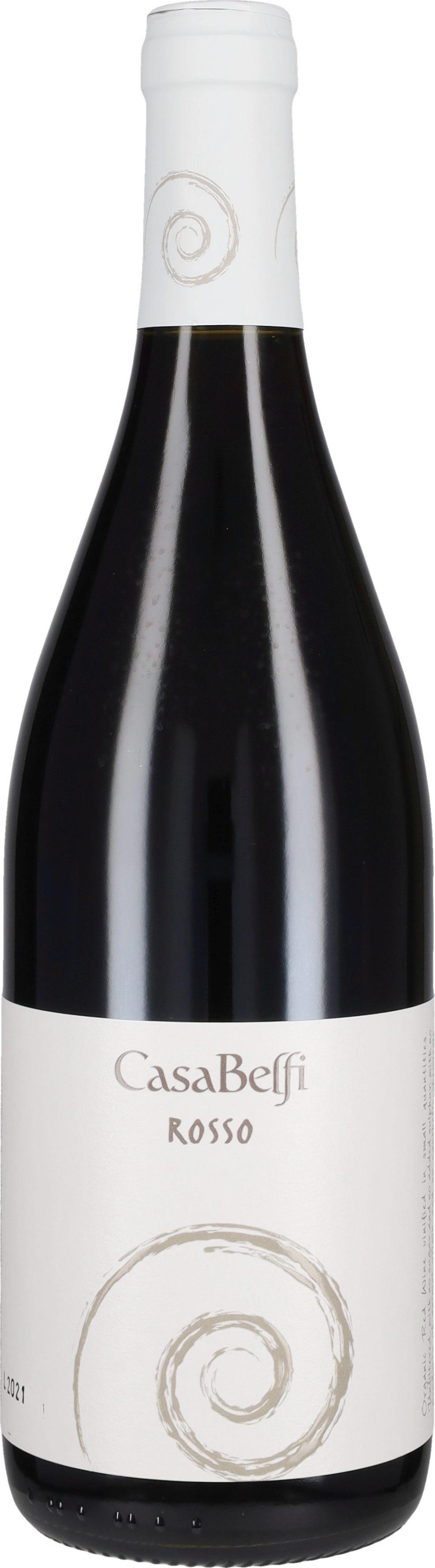
Rosso Casa BelfiThe Rosso di Casa Belfi is a juicy and dynamic wine, with an irresistible drinkability. Casa Belfi is undoubtedly one of those realities that has been able to enhance the uniqueness of Prosecco, at a time when the most famous Italian sparkling wine in the world has been heavily undervalued by quantitative productions of poor quality. To achieve all this, Maurizio and Albino, founders of the winery in 1999, decided to adopt an approach that would enhance the potential of Glera and other local indigenous varieties, adhering to organic farming and more recently to various precepts of biodynamics. Expressive originality and liquids with great drinkability are the strengths of Casa Belfi's bottles, which with this red wine for "snack" do not betray their philosophy. Nature and territory, in a grape juice to drink without ever stopping, especially in summer. Delicious.The Rosso Casa Belfi wine is obtained from a blend of Cabernet Franc and Raboso, from vines cultivated biodynamically and that rest on medium soils.13,00 £*Shipping: 48,00 £Secure redirect to the provider
-
Rosso Halarà 2023Rosso di Halarà is a rare expression of the Parpato grape variety born in the district of Marsala, Sicily, from the collaboration between six artisanal winemakers: Francesco De Franco, Nino Barraco, Stefano Amerighi, Corrado Dottori, Giovanni Scarfone and Francesco Ferreri. Parpato is a black berry variety rediscovered only recently, widespread in western Sicily and symbolising the challenge undertaken by the producers of Halarà, who in 2019, after a holiday spent in Greece, decided to join forces and dive into this joint adventure. The six friends then took over a small 2-hectare plot planted in the 1980s with Catarratto and, indeed, Parpato, thus starting the Halarà project.Rosso Halarà is made from pure Parpato grapes grown according to sustainable agronomic practices in the Abbadessa district in the Marsala area. Here the vines, about 40 years old, are grown using the alberello system on clayey-calcareous soils facing north. Manual harvesting is followed by red wine vinification with spontaneous alcoholic fermentation in stainless steel tanks in contact with the skins, partly in whole bunches. Once the fermentation process is complete, the wine is left to mature for 6 months in stainless steel on the fine lees and is finally bottled without undergoing any clarification or filtration.In the glass, Parpato Rosso from the Sicilian winery Halarà has a light ruby-red colour. The aromatic range evokes fascinating sensations of Morello cherry, orange peel and black cherry, mingling with complex notes of Mediterranean scrubland, cinnamon and black pepper. On the palate, it is very juicy and crisp, full-bodied but at the same time agile thanks to a pleasant freshness and silky tannins that anticipate the irresistible savoury finish.21,00 £*Shipping: 48,00 £Secure redirect to the provider
-
'Vallepicciola Rosso' 2022The ‘Vallepicciola Rosso’ is configured as one of the most representative labels of the Tuscan estate Vallepicciola, a Sangiovese with commendable breadth and expressive finesse capable of expressing the great qualities of the grape variety. This wine is born in the territory of Castelnuovo Berardenga, a municipality that falls within the Chianti Classico denomination, although the winery chooses to label it as Toscana IGT. Vallepicciola was founded in 1999 by entrepreneur Bruno Bolfo and his sister Giuseppina, who decided to renovate an old convent of nuns abandoned for decades to transform it into a successful wine-growing reality complete with a wonderful 5-star hotel. In a short time, the estate's wines have established themselves nationally and internationally, strong in their ability to interpret the Chianti territory in a modern key. ‘Vallepicciola Rosso’ is a 100% Sangiovese that comes from a selection of the best grapes from the Fontanelle vineyard, in Pievasciata, a fraction of the municipality of Castelnuovo Berardenga. The plot is characterized by soils of a calcareous-clay matrix, with the presence of galestro and alberese, and by an altitude ranging between 370 and 430 meters above sea level. After the harvest, carried out entirely by hand, the bunches are pressed in concrete tanks for controlled temperature alcoholic fermentation, accompanied by 4 weeks of maceration on the skins. The liquid is then transferred to French oak barriques, new at 50%, where malolactic fermentation and a long aging of 20 months take place. In the glass, the ‘Rosso Vallepicciola’ reveals an intense ruby appearance. Broad hints of cherry, currant, and violet describe the olfactory weave along with nuances of tobacco and dark chocolate. On the palate, it shows elegant and enveloping, with a tannic structure perfectly integrated guiding the long balsamic persistence.94,00 £*Shipping: 48,00 £Secure redirect to the provider


-
How is the finished Pesto Rosso from Penny in the jar?
The finished Pesto Rosso from Penny in the jar is rich and flavorful, with a vibrant red color and a smooth, creamy texture. It has a delicious combination of sun-dried tomatoes, basil, Parmesan cheese, and nuts, creating a well-balanced and savory taste. The Pesto Rosso is ready to use straight from the jar, making it a convenient and versatile addition to pasta, sandwiches, or as a dip. Overall, it is a high-quality and delicious product that adds a burst of flavor to any dish. **
-
What is the difference between the Kawasaki Ninja 300 with Pirelli Rosso II and the Rosso3?
The main difference between the Kawasaki Ninja 300 with Pirelli Rosso II and the Rosso3 is the technology and performance. The Rosso3 is the newer version of the Rosso II and features improved grip, handling, and stability. It also has a more advanced tread pattern and compound, which provides better performance in both wet and dry conditions. Overall, the Rosso3 offers better overall performance and is a more advanced tire compared to the Rosso II. **
-
Can the arts and crafts course still be completed?
Yes, the arts and crafts course can still be completed as long as the necessary materials and instructions are provided. Participants can follow along with video tutorials, written instructions, or attend virtual classes to learn and create art projects. Online platforms and resources make it possible for individuals to continue their artistic pursuits from the comfort of their own homes. With dedication and practice, participants can successfully complete the arts and crafts course and develop their skills. **
-
Should the religious heritage and Christian tradition of Europe be more clearly included in the European constitutional treaty?
The inclusion of religious heritage and Christian tradition in the European constitutional treaty is a complex and sensitive issue. While Europe has a rich history of Christian influence, it is also a diverse and secular society. Therefore, any inclusion of religious heritage should be done in a way that respects the diversity of beliefs and values within Europe. It is important to strike a balance that acknowledges the historical significance of Christianity while also upholding the principles of secularism and religious freedom. Ultimately, the decision should be made through careful consideration and dialogue among the diverse communities and stakeholders in Europe. **


What can you make in the first arts and crafts class with 5th and 6th grade students?
In the first arts and crafts class with 5th and 6th grade students, you can make simple and fun projects such as friendship bracelets, paper mache masks, or painted rock art. These projects are engaging and allow students to express their creativity while also learning basic crafting skills. Additionally, these projects can be completed within the class period and are suitable for students of varying skill levels. **
Is East Asian cuisine more varied than European cuisine?
Both East Asian and European cuisines are incredibly varied, with each region offering a wide range of flavors, ingredients, and cooking techniques. East Asian cuisine encompasses the diverse culinary traditions of countries such as China, Japan, Korea, and Thailand, each with its own unique dishes and flavors. Similarly, European cuisine is incredibly varied, with distinct culinary traditions in countries like Italy, France, Spain, and Greece. Ultimately, the variety of both East Asian and European cuisines is a result of the rich diversity of ingredients, cooking methods, and cultural influences found within each region. **
Top-Angebote
Products related to Rosso:
-
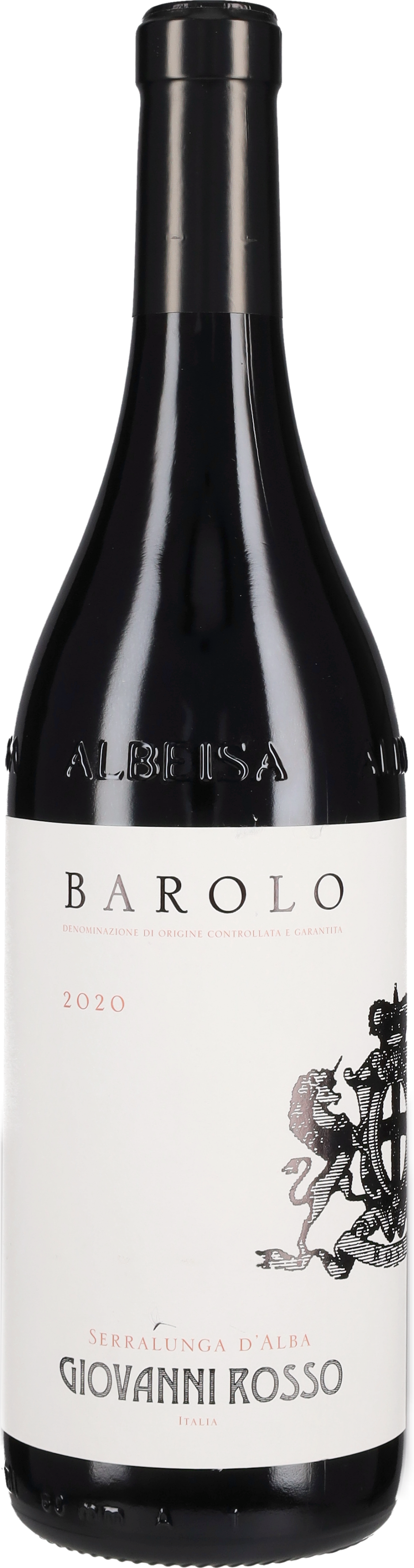
Rosso Giovanni Barolo Giovanni Rosso 2021The Barolo by Giovanni Rosso is a great wine from the Langhe produced with the Nebbiolo grape in purity and made following the oldest traditions of the territory, with grapes coming from various vineyards and aged in large barrels. A label that represents the history and memory of the Langhe, faithful to the customs and classic taste of Barolo, elegant, structured, and long-lived. Barolo is produced by the Giovanni Rosso Winery with vineyards located in the municipalities of Serralunga d'Alba, Barolo, and Castiglione Falletto. Before the Burgundian habit of vinifying and bottling individual vineyards separately became widespread, Barolo producers used to blend all the grapes from the company vineyards, often located in various municipalities of the denomination, to create a single label, a synthesis of the winery and its philosophy. The harvest usually takes place around mid-October and fermentation occurs using only indigenous yeasts in cement tanks with skin maceration lasting about 25 days, accompanied by daily pump-overs and a délestage. The wine matures for a period of 18-36 months in French oak barrels of 50 hectoliters, before finishing aging in the bottle. The Barolo by Giovanni Rosso is a wine capable of revealing the most authentic face of the Langhe and giving an idea, even to those who do not know Barolo, of the value of this great red from the Piedmontese tradition. It is a perfect label to drink and know before tackling the bottles from the individual crus of the denomination. The wine presents a ruby red color tending towards garnet. On the nose, it expresses floral notes, of violet and dried flowers, aromas of red berry fruits, delicate spicy sensations. On the palate, it has a good structure and is supported by a dense and evolved tannic texture. The aromas are rich and intense, with a harmonious finish and good freshness.43,00 £*Shipping: 48,00 £Secure redirect to the provider
-
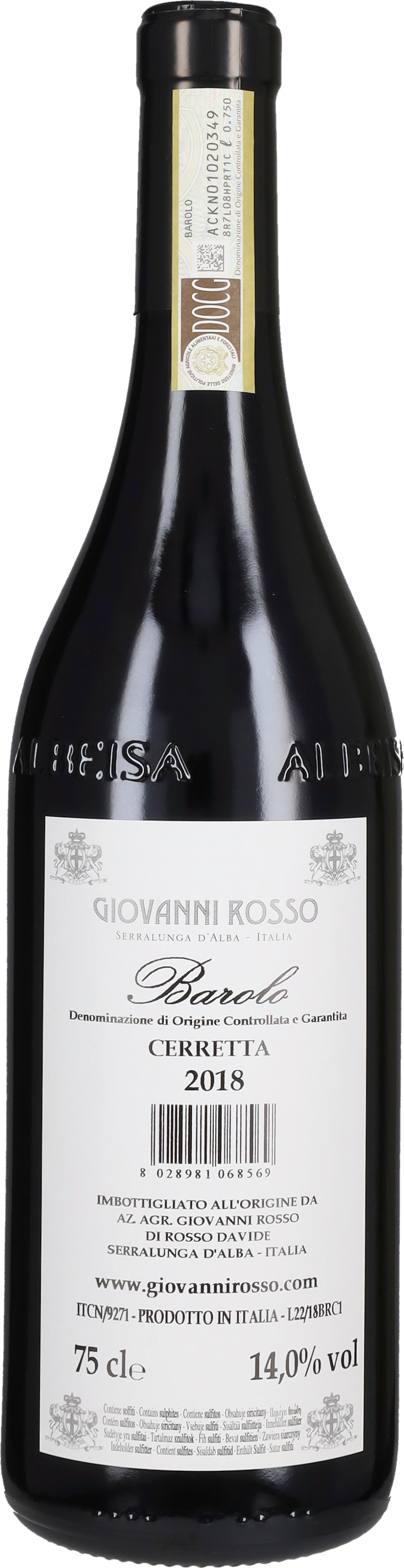
Rosso Giovanni Barolo 'Cerretta' Giovanni Rosso 2018The Barolo "Cerretta" from the Giovanni Rosso winery is a serious and complex red wine produced in Serralunga d'Alba from the homonymous cru "Cerretta" which, replanted partly in 1984 and partly in 2000, has been owned by the Rosso family since 1920 and forms a sort of natural amphitheater, bordered on its southern side by a wooded area that helps create a particularly favorable microclimate, increasing the biodiversity of the territory. This label is made from pure Nebbiolo grapes from vineyards cultivated using the traditional guyot method and exposed to east/southeast, on soils located about 360 meters above sea level and characterized by marl-limestone soils. The winery, experiencing unstoppable growth and now also owning an estate on Etna, is managed by Davide Rosso who, with great dedication and expertise, has managed to revolutionize the production philosophy now focused on the constant and progressive reduction of herbicides and chemicals and on the great work in the vineyard to try to obtain healthy and top-quality grapes.The "Cerretta" Barolo is produced with carefully selected grapes hand-picked around mid-October. The clusters, destemmed and gently pressed, are then fermented in cement tanks, using only indigenous yeasts, for a period of about 28 days with daily pump-overs and délestage halfway through. This is followed by racking and the subsequent aging of the wine in large French oak barrels of 25 and 50 hectoliters, for a period ranging from 18 to 36 months depending on the potential of the different vintages.The Barolo "Cerretta" by Giovanni Rosso presents itself with a ruby red color with slight garnet hues. On the nose, complex aromas of ripe fruit and berries appear, including cherry and currant, floral notes of violet and wilted rose, spicy and balsamic hints, including white pepper, licorice, tobacco, and eucalyptus, finishing with accents of leather and Mediterranean scrub. On the palate, it is rich, deep, broad, and structured, with a enveloping and silky tannin and a finish characterized by great freshness. This label from Giovanni Rosso is a traditional Barolo that perfectly combines power and great elegance.76,00 £*Shipping: 48,00 £Secure redirect to the provider
-
Rosso Casa BelfiThe Rosso di Casa Belfi is a juicy and dynamic wine, with an irresistible drinkability. Casa Belfi is undoubtedly one of those realities that has been able to enhance the uniqueness of Prosecco, at a time when the most famous Italian sparkling wine in the world has been heavily undervalued by quantitative productions of poor quality. To achieve all this, Maurizio and Albino, founders of the winery in 1999, decided to adopt an approach that would enhance the potential of Glera and other local indigenous varieties, adhering to organic farming and more recently to various precepts of biodynamics. Expressive originality and liquids with great drinkability are the strengths of Casa Belfi's bottles, which with this red wine for "snack" do not betray their philosophy. Nature and territory, in a grape juice to drink without ever stopping, especially in summer. Delicious.The Rosso Casa Belfi wine is obtained from a blend of Cabernet Franc and Raboso, from vines cultivated biodynamically and that rest on medium soils.13,00 £*Shipping: 48,00 £Secure redirect to the provider
-
Rosso Halarà 2023Rosso di Halarà is a rare expression of the Parpato grape variety born in the district of Marsala, Sicily, from the collaboration between six artisanal winemakers: Francesco De Franco, Nino Barraco, Stefano Amerighi, Corrado Dottori, Giovanni Scarfone and Francesco Ferreri. Parpato is a black berry variety rediscovered only recently, widespread in western Sicily and symbolising the challenge undertaken by the producers of Halarà, who in 2019, after a holiday spent in Greece, decided to join forces and dive into this joint adventure. The six friends then took over a small 2-hectare plot planted in the 1980s with Catarratto and, indeed, Parpato, thus starting the Halarà project.Rosso Halarà is made from pure Parpato grapes grown according to sustainable agronomic practices in the Abbadessa district in the Marsala area. Here the vines, about 40 years old, are grown using the alberello system on clayey-calcareous soils facing north. Manual harvesting is followed by red wine vinification with spontaneous alcoholic fermentation in stainless steel tanks in contact with the skins, partly in whole bunches. Once the fermentation process is complete, the wine is left to mature for 6 months in stainless steel on the fine lees and is finally bottled without undergoing any clarification or filtration.In the glass, Parpato Rosso from the Sicilian winery Halarà has a light ruby-red colour. The aromatic range evokes fascinating sensations of Morello cherry, orange peel and black cherry, mingling with complex notes of Mediterranean scrubland, cinnamon and black pepper. On the palate, it is very juicy and crisp, full-bodied but at the same time agile thanks to a pleasant freshness and silky tannins that anticipate the irresistible savoury finish.21,00 £*Shipping: 48,00 £Secure redirect to the provider
-
How do you use the Barilla Pesto Rosso sauce?
Barilla Pesto Rosso sauce can be used in a variety of ways to add flavor to your dishes. You can simply toss it with cooked pasta for a quick and easy meal, spread it on sandwiches or wraps for added flavor, or use it as a marinade for grilled meats or vegetables. Additionally, you can mix it into soups or stews to enhance the taste. The possibilities are endless with this versatile sauce. **
-
Does anyone know about the MV Agusta 800 Rosso?
The MV Agusta 800 Rosso is a motorcycle model produced by the Italian manufacturer MV Agusta. It is part of their Brutale lineup, known for its sporty design and performance. The Rosso variant typically features a red color scheme, adding to its visual appeal. Overall, the MV Agusta 800 Rosso is well-regarded among motorcycle enthusiasts for its combination of style and power. **
-
How is the finished Pesto Rosso from Penny in the jar?
The finished Pesto Rosso from Penny in the jar is rich and flavorful, with a vibrant red color and a smooth, creamy texture. It has a delicious combination of sun-dried tomatoes, basil, Parmesan cheese, and nuts, creating a well-balanced and savory taste. The Pesto Rosso is ready to use straight from the jar, making it a convenient and versatile addition to pasta, sandwiches, or as a dip. Overall, it is a high-quality and delicious product that adds a burst of flavor to any dish. **
-
What is the difference between the Kawasaki Ninja 300 with Pirelli Rosso II and the Rosso3?
The main difference between the Kawasaki Ninja 300 with Pirelli Rosso II and the Rosso3 is the technology and performance. The Rosso3 is the newer version of the Rosso II and features improved grip, handling, and stability. It also has a more advanced tread pattern and compound, which provides better performance in both wet and dry conditions. Overall, the Rosso3 offers better overall performance and is a more advanced tire compared to the Rosso II. **
Similar search terms for Rosso
-
'Vallepicciola Rosso' 2022The ‘Vallepicciola Rosso’ is configured as one of the most representative labels of the Tuscan estate Vallepicciola, a Sangiovese with commendable breadth and expressive finesse capable of expressing the great qualities of the grape variety. This wine is born in the territory of Castelnuovo Berardenga, a municipality that falls within the Chianti Classico denomination, although the winery chooses to label it as Toscana IGT. Vallepicciola was founded in 1999 by entrepreneur Bruno Bolfo and his sister Giuseppina, who decided to renovate an old convent of nuns abandoned for decades to transform it into a successful wine-growing reality complete with a wonderful 5-star hotel. In a short time, the estate's wines have established themselves nationally and internationally, strong in their ability to interpret the Chianti territory in a modern key. ‘Vallepicciola Rosso’ is a 100% Sangiovese that comes from a selection of the best grapes from the Fontanelle vineyard, in Pievasciata, a fraction of the municipality of Castelnuovo Berardenga. The plot is characterized by soils of a calcareous-clay matrix, with the presence of galestro and alberese, and by an altitude ranging between 370 and 430 meters above sea level. After the harvest, carried out entirely by hand, the bunches are pressed in concrete tanks for controlled temperature alcoholic fermentation, accompanied by 4 weeks of maceration on the skins. The liquid is then transferred to French oak barriques, new at 50%, where malolactic fermentation and a long aging of 20 months take place. In the glass, the ‘Rosso Vallepicciola’ reveals an intense ruby appearance. Broad hints of cherry, currant, and violet describe the olfactory weave along with nuances of tobacco and dark chocolate. On the palate, it shows elegant and enveloping, with a tannic structure perfectly integrated guiding the long balsamic persistence.94,00 £*Shipping: 48,00 £Secure redirect to the provider
-
Rosso Chateau Musar 2018The Rosso Château Musar is a strongly territorial and expressive Lebanese wine, born in a terroir whose historical value for the origins of world viticulture is of primary importance. Rich in personality and elegance, this blend mixes fruit and tertiary hints on the nose, a prelude to a warm sip in which one appreciates the balance between the different organoleptic components. A very interesting label, to try to engage with the most important winery in Lebanon, an area increasingly appreciated by wine enthusiasts around the world. The Rosso Château Musar comes from a blend of international grape varieties, each contributing one third to form the final blend; specifically, we find Cabernet Sauvignon, Cinsault, and Carignan, grown in vineyards that are over forty years old, within a subsoil rich in stones and limestone. The yield per hectare between the rows does not exceed 25 quintals, and the plants are worked organically, without using chemical fertilizers in the vineyard. The fermentation of the must takes place spontaneously in cement tanks, and takes place slowly, for a total of 4 weeks; malolactic fermentation follows and then the wine is transferred into French oak barriques, where it remains to refine on the fine lees for a year. At the end of this period, an additional maturation of one year in vitrified cement tanks follows. The Rosso made by Château Musar presents itself visually with a ruby red color. Wide and layered on the nose, which settles on a whirlwind of linear fruity notes, while at the end of the olfactory analysis more tertiary hints emerge where leather and coffee are perceived with increasing intensity. On the palate, it is fragrant, well-structured, with a concentrated sip in which freshness and tannic component are well balanced. A label that originates in the cradle of world viticulture, the Lebanese Bekaa Valley where, over 6,000 years ago, the Phoenicians began to dedicate themselves to vine cultivation: a sip of history within reach of the glass.49,00 £*Shipping: 48,00 £Secure redirect to the provider
-
Etna Rosso Graci 2024You do not come by chance to Graci wines: what guides each amazing taste of these Etna wines with an unmistakable territorial imprint is the northern slopes of the impressive Sicilian volcano in Passopisciaro, where the altitude in some places exceeds 1000 meters above sea level and the vines planted are often over 100 years old. In this evocative agricultural piece of land dominated by the asperities, each environmental element finds a way to describe the profound balance of the creative energy of the earth, and Graci has learned to take care of the terroir through distinctive features: exclusive cultivation of native grapes such as Nerello Mascalese, Nerello Cappuccio, Catarratto and Carricante, absolute restriction of interventions in the vineyard and in the cellar (with no use of herbicide in the field or barriques for aging), exaltation of the differences among the vineyards and the specific characteristics of each year. Thus, in the territories of Arcuria and Barbabecchi it's important to wait for a proper maturation of the grapes, with harvests that sometimes come in November because of the altitude, without any need for action to speed up the process via shortcuts. On this basis Graci underlines the desire to produce truthful and authentic wines: to complete the task, there’s nothing better than Nerello Mascalese, an excellent interpreter of the variability that characterizes each vintage and each vineyard. From these grapes comes Etna Rosso by Graci, nourished by volcanic and mineral soils, with a sharp freshness and an unparalleled drinkability, carrying geographical highlights that become an essential key to the tasting.26,00 £*Shipping: 48,00 £Secure redirect to the provider
-
Can the arts and crafts course still be completed?
Yes, the arts and crafts course can still be completed as long as the necessary materials and instructions are provided. Participants can follow along with video tutorials, written instructions, or attend virtual classes to learn and create art projects. Online platforms and resources make it possible for individuals to continue their artistic pursuits from the comfort of their own homes. With dedication and practice, participants can successfully complete the arts and crafts course and develop their skills. **
-
Should the religious heritage and Christian tradition of Europe be more clearly included in the European constitutional treaty?
The inclusion of religious heritage and Christian tradition in the European constitutional treaty is a complex and sensitive issue. While Europe has a rich history of Christian influence, it is also a diverse and secular society. Therefore, any inclusion of religious heritage should be done in a way that respects the diversity of beliefs and values within Europe. It is important to strike a balance that acknowledges the historical significance of Christianity while also upholding the principles of secularism and religious freedom. Ultimately, the decision should be made through careful consideration and dialogue among the diverse communities and stakeholders in Europe. **
-
What can you make in the first arts and crafts class with 5th and 6th grade students?
In the first arts and crafts class with 5th and 6th grade students, you can make simple and fun projects such as friendship bracelets, paper mache masks, or painted rock art. These projects are engaging and allow students to express their creativity while also learning basic crafting skills. Additionally, these projects can be completed within the class period and are suitable for students of varying skill levels. **
-
Is East Asian cuisine more varied than European cuisine?
Both East Asian and European cuisines are incredibly varied, with each region offering a wide range of flavors, ingredients, and cooking techniques. East Asian cuisine encompasses the diverse culinary traditions of countries such as China, Japan, Korea, and Thailand, each with its own unique dishes and flavors. Similarly, European cuisine is incredibly varied, with distinct culinary traditions in countries like Italy, France, Spain, and Greece. Ultimately, the variety of both East Asian and European cuisines is a result of the rich diversity of ingredients, cooking methods, and cultural influences found within each region. **
* All prices are inclusive of VAT and, if applicable, plus shipping costs. The offer information is based on the details provided by the respective shop and is updated through automated processes. Real-time updates do not occur, so deviations can occur in individual cases. ** Note: Parts of this content were created by AI.