Buy roadstoculture.eu ?
We are moving the project
roadstoculture.eu .
Are you interested in purchasing the domain
roadstoculture.eu ?
domain@kv-gmbh.de · 0541-91531010
Buy roadstoculture.eu ?
From which years are Asti Spumante No. 22725 and 51831?
Asti Spumante No. 22725 was produced between 1960 and 1969, while Asti Spumante No. 51831 was produced between 1970 and 1979. These two Asti Spumante vintages are from different decades, with No. 22725 being from the 1960s and No. 51831 from the 1970s. **
From which years are Asti Spumante No. 22725 and 51831 from?
Asti Spumante No. 22725 is from the years 2010-2019, while Asti Spumante No. 51831 is from the years 2020-2029. **

Similar search terms for Tappero-Merlo-Spumante-Metodo
Top-Angebote
Products related to Tappero-Merlo-Spumante-Metodo:
-
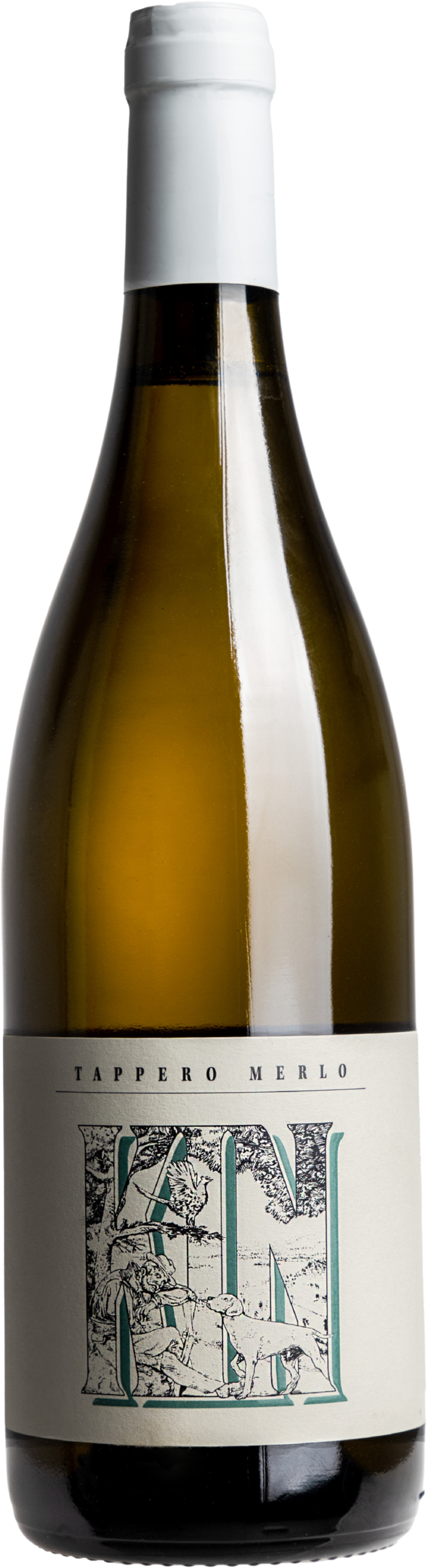
Erbaluce di Caluso 'Kin' Tappero Merlo 2021The Erbaluce di Caluso “Kin” by Tappero Merlo is a tribute to Domenico Tappero Merlo, nicknamed Kin and grandfather of the current owner of the winery. It is a label that aims to represent the historical memory of the family through a great territorial wine, capable of summarizing the best characteristics of the Canavese lands. It is produced with pure Erbaluce, the typical grape variety of the area, which is enhanced by a long aging process. Thus, a deep, intense, persistent, and very long-lived white is born. A version of Erbaluce of particular value, which highlights the worth of this extraordinary Piedmontese variety, now recognized as one of the most interesting in the region. “Kin” is an Erbaluce di Caluso out of the ordinary. Tappero Merlo has put all his best energies into creating a great white, which could become a true symbol of the winery's style. The Erbaluce vines are cultivated in the best parcels of the estate, at an altitude between 300 and 350 meters above sea level, on very poor soils mainly sandy, with small percentages of silt and clay. At the end of the manual harvest, fermentation begins in stainless steel tanks at controlled temperature, using only indigenous yeasts and continues in 20 hectoliter oak barrels. The wine matures in wood on the fine lees for a period of 18 months, is then racked into concrete tanks for a few months, and finishes aging with at least 2 years in the bottle, in order to reach full expressive maturity. The Erbaluce di Caluso “Kin” from the Tappero Merlo winery is a white that stands out from the Canavese production for its richness, ability to evolve aromatically, and longevity. In the glass, it presents a bright yellow color. The bouquet is particularly enchanting, characterized by fragrant aromas of citrus, medicinal herbs, wild plants, ripe fruit, delicately spicy sensations, and balsamic notes. On the palate, it is full-bodied, with dense and multifaceted aromas, which harmoniously lead to a very persistent finish, crossed by a clear trail of mineral freshness. It is a great white to enjoy with agnolotti di magro, baked pasta with vegetables, poultry, white roasted meats, or with flavorful medium-aged cheeses. roasted white meats or with flavorful medium-aged cheeses. A wine capable of defying time, which offers unique evolutions!29,00 £*Shipping: 48,00 £Secure redirect to the provider
-
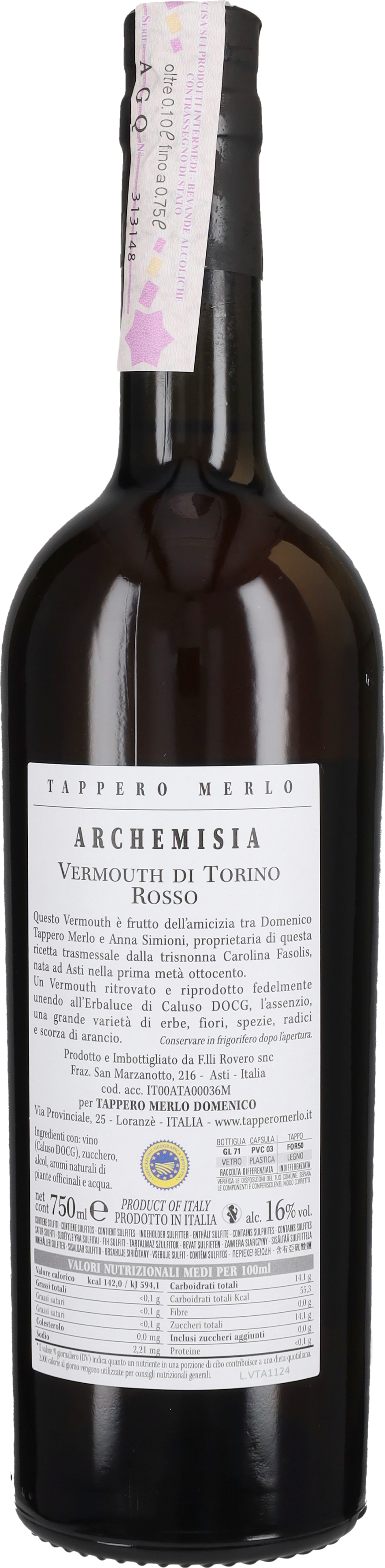
Erbaluce di Caluso Passito 'Bohemien' Tappero Merlo 2020 - 37,5clL’Erbaluce di Caluso “Bohemien” di Tappero Merlo è la versione Passito del duttile vitigno autoctono piemontese. È un’etichetta che si ricollega alla storia più antica del territorio, quando quasi tutte le famiglie del Canavese producevano in modo artigianale una piccola quantità di vino Passito da consumare in occasione di ricorrenze particolari o feste comandate. Era il vino più prezioso, fatto con le uve migliori, più mature e dolci, che venivano vinificate una volta appassite nei fruttai. L’antica tradizione ci ha consegnato un piccolo gioiello. Grazie alle caratteristiche del vitigno, il Passito propone un ampio spetto di dolcezze aromatiche, ben bilanciato dalla freschezza, che ne rende il sorso particolarmente equilibrato. “Bohemien” è un Erbaluce di Caluso Passito prodotto in un’edizione limitata dalla cantina Tappero Merlo. La sua etichetta è un omaggio a Giuseppe Giacosa, librettista di Giacomo Puccini e nativo di Colleretto Parella, grande amante dei vini passiti del territorio. Le vigne si trovano sulle dolci colline moreniche, a un’altitudine di circa 300-350 metri sul livello dl mare, su terreni prevalentemente sabbiosi. Le uve provengono da una selezione dei grappoli più sani e spargoli, vendemmiati a mano con una decina di giorni di anticipo per preservare la freschezza. I grappoli sono messi ad appassire su appositi graticci in solai ben ventilati fino a metà marzo, in modo che gli acini si disidratino completamente e siano attaccati dalla Botrytis Cinerea, che contribuisce a rendere più complessi ed eleganti gli aromi. Gli acini sono quindi pressati e il denso mosto zuccherino fermenta in botti di rovere. Il vino matura per almeno 3 anni in legno e si affina per 7 anni in bottiglia prima della messa in vendita. Il Passito “Bohemien” è un Erbaluce di Caluso di Tappero Merlo che rappresenta una vera specialità, rara e di eccellente livello qualitativo. È sicuramente tra i vini dolci più interessanti della nostra penisola. Nel calice si presenta di color ambrato con riflessi luminosi. Il quadro olfattivo è elegante e complesso, con profumi di fichi secchi, datteri, albicocca disidratata, scorza di arancia candita, uva sultanina, dolcezza mielata, cenni di zafferano e delicate spezie, radice di liquirizia e erbe officinali. Il sorso è avvolgente, caldo e denso d’aromi complessi e persistenti, che anticipano un finale armonioso, fresco e sapido. Perfetto con della pasticceria secca è da provare con formaggi erborinati o stagionati.43,00 £*Shipping: 48,00 £Secure redirect to the provider
-
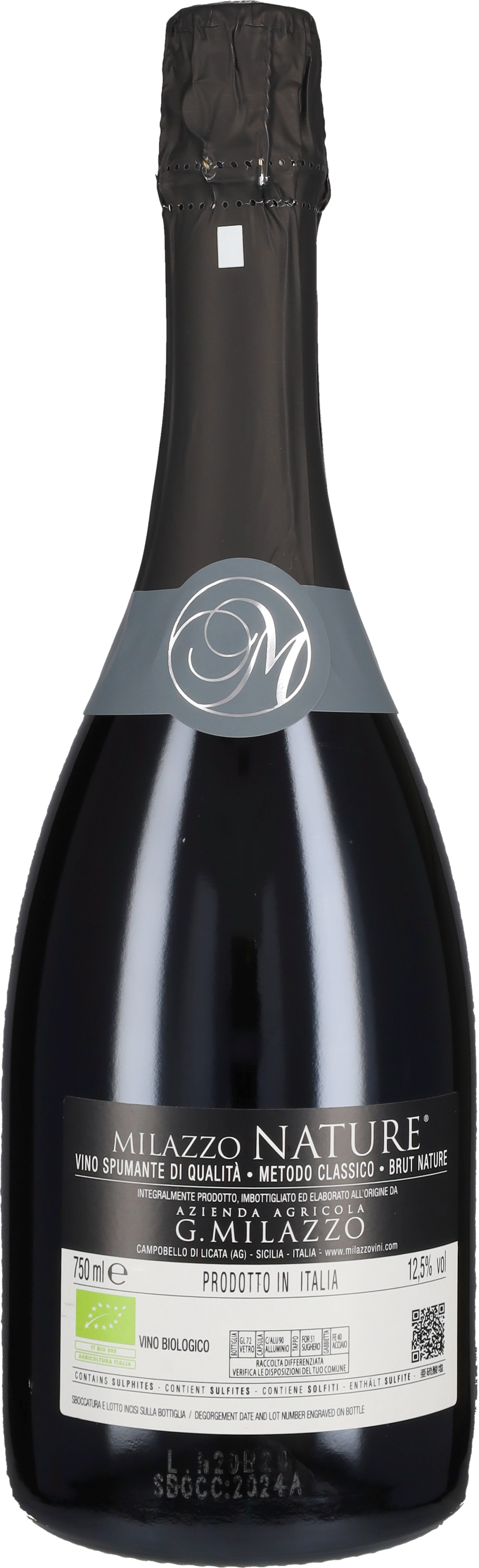
Spumante Metodo Classico Nature MilazzoThe Metodo Classico Nature from the Milazzo winery is a Sicilian sparkling wine, originating from the Licata area. It is a blanc de blancs made solely from pure Chardonnay grapes, which, thanks to perfect ripening, impart freshness and aromatic intensity to the wine. The interior of Licata consists of a hilly area particularly suited for the cultivation of white grape varieties, which, if harvested at the right time, can also provide excellent sparkling bases. It is an elegant classic method, which, thanks to the absence of dosage, maintains its vertical and taut profile, perfect for those who love the expressive purity of great Chardonnays. The Spumante Nature from Milazzo is a Metodo Classico that originates from a reality still with a familial face, producing wine for five generations, in a territory particularly suited for enhancing indigenous grape varieties, but which has also proven suitable for the most famous international varieties. The excellent results of Chardonnay have convinced them to pursue the path of Metodo Classico. Today, the estate extends over 75 hectares with vineyards cultivated at about 400 meters above sea level, in a sunny hilly area, which presents a great heterogeneity of soils, so as to dedicate to each grape variety the plots most suitable for its needs. The Spumante is the result of a perfect synthesis between suited lands, a constantly ventilated Mediterranean climate, and a great grape variety like Chardonnay. It is thanks to the perfect combination of these components that a Metodo Classico among the most interesting in Sicily is born. The Nature from the Milazzo winery is a Metodo Classico made with a selection of the best grapes. After a soft pressing, the must is fermented in steel. Before the blending and the creation of the final cuvée, the base wines mature for a few months in steel. The second fermentation takes place in the bottle according to the Metodo Classico, with aging on the lees for 48 months. It presents itself with a bright light yellow color, crossed by a fine and continuous perlage. On the nose, it opens with delicate floral notes, scents of orange blossom, aromas of Mediterranean scrub herbs, yellow fruit, hints of bread crust and mineral puffs of flint. The sip is taut and smooth, with a rich and harmonious fruit. The finish is of lively freshness, with a savory closure.39,00 £*Shipping: 48,00 £Secure redirect to the provider

-
Can the arts and crafts course still be completed?
Yes, the arts and crafts course can still be completed as long as the necessary materials and instructions are provided. Participants can follow along with video tutorials, written instructions, or attend virtual classes to learn and create art projects. Online platforms and resources make it possible for individuals to continue their artistic pursuits from the comfort of their own homes. With dedication and practice, participants can successfully complete the arts and crafts course and develop their skills. **
-
Should the religious heritage and Christian tradition of Europe be more clearly included in the European constitutional treaty?
The inclusion of religious heritage and Christian tradition in the European constitutional treaty is a complex and sensitive issue. While Europe has a rich history of Christian influence, it is also a diverse and secular society. Therefore, any inclusion of religious heritage should be done in a way that respects the diversity of beliefs and values within Europe. It is important to strike a balance that acknowledges the historical significance of Christianity while also upholding the principles of secularism and religious freedom. Ultimately, the decision should be made through careful consideration and dialogue among the diverse communities and stakeholders in Europe. **
-
What can you make in the first arts and crafts class with 5th and 6th grade students?
In the first arts and crafts class with 5th and 6th grade students, you can make simple and fun projects such as friendship bracelets, paper mache masks, or painted rock art. These projects are engaging and allow students to express their creativity while also learning basic crafting skills. Additionally, these projects can be completed within the class period and are suitable for students of varying skill levels. **
-
Is East Asian cuisine more varied than European cuisine?
Both East Asian and European cuisines are incredibly varied, with each region offering a wide range of flavors, ingredients, and cooking techniques. East Asian cuisine encompasses the diverse culinary traditions of countries such as China, Japan, Korea, and Thailand, each with its own unique dishes and flavors. Similarly, European cuisine is incredibly varied, with distinct culinary traditions in countries like Italy, France, Spain, and Greece. Ultimately, the variety of both East Asian and European cuisines is a result of the rich diversity of ingredients, cooking methods, and cultural influences found within each region. **
On which Jewish festivals are the Christian festivals based?
The Christian festivals of Easter and Pentecost are based on the Jewish festivals of Passover and Shavuot, respectively. Easter is linked to the Jewish Passover, as it commemorates the crucifixion and resurrection of Jesus, which occurred during the time of Passover. Pentecost, on the other hand, is based on the Jewish festival of Shavuot, which celebrates the giving of the Torah at Mount Sinai. Christians believe that the Holy Spirit descended upon the apostles on the day of Pentecost, which is why the Christian festival is based on this Jewish holiday. **
Are traditional crafts disappearing?
Traditional crafts are indeed at risk of disappearing due to various factors such as modernization, globalization, and changing consumer preferences. Many younger generations are not pursuing these crafts as careers, leading to a decline in the number of skilled artisans. Additionally, mass production and cheaper alternatives are making it difficult for traditional crafts to compete in the market. Efforts are being made to preserve and promote these crafts through initiatives like cultural heritage programs and artisan cooperatives. **
Top-Angebote
Products related to Tappero-Merlo-Spumante-Metodo:
-
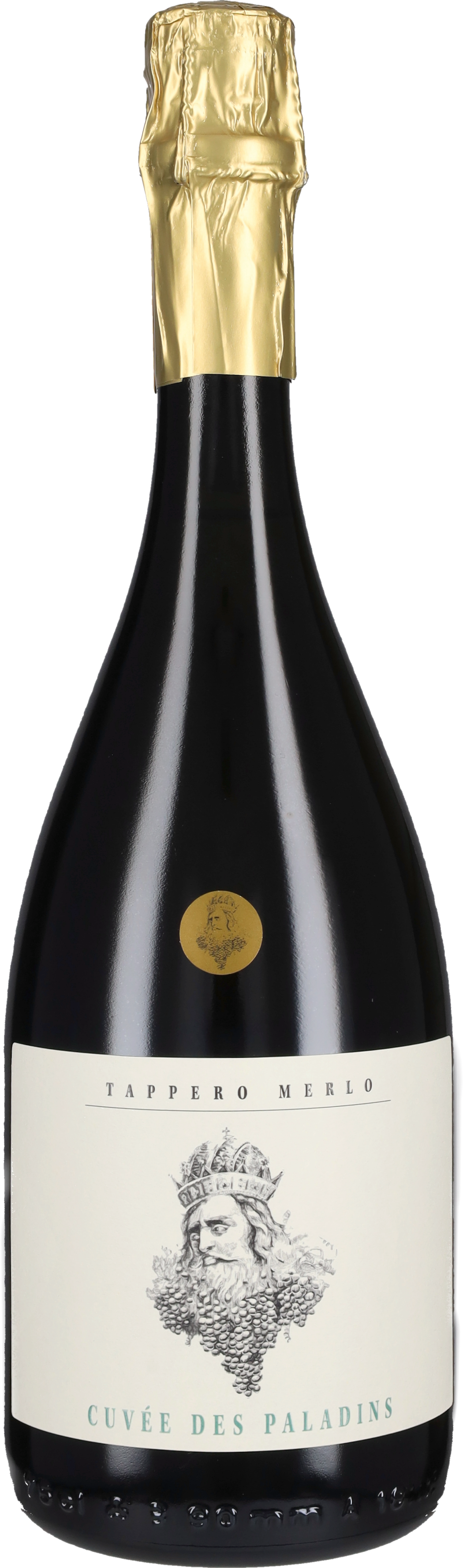
Tappero Merlo Spumante Metodo Classico Erbaluce di Caluso 'Cuvée des Paladins' TappeLo Spumante Erbaluce di Caluso "Cuvée des Paladins" della cantina Tappero Merlo è un Metodo Classico di grande finezza ed eleganza, realizzato con l’omonimo vitigno piemontese a bacca bianca, vero simbolo della viticoltura dell’area del Canavese. L’etichetta richiama nel nome l’antica vocazione del territorio, che già verso la fine del ‘700 era conosciuto per i grandi vini. Si tratta di una cuvée di notevole personalità, capace di coniugare una delicata e complessa sfaccettatura aromatica, con sapidità e freschezza. È una bottiglia dalla vocazione gastronomica, particolarmente adatta a essere degustata a tavola con primi piatti di mare o con del pesce dal sapore delicato. Il Metodo Classico Erbaluce di Caluso "Cuvée des Paladins" è uno Spumante che nasce dal desiderio di esaltare le caratteristiche di un vitigno molto duttile e di eccellenti qualità aromatiche. La cantina Tappero Merlo, infatti, ha concentrato la sua attività soprattutto sulla valorizzazione dell’Erbaluce. La tenuta si estende su una ventina di ettari, ripiantati nel 2001 e gestiti con interfilare inerbito e pratica del sovescio. I vigneti sono coltivati sui classici terreni di antica origine morenica della zona collinare del Canavese, composti da sabbia, limo e argilla, generati dai depositi lasciati a valle dal ritiro di un ghiacciaio alpino. Al termine della vendemmia, i grappoli sono pressati in modo delicato e il mosto fiore è avviato alla fermentazione, in parte in serbatoi d’acciaio inox e in parte in vecchie barrique. Dopo qualche mese di affinamento, viene creato l’assemblaggio e si procede alla rifermentazione in bottiglia secondo il Metodo Classico, con una sosta sui lieviti di almeno 60 mesi. L’Erbaluce di Caluso "Cuvée des Paladins” è un Metodo Classico di grande finezza, che mette in luce la notevole predisposizione del vitigno Erbaluce alla spumantizzazione. Alla vista si presenta di colore giallo paglierino brillante con leggeri e luminosi riflessi dorati. Il perlage è fine e molto persistente. All’olfatto seduce con profumi di erbe officinali, cenni floreali, aromi agrumati e di frutta gialla, sentori di crosta di pane, miele, vaniglia, note di nocciola tostata e frutta secca. Al palato è teso è limpido, con aromi complessi e di buona persistenza gustativa, che accompagnano verso un finale armonioso, caratterizzato da una chiusura fresca e sapida.33,00 £*Shipping: 48,00 £Secure redirect to the provider
-
'Acini Perduti' Tappero Merlo“Acini Perduti” della cantina piemontese Tappero Merlo è un bianco tradizionale del territorio, che può vantare origini antichissime. Testimonianze storiche che risalgono al 1600, parlano già di un vino bianco particolarmente buono, realizzato con vitigni locali. A distanza di secoli, la ricetta è rimasta invariata è oggi viene riproposta in una versione particolarmente interessante. La ricchezza aromatica e la morbidezza fruttata delle uve aromatiche si sposano in modo perfettamente complementare con l’eleganza e la freschezza sapida di altre varietà, creando un perfetto connubio gustativo. Il bianco “Acini Perduti” di Tappero Merlo è l’espressione pura di uve di eccellente qualità, coltivate secondo le regole dell’agricoltura biologica e i principi della biodinamica, con l’intento di produrre vini sani e genuini. Le uve provengono da vigne giovani, coltivate in zona collinare, a un’altitudine di circa 300 metri sul livello del mare, su terreni d’origine morenica, caratterizzati da una matrice prevalentemente sabbiosa. La vendemmia si svolge verso la fine di settembre, con raccolta manuale dei migliori grappoli. La fermentazione è avviata direttamente in tonneau di rovere, con utilizzo di soli lieviti indigeni. Dopo l'affinamento, completa il lungo periodo di maturazione con 6 mesi in bottiglia, prima della messa in vendita. Il vino “Acini Perduti” è un bianco di buona struttura, particolarmente adatto ad accompagnare risotti con verdure, secondi piatti di mare e in particolare del pesce al forno saporito. È assolutamente da provare con un tagliere di formaggi freschi o semi-stagionati. Nel calice si presenta di colore giallo chiaro con riflessi luminosi. Il quadro olfattivo è ricco e ampio, con profumi di erbe officinali, scorza d’agrumi, frutta matura a polpa bianca, sfumature floreali di ginestra e cenni delicatamente speziati. Il sorso è armonioso e ricco, con una buona complessità e persistenza aromatica, che chiude su note fresche e piacevolmente sapide.22,00 £*Shipping: 48,00 £Secure redirect to the provider
-
Erbaluce di Caluso 'Kin' Tappero Merlo 2021The Erbaluce di Caluso “Kin” by Tappero Merlo is a tribute to Domenico Tappero Merlo, nicknamed Kin and grandfather of the current owner of the winery. It is a label that aims to represent the historical memory of the family through a great territorial wine, capable of summarizing the best characteristics of the Canavese lands. It is produced with pure Erbaluce, the typical grape variety of the area, which is enhanced by a long aging process. Thus, a deep, intense, persistent, and very long-lived white is born. A version of Erbaluce of particular value, which highlights the worth of this extraordinary Piedmontese variety, now recognized as one of the most interesting in the region. “Kin” is an Erbaluce di Caluso out of the ordinary. Tappero Merlo has put all his best energies into creating a great white, which could become a true symbol of the winery's style. The Erbaluce vines are cultivated in the best parcels of the estate, at an altitude between 300 and 350 meters above sea level, on very poor soils mainly sandy, with small percentages of silt and clay. At the end of the manual harvest, fermentation begins in stainless steel tanks at controlled temperature, using only indigenous yeasts and continues in 20 hectoliter oak barrels. The wine matures in wood on the fine lees for a period of 18 months, is then racked into concrete tanks for a few months, and finishes aging with at least 2 years in the bottle, in order to reach full expressive maturity. The Erbaluce di Caluso “Kin” from the Tappero Merlo winery is a white that stands out from the Canavese production for its richness, ability to evolve aromatically, and longevity. In the glass, it presents a bright yellow color. The bouquet is particularly enchanting, characterized by fragrant aromas of citrus, medicinal herbs, wild plants, ripe fruit, delicately spicy sensations, and balsamic notes. On the palate, it is full-bodied, with dense and multifaceted aromas, which harmoniously lead to a very persistent finish, crossed by a clear trail of mineral freshness. It is a great white to enjoy with agnolotti di magro, baked pasta with vegetables, poultry, white roasted meats, or with flavorful medium-aged cheeses. roasted white meats or with flavorful medium-aged cheeses. A wine capable of defying time, which offers unique evolutions!29,00 £*Shipping: 48,00 £Secure redirect to the provider
-
From which years are Asti Spumante No. 22725 and 51831?
Asti Spumante No. 22725 was produced between 1960 and 1969, while Asti Spumante No. 51831 was produced between 1970 and 1979. These two Asti Spumante vintages are from different decades, with No. 22725 being from the 1960s and No. 51831 from the 1970s. **
-
From which years are Asti Spumante No. 22725 and 51831 from?
Asti Spumante No. 22725 is from the years 2010-2019, while Asti Spumante No. 51831 is from the years 2020-2029. **
-
Can the arts and crafts course still be completed?
Yes, the arts and crafts course can still be completed as long as the necessary materials and instructions are provided. Participants can follow along with video tutorials, written instructions, or attend virtual classes to learn and create art projects. Online platforms and resources make it possible for individuals to continue their artistic pursuits from the comfort of their own homes. With dedication and practice, participants can successfully complete the arts and crafts course and develop their skills. **
-
Should the religious heritage and Christian tradition of Europe be more clearly included in the European constitutional treaty?
The inclusion of religious heritage and Christian tradition in the European constitutional treaty is a complex and sensitive issue. While Europe has a rich history of Christian influence, it is also a diverse and secular society. Therefore, any inclusion of religious heritage should be done in a way that respects the diversity of beliefs and values within Europe. It is important to strike a balance that acknowledges the historical significance of Christianity while also upholding the principles of secularism and religious freedom. Ultimately, the decision should be made through careful consideration and dialogue among the diverse communities and stakeholders in Europe. **
Similar search terms for Tappero-Merlo-Spumante-Metodo
-
Erbaluce di Caluso Passito 'Bohemien' Tappero Merlo 2020 - 37,5clL’Erbaluce di Caluso “Bohemien” di Tappero Merlo è la versione Passito del duttile vitigno autoctono piemontese. È un’etichetta che si ricollega alla storia più antica del territorio, quando quasi tutte le famiglie del Canavese producevano in modo artigianale una piccola quantità di vino Passito da consumare in occasione di ricorrenze particolari o feste comandate. Era il vino più prezioso, fatto con le uve migliori, più mature e dolci, che venivano vinificate una volta appassite nei fruttai. L’antica tradizione ci ha consegnato un piccolo gioiello. Grazie alle caratteristiche del vitigno, il Passito propone un ampio spetto di dolcezze aromatiche, ben bilanciato dalla freschezza, che ne rende il sorso particolarmente equilibrato. “Bohemien” è un Erbaluce di Caluso Passito prodotto in un’edizione limitata dalla cantina Tappero Merlo. La sua etichetta è un omaggio a Giuseppe Giacosa, librettista di Giacomo Puccini e nativo di Colleretto Parella, grande amante dei vini passiti del territorio. Le vigne si trovano sulle dolci colline moreniche, a un’altitudine di circa 300-350 metri sul livello dl mare, su terreni prevalentemente sabbiosi. Le uve provengono da una selezione dei grappoli più sani e spargoli, vendemmiati a mano con una decina di giorni di anticipo per preservare la freschezza. I grappoli sono messi ad appassire su appositi graticci in solai ben ventilati fino a metà marzo, in modo che gli acini si disidratino completamente e siano attaccati dalla Botrytis Cinerea, che contribuisce a rendere più complessi ed eleganti gli aromi. Gli acini sono quindi pressati e il denso mosto zuccherino fermenta in botti di rovere. Il vino matura per almeno 3 anni in legno e si affina per 7 anni in bottiglia prima della messa in vendita. Il Passito “Bohemien” è un Erbaluce di Caluso di Tappero Merlo che rappresenta una vera specialità, rara e di eccellente livello qualitativo. È sicuramente tra i vini dolci più interessanti della nostra penisola. Nel calice si presenta di color ambrato con riflessi luminosi. Il quadro olfattivo è elegante e complesso, con profumi di fichi secchi, datteri, albicocca disidratata, scorza di arancia candita, uva sultanina, dolcezza mielata, cenni di zafferano e delicate spezie, radice di liquirizia e erbe officinali. Il sorso è avvolgente, caldo e denso d’aromi complessi e persistenti, che anticipano un finale armonioso, fresco e sapido. Perfetto con della pasticceria secca è da provare con formaggi erborinati o stagionati.43,00 £*Shipping: 48,00 £Secure redirect to the provider
-
Spumante Metodo Classico Nature MilazzoThe Metodo Classico Nature from the Milazzo winery is a Sicilian sparkling wine, originating from the Licata area. It is a blanc de blancs made solely from pure Chardonnay grapes, which, thanks to perfect ripening, impart freshness and aromatic intensity to the wine. The interior of Licata consists of a hilly area particularly suited for the cultivation of white grape varieties, which, if harvested at the right time, can also provide excellent sparkling bases. It is an elegant classic method, which, thanks to the absence of dosage, maintains its vertical and taut profile, perfect for those who love the expressive purity of great Chardonnays. The Spumante Nature from Milazzo is a Metodo Classico that originates from a reality still with a familial face, producing wine for five generations, in a territory particularly suited for enhancing indigenous grape varieties, but which has also proven suitable for the most famous international varieties. The excellent results of Chardonnay have convinced them to pursue the path of Metodo Classico. Today, the estate extends over 75 hectares with vineyards cultivated at about 400 meters above sea level, in a sunny hilly area, which presents a great heterogeneity of soils, so as to dedicate to each grape variety the plots most suitable for its needs. The Spumante is the result of a perfect synthesis between suited lands, a constantly ventilated Mediterranean climate, and a great grape variety like Chardonnay. It is thanks to the perfect combination of these components that a Metodo Classico among the most interesting in Sicily is born. The Nature from the Milazzo winery is a Metodo Classico made with a selection of the best grapes. After a soft pressing, the must is fermented in steel. Before the blending and the creation of the final cuvée, the base wines mature for a few months in steel. The second fermentation takes place in the bottle according to the Metodo Classico, with aging on the lees for 48 months. It presents itself with a bright light yellow color, crossed by a fine and continuous perlage. On the nose, it opens with delicate floral notes, scents of orange blossom, aromas of Mediterranean scrub herbs, yellow fruit, hints of bread crust and mineral puffs of flint. The sip is taut and smooth, with a rich and harmonious fruit. The finish is of lively freshness, with a savory closure.39,00 £*Shipping: 48,00 £Secure redirect to the provider
-
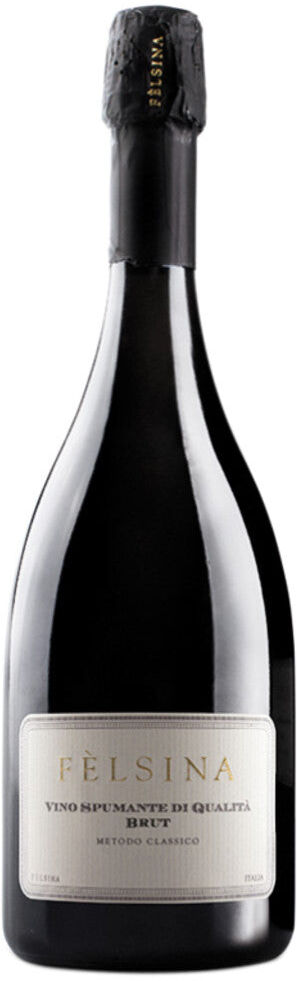
Spumante Metodo Classico Brut FelsinaThe Brut Metodo Classico from the Felsina winery is an elegant, fresh, and delicate sparkling wine produced in Castelnuovo Berardenga, in that part of Chianti Classico in the province of Siena, Tuscany, where the landscape opens up towards the horizon, the Monte Amiata, and the view becomes wonderful. It comes to life from a blend of grapes that sees Sangiovese, which appears predominantly, joining Pinot Nero and Chardonnay in an excellent and very well-balanced manner. The vineyards, located on hills at over 300 meters above sea level, are cultivated according to organic farming methods, also using biodynamic preparations, on mixed soils rich in quartz sandstones, alberese, and silt. The winery, owner of over 94 hectares of vineyards, was purchased in 1966 by Domenico Poggiali and is now managed by Giuseppe Mazzolin, a professor of Latin and Greek originally from Venice, who moved to Tuscany for love and continued the founder's work, bringing Felsina to achieve significant international recognition. The Brut Metodo Classico sparkling wine from Felsina is a non-vintage sparkling wine made from grapes harvested by hand and carefully selected at the moment of their perfect ripeness. The bunches are brought to the winery to be pressed directly and subjected to static cold decantation of the must for several hours. This is followed by alcoholic fermentation, which takes place using exclusively indigenous yeasts, in temperature-controlled stainless steel containers for several weeks. The base wine obtained is then blended with reserve wine and liqueur de tirage to trigger the second fermentation in the bottle, which lasts for about 20-22 months. After the aging period on the lees, disgorgement is carried out, and liqueur d’expedition is added, with dosage as per the brut category, after which the sparkling wine ages for an additional 3 months in the bottle before being released for sale. The Metodo Classico Spumante Brut from Felsina presents itself with a bright straw-yellow color, with slight greenish reflections and a fine and persistent perlage. On the nose, intense aromas of crunchy fruit and yellow fruit appear, including golden apple and peach, floral notes of white flowers, hints of pastry and bread crust. On the palate, it is clear, fresh, and vertical, characterized by good sapidity and a long finish with aromatic returns reminiscent of exotic fruit. This sparkling wine from the Felsina winery is well-made, young, and balanced, to be enjoyed without waiting too long.18,00 £*Shipping: 48,00 £Secure redirect to the provider
-
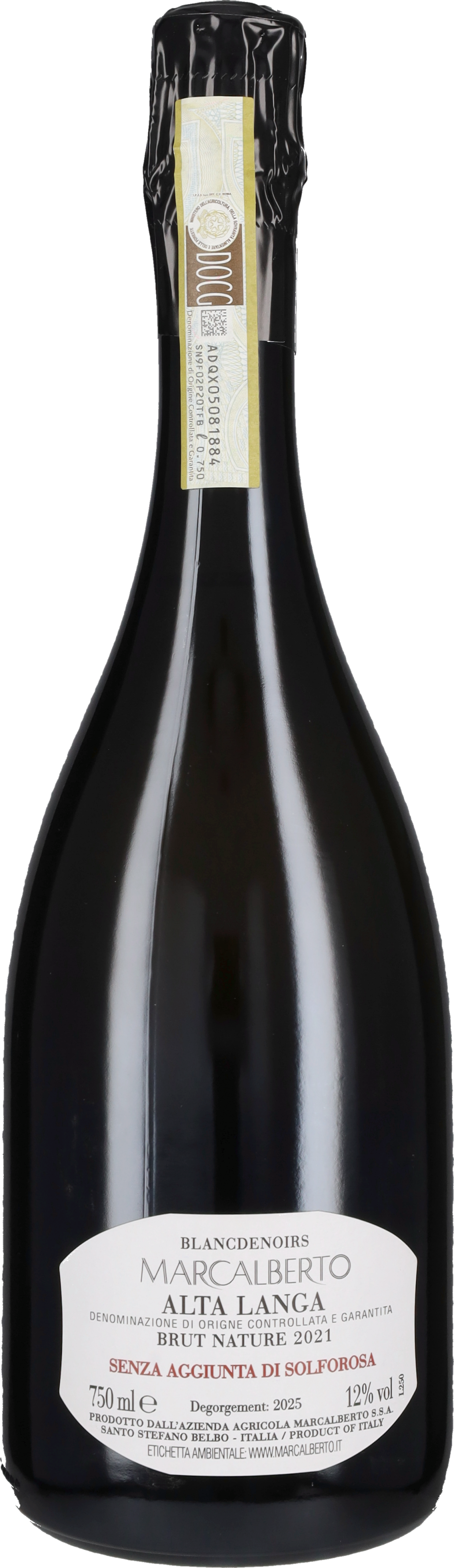
Spumante Metodo Classico Nature MarcalbertoThe Spumante Metodo Classico Nature by Marcalberto is an excellence crafted with care and artisanal attention by a winery located in Piemonte, based in Santo Stefano Belbo. It is a label born from a passion for great Champagnes and the desire to enhance the best Pinot Nero grapes from the estate, aiming to preserve their maximum expressive purity. Soft pressing, careful processing of the musts, and the choice not to use sulfur allow the wine to maintain an integrity and aromatic richness that express themselves through a balance and harmony so perfect that no dosage is required. The Metodo Classico Nature by Marcalberto is a sparkling wine that originates from a small family-run reality. The Pinot Nero vineyards are located in beautiful hilly, sunny, and ventilated positions, at an altitude between 300 and 500 meters above sea level, in the municipalities of Santo Stefano Belbo, Calosso, Cossano Belbo, and Loazzolo. The harvest is carried out manually at the beginning of September, and the best bunches, healthier and mature, selected directly in the vineyard, are pressed using a traditional marmonnier press, generally used in Champagne by small artisanal houses that focus solely on quality. The pressing, in fact, is particularly soft and allows for the production of clear, bright musts of extraordinary purity. The base wines ferment in French oak barrels and remain in aging on the fine lees in the same wood until the moment of blending. The second fermentation takes place in the bottle according to the Metodo Classico, with a stay on the lees of about 30 months. The Spumante Metodo Classico Nature Marcalberto is a bottle for purists, dedicated to those who love to savor a great Blanc de Noirs in its most authentic form. It presents in the glass a beautiful bright light yellow with brilliant golden reflections and a fine, delicate, and very persistent perlage. The bouquet is elegant, intense, with aromas reminiscent of lime zest, bitter orange, fragrances of ripe citrus, aromas of white-fleshed fruit, apple, peach, hints of bread crust and toasted bread. On the palate, it has a good structure, with a long and deep sip, savory and austere, characterized by pleasant fruity notes, leading to a decisive, dry finish with remarkable freshness.41,00 £*Shipping: 48,00 £Secure redirect to the provider
-
What can you make in the first arts and crafts class with 5th and 6th grade students?
In the first arts and crafts class with 5th and 6th grade students, you can make simple and fun projects such as friendship bracelets, paper mache masks, or painted rock art. These projects are engaging and allow students to express their creativity while also learning basic crafting skills. Additionally, these projects can be completed within the class period and are suitable for students of varying skill levels. **
-
Is East Asian cuisine more varied than European cuisine?
Both East Asian and European cuisines are incredibly varied, with each region offering a wide range of flavors, ingredients, and cooking techniques. East Asian cuisine encompasses the diverse culinary traditions of countries such as China, Japan, Korea, and Thailand, each with its own unique dishes and flavors. Similarly, European cuisine is incredibly varied, with distinct culinary traditions in countries like Italy, France, Spain, and Greece. Ultimately, the variety of both East Asian and European cuisines is a result of the rich diversity of ingredients, cooking methods, and cultural influences found within each region. **
-
On which Jewish festivals are the Christian festivals based?
The Christian festivals of Easter and Pentecost are based on the Jewish festivals of Passover and Shavuot, respectively. Easter is linked to the Jewish Passover, as it commemorates the crucifixion and resurrection of Jesus, which occurred during the time of Passover. Pentecost, on the other hand, is based on the Jewish festival of Shavuot, which celebrates the giving of the Torah at Mount Sinai. Christians believe that the Holy Spirit descended upon the apostles on the day of Pentecost, which is why the Christian festival is based on this Jewish holiday. **
-
Are traditional crafts disappearing?
Traditional crafts are indeed at risk of disappearing due to various factors such as modernization, globalization, and changing consumer preferences. Many younger generations are not pursuing these crafts as careers, leading to a decline in the number of skilled artisans. Additionally, mass production and cheaper alternatives are making it difficult for traditional crafts to compete in the market. Efforts are being made to preserve and promote these crafts through initiatives like cultural heritage programs and artisan cooperatives. **
* All prices are inclusive of VAT and, if applicable, plus shipping costs. The offer information is based on the details provided by the respective shop and is updated through automated processes. Real-time updates do not occur, so deviations can occur in individual cases. ** Note: Parts of this content were created by AI.