Buy roadstoculture.eu ?
We are moving the project
roadstoculture.eu .
Are you interested in purchasing the domain
roadstoculture.eu ?
domain@kv-gmbh.de · 0541-91531010
Buy roadstoculture.eu ?
How do you calculate the following telescoping sum?
To calculate a telescoping sum, you first need to express the summands as a partial fraction decomposition. Then, you simplify the sum by pairing up terms that cancel each other out when added together. Finally, you evaluate the remaining terms to find the sum of the series. This method allows you to simplify the sum and find a closed-form expression for the sum. **
How do I calculate the limit of this telescoping sum?
To calculate the limit of a telescoping sum, you can first find the general term of the sum and then take the limit as the number of terms approaches infinity. The general term of a telescoping sum can often be found by expressing each term as a difference of two terms. Once you have the general term, you can then take the limit as the number of terms approaches infinity to find the value of the sum. This process allows you to find the limit of the telescoping sum without having to explicitly calculate each term. **


Similar search terms for Telescoping
Top-Angebote
Products related to Telescoping:
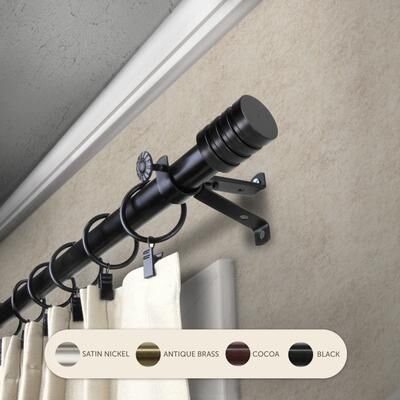
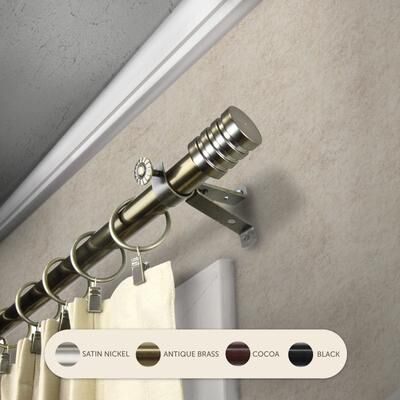
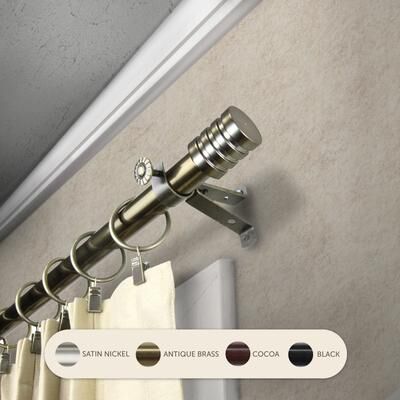

-
How do I determine the limit of this telescoping sum?
To determine the limit of a telescoping sum, you can first write out the general form of the sum and then try to simplify it by canceling out terms. This will often result in a simpler expression that can help you find the limit. You can also try to express the sum as a difference of two series and then find the limits of each series separately. Finally, you can use the properties of limits to find the limit of the telescoping sum. **
-
'How do I calculate the limit of this telescoping series?'
To calculate the limit of a telescoping series, you can first express the series as a partial sum and then take the limit as the number of terms approaches infinity. For example, if you have a series like 1 - 1/2 + 1/2 - 1/3 + 1/3 - 1/4 + ..., you can group the terms and simplify to find a pattern. In this case, you'll notice that most terms cancel out, leaving you with just 1 as the limit of the series. **
-
What is the representation of the partial sums Sn as a telescoping sum?
The representation of the partial sums Sn as a telescoping sum is a sum in which most of the terms cancel each other out, leaving only a few terms that do not cancel. This allows for a simpler expression of the sum, making it easier to compute. In the case of partial sums Sn, the telescoping sum representation allows us to express Sn as the difference between two consecutive terms in the sequence, which simplifies the calculation of the sum. **
-
Can the arts and crafts course still be completed?
Yes, the arts and crafts course can still be completed as long as the necessary materials and instructions are provided. Participants can follow along with video tutorials, written instructions, or attend virtual classes to learn and create art projects. Online platforms and resources make it possible for individuals to continue their artistic pursuits from the comfort of their own homes. With dedication and practice, participants can successfully complete the arts and crafts course and develop their skills. **


Should the religious heritage and Christian tradition of Europe be more clearly included in the European constitutional treaty?
The inclusion of religious heritage and Christian tradition in the European constitutional treaty is a complex and sensitive issue. While Europe has a rich history of Christian influence, it is also a diverse and secular society. Therefore, any inclusion of religious heritage should be done in a way that respects the diversity of beliefs and values within Europe. It is important to strike a balance that acknowledges the historical significance of Christianity while also upholding the principles of secularism and religious freedom. Ultimately, the decision should be made through careful consideration and dialogue among the diverse communities and stakeholders in Europe. **
What can you make in the first arts and crafts class with 5th and 6th grade students?
In the first arts and crafts class with 5th and 6th grade students, you can make simple and fun projects such as friendship bracelets, paper mache masks, or painted rock art. These projects are engaging and allow students to express their creativity while also learning basic crafting skills. Additionally, these projects can be completed within the class period and are suitable for students of varying skill levels. **
Top-Angebote
Products related to Telescoping:
-
Market Central Telescoping LED Inspection Mirror For Mechanics Telescoping LED Inspection Mirror For MechanicsExperience the confidence of seeing what others can't. This LED inspection mirror helps you inspect tight, dark, and hardtoreach spaces without taking parts apart, making every repair faster and easier. Designed for mechanics, DIY enthusiasts, and...34,97 $*Shipping: 0,00 $Secure redirect to the provider
-
How do you calculate the following telescoping sum?
To calculate a telescoping sum, you first need to express the summands as a partial fraction decomposition. Then, you simplify the sum by pairing up terms that cancel each other out when added together. Finally, you evaluate the remaining terms to find the sum of the series. This method allows you to simplify the sum and find a closed-form expression for the sum. **
-
How do I calculate the limit of this telescoping sum?
To calculate the limit of a telescoping sum, you can first find the general term of the sum and then take the limit as the number of terms approaches infinity. The general term of a telescoping sum can often be found by expressing each term as a difference of two terms. Once you have the general term, you can then take the limit as the number of terms approaches infinity to find the value of the sum. This process allows you to find the limit of the telescoping sum without having to explicitly calculate each term. **
-
How do I determine the limit of this telescoping sum?
To determine the limit of a telescoping sum, you can first write out the general form of the sum and then try to simplify it by canceling out terms. This will often result in a simpler expression that can help you find the limit. You can also try to express the sum as a difference of two series and then find the limits of each series separately. Finally, you can use the properties of limits to find the limit of the telescoping sum. **
-
'How do I calculate the limit of this telescoping series?'
To calculate the limit of a telescoping series, you can first express the series as a partial sum and then take the limit as the number of terms approaches infinity. For example, if you have a series like 1 - 1/2 + 1/2 - 1/3 + 1/3 - 1/4 + ..., you can group the terms and simplify to find a pattern. In this case, you'll notice that most terms cancel out, leaving you with just 1 as the limit of the series. **
Similar search terms for Telescoping
-
What is the representation of the partial sums Sn as a telescoping sum?
The representation of the partial sums Sn as a telescoping sum is a sum in which most of the terms cancel each other out, leaving only a few terms that do not cancel. This allows for a simpler expression of the sum, making it easier to compute. In the case of partial sums Sn, the telescoping sum representation allows us to express Sn as the difference between two consecutive terms in the sequence, which simplifies the calculation of the sum. **
-
Can the arts and crafts course still be completed?
Yes, the arts and crafts course can still be completed as long as the necessary materials and instructions are provided. Participants can follow along with video tutorials, written instructions, or attend virtual classes to learn and create art projects. Online platforms and resources make it possible for individuals to continue their artistic pursuits from the comfort of their own homes. With dedication and practice, participants can successfully complete the arts and crafts course and develop their skills. **
-
Should the religious heritage and Christian tradition of Europe be more clearly included in the European constitutional treaty?
The inclusion of religious heritage and Christian tradition in the European constitutional treaty is a complex and sensitive issue. While Europe has a rich history of Christian influence, it is also a diverse and secular society. Therefore, any inclusion of religious heritage should be done in a way that respects the diversity of beliefs and values within Europe. It is important to strike a balance that acknowledges the historical significance of Christianity while also upholding the principles of secularism and religious freedom. Ultimately, the decision should be made through careful consideration and dialogue among the diverse communities and stakeholders in Europe. **
-
What can you make in the first arts and crafts class with 5th and 6th grade students?
In the first arts and crafts class with 5th and 6th grade students, you can make simple and fun projects such as friendship bracelets, paper mache masks, or painted rock art. These projects are engaging and allow students to express their creativity while also learning basic crafting skills. Additionally, these projects can be completed within the class period and are suitable for students of varying skill levels. **
* All prices are inclusive of VAT and, if applicable, plus shipping costs. The offer information is based on the details provided by the respective shop and is updated through automated processes. Real-time updates do not occur, so deviations can occur in individual cases. ** Note: Parts of this content were created by AI.