Buy roadstoculture.eu ?
We are moving the project
roadstoculture.eu .
Are you interested in purchasing the domain
roadstoculture.eu ?
domain@kv-gmbh.de · 0541-91531010
Buy roadstoculture.eu ?
What is the correct form: italienisch tedesci or tedeschi and why?
The correct form is "tedeschi." This is because "tedeschi" is the Italian word for "German" when referring to the German language or people. "Tedeschi" is the plural form of "tedesco," which means "German" in Italian. On the other hand, "italienisch" is the correct form for "Italian" in German. **
Can the arts and crafts course still be completed?
Yes, the arts and crafts course can still be completed as long as the necessary materials and instructions are provided. Participants can follow along with video tutorials, written instructions, or attend virtual classes to learn and create art projects. Online platforms and resources make it possible for individuals to continue their artistic pursuits from the comfort of their own homes. With dedication and practice, participants can successfully complete the arts and crafts course and develop their skills. **

Similar search terms for Valpolicella-Superiore-Maternigo-Tedeschi
Top-Angebote
Products related to Valpolicella-Superiore-Maternigo-Tedeschi:
-
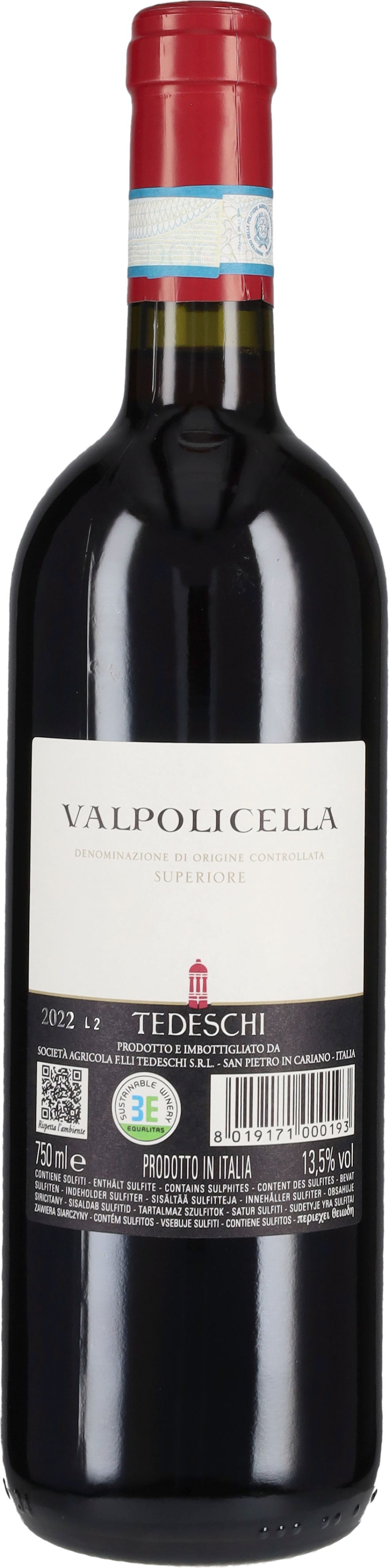
Valpolicella Superiore 'Capitel Nicalò' Tedeschi 2022The Valpolicella Superiore “Capitel Nicalò” is a classic red from Valpolicella, a traditional expression of the indigenous grapes from the Verona area and the splendid hilly territory of this historic Venetian denomination. A medium-bodied wine, elegant and aromatically intense, that presents aromas of ripe red fruit, berries, and delicate spicy notes. Harmonious and balanced, it has a pleasantly soft and fresh sip, making it particularly versatile for food pairings. The “Capitel Nicalò” Valpolicella Superiore comes from the vineyards of the Tedeschi estate, a historic reality of Valpolicella, with lands in the most vocated areas of the territory: San Pietro in Cariano, Fumane, Sant’Ambrogio, Mezzane di Sotto, and Pedemonte. The vineyards are cultivated on ancient morainic soils, with red earth rich in limestone and clay and a planting density of 5500 plants per hectare. After the harvest, the best bunches undergo a short drying process lasting about a month, allowing the grapes to lose about 10% of their weight, concentrating the aromas and sugars. The alcoholic fermentation takes place in steel with a maceration on the skins of about two weeks. The wine rests for 12/18 months in Slavonian oak barrels and concludes the aging period with 6 months in bottle. The wine “Capitel Nicalò” is a Valpolicella Superiore of particular intensity and aromatic richness. The slight drying of the grapes and the long aging in wood make it a wine with a complex and deep profile. In the glass, it presents itself with a ruby color. The bouquet expresses aromas of cherry, ripe red fruit, small berries, hints of vanilla, and spices. On the palate, it has a good structure with a fine tannic texture well integrated into the body and concludes with a fresh and persistent finish.14,00 £*Shipping: 48,00 £Secure redirect to the provider
-
Valpolicella Classico Superiore 'La Fabriseria' Tedeschi 2021The Veneto wine Valpolicella Classico Superiore “La Fabriseria” has a particular story within the range produced by the Tedeschi winery. It was originally conceived as a product in the classic international style, but in recent years, the ownership has decided to completely rethink it, making it one of the champions of the territory of Valpolicella, in perfect coherence with the rest of the production. A wine that has the task of telling the story of the territory, and which presents itself with a delightful aromatic profile, the beginning of a warm and enveloping sip. This “La Fabriseria” by Tedeschi is a Valpolicella Classico Superiore that comes from a blend of red grape varieties typical of the Veneto territory, Corvina, Corvinone, Rondinella, and Oseleta. The plants of these four varieties have an average age of about 16 years, and grow within the vineyard that gives its name to the label, the “La Fabriseria”, located between the municipalities of Sant’Ambrogio and Fumane. The terroir here is characterized by a strong presence of clay and limestone. The bunches, harvested when they are slightly overripe, are only partially destemmed and the must obtained from the subsequent pressing ferments in stainless steel containers. Then follows the aging process, in which the wine rests for 24 months in Slavonian oak barrels, until it is ready to be bottled. The Valpolicella Classico Superiore “La Fabriseria” presents itself to the visual examination with a ruby red color, particularly intense and concentrated. The olfactory spectrum is dominated by rich and complex notes, where the fruit alternates with sensations of sweet and oriental spices. On the palate, it has excellent body, intense, with a warm sip thanks to the important alcohol content and a taste in perfect balance with the aromas already perceived on the nose; the tannins are elegant and well-crafted. A label with which the Tedeschi winery reaffirms its love for the terroir of Valpolicella.27,00 £*Shipping: 48,00 £Secure redirect to the provider
-
Valpolicella Superiore Ripasso 'Capitel San Rocco' Tedeschi 2022The ‘Capitel San Rocco’ Valpolicella Superiore Ripasso is a bottle that stands out for its round and enveloping taste, made by the renowned Veronese estate Tedeschi. The ‘Capitel’ brand was launched by the winery in the early 1970s to identify a cru or a particular selection, taking up the ancient symbol present in the Valpolicella countryside that served to pay homage to a saint, such as San Rocco, to protect the harvest. The logo on this label, first released with the 1976 vintage, depicts the shell, a symbol of San Rocco, which recalls the saint's pilgrimage to Santiago. Tedeschi Valpolicella Ripasso Superiore ‘Capitel San Rocco’ consists of an equivalent blend of Corvina Veronese, Corvinone, and Rondinella, to which 10% of the grape varieties Rossignola, Oseleta, Negrara, and Dindarella is added. The vines, with an average age of about 20 years, are trained in guyot on red soils of clay-limestone origin and of morainic origin. Following the harvest, which takes place between late September and early October, the bunches are subjected to the operations of destemming and crushing, followed by alcoholic fermentation at controlled temperature with 15 days of contact between the must and the skins. A portion of the mass is then placed in maceration for 8-10 days with the pomace of Amarone and Recioto according to the Ripasso technique, undergoing a slow refermentation. After 12-24 months of aging in Slavonian oak barrels, the wine is finally bottled. The Valpolicella Superiore Ripasso ‘Capitel San Rocco’ by Tedeschi is ruby red in color, clear and transparent. On the nose, notes of cherry, raspberry, and red currant are perceived, followed by hints of sweet spices. Structured, warm, and soft on the palate, supported by excellent freshness and smooth tannins.17,00 £*Shipping: 48,00 £Secure redirect to the provider
-
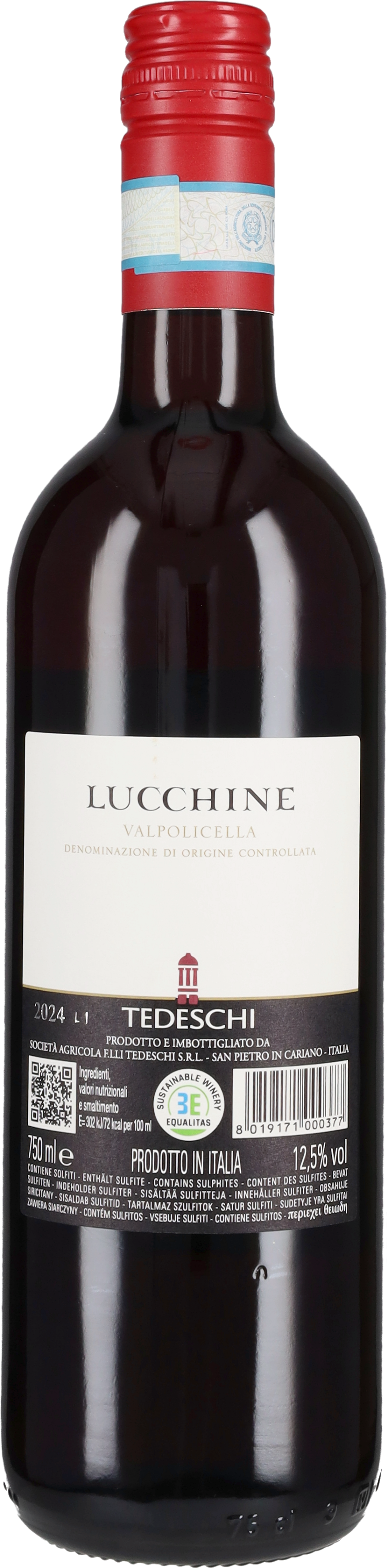
Valpolicella Classico 'Lucchine' Tedeschi 2024This red wine from Veneto "Lucchine" is a Valpolicella Classico signed by Tedeschi, originating from one of the most historic production areas of the entire Valpolicella terroir, that of the hills of Pedemonte. Here, the vines that give rise to this blend with a linear and straightforward sip grow, benefiting from a pleasant freshness on the palate. A label that achieves good scores both in national and foreign guides and that, moreover, also demonstrates an excellent gastronomic versatility at the table. The "Lucchine" Valpolicella Classico is made from a blend of indigenous red grape varieties from the area, including Corvina, Corvinone, Rondinella, Molinara, Rossignola, Negrara, and Dindarella. The vines of these different varieties, which are around 25 years old, grow using the pergoletta trentina system in the Lucchine vineyard, which gives its name to the label, located at the foot of the hills of Pedemonte. The bunches, after harvesting, are destemmed and the berries continue the production process towards pressing. The must obtained ferments in stainless steel containers, where it remains to stabilize for two months, until the Tedeschi team is ready to start the bottling procedures. The Valpolicella Classico "Lucchine" reveals itself to the eye with a typically ruby, bright, and shiny color. The bouquet of aromas that envelops the nose tells of subtle and refined notes, where the fruit alternates with nuances that reveal a more spiced soul at the finish. On the palate, it has a light body, characterized by a sip marked by a pleasant freshness and a fruity taste. A bottle signed by the Tedeschi winery, ideal for everyday consumption, considering the interesting relationship between the expressed quality and the final price.12,00 £*Shipping: 48,00 £Secure redirect to the provider


-
Should the religious heritage and Christian tradition of Europe be more clearly included in the European constitutional treaty?
The inclusion of religious heritage and Christian tradition in the European constitutional treaty is a complex and sensitive issue. While Europe has a rich history of Christian influence, it is also a diverse and secular society. Therefore, any inclusion of religious heritage should be done in a way that respects the diversity of beliefs and values within Europe. It is important to strike a balance that acknowledges the historical significance of Christianity while also upholding the principles of secularism and religious freedom. Ultimately, the decision should be made through careful consideration and dialogue among the diverse communities and stakeholders in Europe. **
-
What can you make in the first arts and crafts class with 5th and 6th grade students?
In the first arts and crafts class with 5th and 6th grade students, you can make simple and fun projects such as friendship bracelets, paper mache masks, or painted rock art. These projects are engaging and allow students to express their creativity while also learning basic crafting skills. Additionally, these projects can be completed within the class period and are suitable for students of varying skill levels. **
-
Is East Asian cuisine more varied than European cuisine?
Both East Asian and European cuisines are incredibly varied, with each region offering a wide range of flavors, ingredients, and cooking techniques. East Asian cuisine encompasses the diverse culinary traditions of countries such as China, Japan, Korea, and Thailand, each with its own unique dishes and flavors. Similarly, European cuisine is incredibly varied, with distinct culinary traditions in countries like Italy, France, Spain, and Greece. Ultimately, the variety of both East Asian and European cuisines is a result of the rich diversity of ingredients, cooking methods, and cultural influences found within each region. **
-
On which Jewish festivals are the Christian festivals based?
The Christian festivals of Easter and Pentecost are based on the Jewish festivals of Passover and Shavuot, respectively. Easter is linked to the Jewish Passover, as it commemorates the crucifixion and resurrection of Jesus, which occurred during the time of Passover. Pentecost, on the other hand, is based on the Jewish festival of Shavuot, which celebrates the giving of the Torah at Mount Sinai. Christians believe that the Holy Spirit descended upon the apostles on the day of Pentecost, which is why the Christian festival is based on this Jewish holiday. **
Are traditional crafts disappearing?
Traditional crafts are indeed at risk of disappearing due to various factors such as modernization, globalization, and changing consumer preferences. Many younger generations are not pursuing these crafts as careers, leading to a decline in the number of skilled artisans. Additionally, mass production and cheaper alternatives are making it difficult for traditional crafts to compete in the market. Efforts are being made to preserve and promote these crafts through initiatives like cultural heritage programs and artisan cooperatives. **
Are festivals dangerous?
Festivals can pose certain risks due to large crowds, potential for accidents, and sometimes excessive alcohol consumption. However, with proper planning, security measures, and responsible behavior, the risks can be minimized. It is important for festival-goers to stay aware of their surroundings, look out for each other, and follow safety guidelines to ensure a fun and safe experience. **
Top-Angebote
Products related to Valpolicella-Superiore-Maternigo-Tedeschi:
-
Valpolicella Superiore 'Maternigo' Tedeschi 2021The Valpolicella Superiore "Maternigo" by Fratelli Tedeschi originates from the homonymous vineyard, on a plot of land that has characteristics in terms of soils, exposure, and plant responses that define it as a true cru. In the Maternigo vineyard, we also find the Impervio, a small plot of land with a steep slope that is managed organically; here we find a high presence of white and yellow marls that impart a truly important freshness to this Valpolicella, without ever forgetting the necessary balance. Here, each individual plant is monitored, and the maturation is followed day by day, with careful selection of the grapes during thinning and harvest that allows for the creation of a fruity and spicy wine, with concentrated aromas and the typical freshness of these grape varieties. Corvina, Corvinone, and Rondinella, in varying percentages from year to year, after being harvested, are left to ferment for 20 days, before resting for 14 months in Slavonian oak barrels and remaining 6 months in the bottle. This gives rise to a wine capable of lasting wonderfully even up to 10 years, with an intense ruby red color and pronounced fruit where the notes of currant, sour cherry, cherry, and plum blend with ethereal, mineral, and spicy hints. The Valpolicella “Maternigo” has a rich, fresh, and balanced structure, with a significant concentration perfectly balanced by a truly interesting tannic structure. “Maternigo”: a long, fresh, persistent, and very elegant Valpolicella…25,00 £*Shipping: 48,00 £Secure redirect to the provider
-
Valpolicella Superiore 'Capitel Nicalò' Tedeschi 2022The Valpolicella Superiore “Capitel Nicalò” is a classic red from Valpolicella, a traditional expression of the indigenous grapes from the Verona area and the splendid hilly territory of this historic Venetian denomination. A medium-bodied wine, elegant and aromatically intense, that presents aromas of ripe red fruit, berries, and delicate spicy notes. Harmonious and balanced, it has a pleasantly soft and fresh sip, making it particularly versatile for food pairings. The “Capitel Nicalò” Valpolicella Superiore comes from the vineyards of the Tedeschi estate, a historic reality of Valpolicella, with lands in the most vocated areas of the territory: San Pietro in Cariano, Fumane, Sant’Ambrogio, Mezzane di Sotto, and Pedemonte. The vineyards are cultivated on ancient morainic soils, with red earth rich in limestone and clay and a planting density of 5500 plants per hectare. After the harvest, the best bunches undergo a short drying process lasting about a month, allowing the grapes to lose about 10% of their weight, concentrating the aromas and sugars. The alcoholic fermentation takes place in steel with a maceration on the skins of about two weeks. The wine rests for 12/18 months in Slavonian oak barrels and concludes the aging period with 6 months in bottle. The wine “Capitel Nicalò” is a Valpolicella Superiore of particular intensity and aromatic richness. The slight drying of the grapes and the long aging in wood make it a wine with a complex and deep profile. In the glass, it presents itself with a ruby color. The bouquet expresses aromas of cherry, ripe red fruit, small berries, hints of vanilla, and spices. On the palate, it has a good structure with a fine tannic texture well integrated into the body and concludes with a fresh and persistent finish.14,00 £*Shipping: 48,00 £Secure redirect to the provider
-
Valpolicella Classico Superiore 'La Fabriseria' Tedeschi 2021The Veneto wine Valpolicella Classico Superiore “La Fabriseria” has a particular story within the range produced by the Tedeschi winery. It was originally conceived as a product in the classic international style, but in recent years, the ownership has decided to completely rethink it, making it one of the champions of the territory of Valpolicella, in perfect coherence with the rest of the production. A wine that has the task of telling the story of the territory, and which presents itself with a delightful aromatic profile, the beginning of a warm and enveloping sip. This “La Fabriseria” by Tedeschi is a Valpolicella Classico Superiore that comes from a blend of red grape varieties typical of the Veneto territory, Corvina, Corvinone, Rondinella, and Oseleta. The plants of these four varieties have an average age of about 16 years, and grow within the vineyard that gives its name to the label, the “La Fabriseria”, located between the municipalities of Sant’Ambrogio and Fumane. The terroir here is characterized by a strong presence of clay and limestone. The bunches, harvested when they are slightly overripe, are only partially destemmed and the must obtained from the subsequent pressing ferments in stainless steel containers. Then follows the aging process, in which the wine rests for 24 months in Slavonian oak barrels, until it is ready to be bottled. The Valpolicella Classico Superiore “La Fabriseria” presents itself to the visual examination with a ruby red color, particularly intense and concentrated. The olfactory spectrum is dominated by rich and complex notes, where the fruit alternates with sensations of sweet and oriental spices. On the palate, it has excellent body, intense, with a warm sip thanks to the important alcohol content and a taste in perfect balance with the aromas already perceived on the nose; the tannins are elegant and well-crafted. A label with which the Tedeschi winery reaffirms its love for the terroir of Valpolicella.27,00 £*Shipping: 48,00 £Secure redirect to the provider
-
What is the correct form: italienisch tedesci or tedeschi and why?
The correct form is "tedeschi." This is because "tedeschi" is the Italian word for "German" when referring to the German language or people. "Tedeschi" is the plural form of "tedesco," which means "German" in Italian. On the other hand, "italienisch" is the correct form for "Italian" in German. **
-
Can the arts and crafts course still be completed?
Yes, the arts and crafts course can still be completed as long as the necessary materials and instructions are provided. Participants can follow along with video tutorials, written instructions, or attend virtual classes to learn and create art projects. Online platforms and resources make it possible for individuals to continue their artistic pursuits from the comfort of their own homes. With dedication and practice, participants can successfully complete the arts and crafts course and develop their skills. **
-
Should the religious heritage and Christian tradition of Europe be more clearly included in the European constitutional treaty?
The inclusion of religious heritage and Christian tradition in the European constitutional treaty is a complex and sensitive issue. While Europe has a rich history of Christian influence, it is also a diverse and secular society. Therefore, any inclusion of religious heritage should be done in a way that respects the diversity of beliefs and values within Europe. It is important to strike a balance that acknowledges the historical significance of Christianity while also upholding the principles of secularism and religious freedom. Ultimately, the decision should be made through careful consideration and dialogue among the diverse communities and stakeholders in Europe. **
-
What can you make in the first arts and crafts class with 5th and 6th grade students?
In the first arts and crafts class with 5th and 6th grade students, you can make simple and fun projects such as friendship bracelets, paper mache masks, or painted rock art. These projects are engaging and allow students to express their creativity while also learning basic crafting skills. Additionally, these projects can be completed within the class period and are suitable for students of varying skill levels. **
Similar search terms for Valpolicella-Superiore-Maternigo-Tedeschi
-
Valpolicella Superiore Ripasso 'Capitel San Rocco' Tedeschi 2022The ‘Capitel San Rocco’ Valpolicella Superiore Ripasso is a bottle that stands out for its round and enveloping taste, made by the renowned Veronese estate Tedeschi. The ‘Capitel’ brand was launched by the winery in the early 1970s to identify a cru or a particular selection, taking up the ancient symbol present in the Valpolicella countryside that served to pay homage to a saint, such as San Rocco, to protect the harvest. The logo on this label, first released with the 1976 vintage, depicts the shell, a symbol of San Rocco, which recalls the saint's pilgrimage to Santiago. Tedeschi Valpolicella Ripasso Superiore ‘Capitel San Rocco’ consists of an equivalent blend of Corvina Veronese, Corvinone, and Rondinella, to which 10% of the grape varieties Rossignola, Oseleta, Negrara, and Dindarella is added. The vines, with an average age of about 20 years, are trained in guyot on red soils of clay-limestone origin and of morainic origin. Following the harvest, which takes place between late September and early October, the bunches are subjected to the operations of destemming and crushing, followed by alcoholic fermentation at controlled temperature with 15 days of contact between the must and the skins. A portion of the mass is then placed in maceration for 8-10 days with the pomace of Amarone and Recioto according to the Ripasso technique, undergoing a slow refermentation. After 12-24 months of aging in Slavonian oak barrels, the wine is finally bottled. The Valpolicella Superiore Ripasso ‘Capitel San Rocco’ by Tedeschi is ruby red in color, clear and transparent. On the nose, notes of cherry, raspberry, and red currant are perceived, followed by hints of sweet spices. Structured, warm, and soft on the palate, supported by excellent freshness and smooth tannins.17,00 £*Shipping: 48,00 £Secure redirect to the provider
-
Valpolicella Classico 'Lucchine' Tedeschi 2024This red wine from Veneto "Lucchine" is a Valpolicella Classico signed by Tedeschi, originating from one of the most historic production areas of the entire Valpolicella terroir, that of the hills of Pedemonte. Here, the vines that give rise to this blend with a linear and straightforward sip grow, benefiting from a pleasant freshness on the palate. A label that achieves good scores both in national and foreign guides and that, moreover, also demonstrates an excellent gastronomic versatility at the table. The "Lucchine" Valpolicella Classico is made from a blend of indigenous red grape varieties from the area, including Corvina, Corvinone, Rondinella, Molinara, Rossignola, Negrara, and Dindarella. The vines of these different varieties, which are around 25 years old, grow using the pergoletta trentina system in the Lucchine vineyard, which gives its name to the label, located at the foot of the hills of Pedemonte. The bunches, after harvesting, are destemmed and the berries continue the production process towards pressing. The must obtained ferments in stainless steel containers, where it remains to stabilize for two months, until the Tedeschi team is ready to start the bottling procedures. The Valpolicella Classico "Lucchine" reveals itself to the eye with a typically ruby, bright, and shiny color. The bouquet of aromas that envelops the nose tells of subtle and refined notes, where the fruit alternates with nuances that reveal a more spiced soul at the finish. On the palate, it has a light body, characterized by a sip marked by a pleasant freshness and a fruity taste. A bottle signed by the Tedeschi winery, ideal for everyday consumption, considering the interesting relationship between the expressed quality and the final price.12,00 £*Shipping: 48,00 £Secure redirect to the provider
-
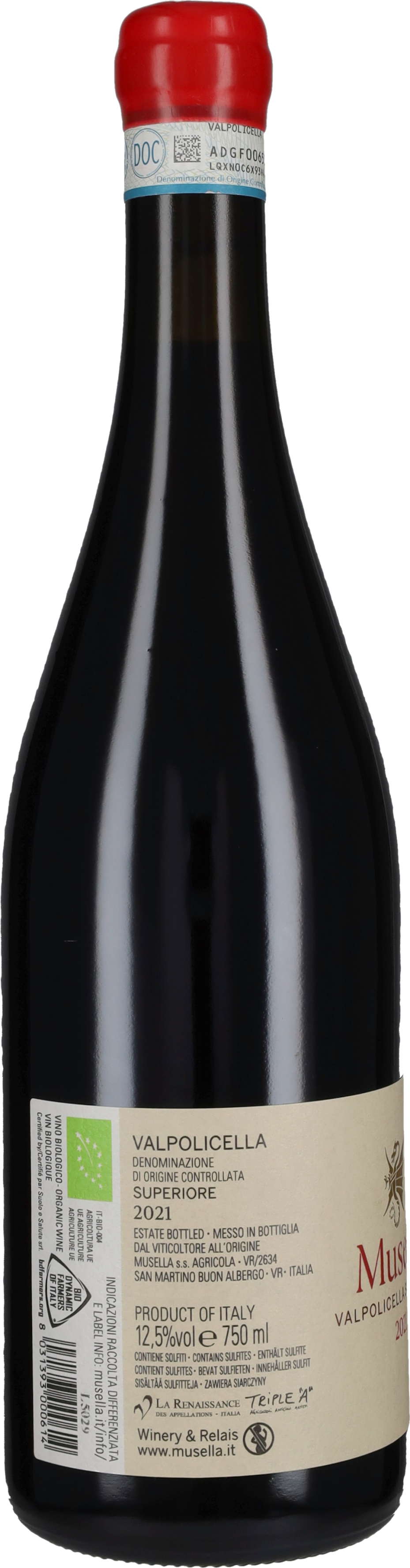
Valpolicella Superiore Musella 2021The Valpolicella Superiore from the Musella winery is a red wine bottled near Verona, in San Martino Buon Albergo, by the Pasqua family. Emilio, Maddalena, and Enrico cultivate, on their estate, vines grown according to the principles of biodynamic agriculture, paying great attention to respect for the environment and with the desire to return to the bottles the intrinsic qualities of the territory in which they are born. For these reasons, this label, harmonious and fresh, is particularly suited for those who do not seek a traditional style, but want to savor a rich concentration of aromas and flavors from this area. The Valpolicella Superiore Musella is a blend of Corvina and Corvinone, in a higher percentage, which confer the typical fruity notes, assembled together with Rondinella and Barbera, which add more herbaceous and fresh perceptions. The plants are cultivated through the exclusive use of organic fertilizers, such as Cornoletame and Cornosilice, and have a low yield, giving rise to few and concentrated fruits that uniquely and faithfully reflect the territory.of origin. The must obtained after destemming the grapes is left to macerate on the skins for 12/15 days at uncontrolled temperature with continuous periodic pump-overs. After the malolactic fermentation, the wine ages for 6 months in large oak barrels and another 6 months in cement tanks that give purity and depth. The red Superiore from the Musella winery presents itself with a ruby red color with violet hues. Initially, the nose is dominated by fruity notes of cherry, currant, and cassis that then shift towards more herbal and fine scents like green almond and white pepper. The sip is a surprise, unconventionality and expression of the territory. The body is of medium structure and good intensity, supported by a balanced and slender freshness. A long and persistent finish completes the tasting of this wine, leaving a pleasant fruity imprint in memory.21,00 £*Shipping: 48,00 £Secure redirect to the provider
-
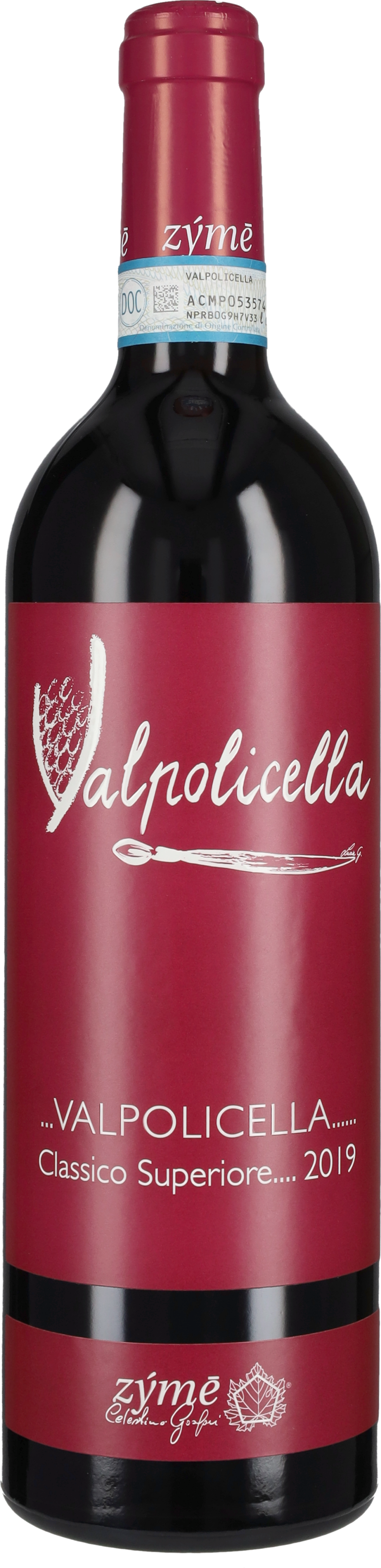
Valpolicella Classico Superiore Zymé 2019The Valpolicella Classico Superiore Ripasso by Zyme is the wine that perhaps is the soul of the Valpolicella beautifully reinterpreted by Celestino Gaspari, winemaker and owner of this fabulous cellar Venetian. A Valpolicella Superiore that is fermented with the ancient technique of the Ripasso which provides that in January, when it finishes the drying of the skins of the grapes that will give life to Amarone, the Valpolicella Classico Superiore by Zyme performs a second fermentation on the skins of Amarone for about 14 days. A precisely refresher that gives structure, elegance and softness to this Valpolicella which is naturally soothing and enveloping. The label, always very unique in style Zyme, represents the maroon of this wine with the inscription "Valpolicella" incomplete representing humility and respect with which the winemaker is starting to approach this great classic, whose level quality must be constantly refined and improved. The nose gives off notes of ripe cherry, cherry and plum slightly wilted and never fails to deliver its softness and its enveloping known, well accompanied by savory and spicy finale...36,00 £*Shipping: 48,00 £Secure redirect to the provider
-
Is East Asian cuisine more varied than European cuisine?
Both East Asian and European cuisines are incredibly varied, with each region offering a wide range of flavors, ingredients, and cooking techniques. East Asian cuisine encompasses the diverse culinary traditions of countries such as China, Japan, Korea, and Thailand, each with its own unique dishes and flavors. Similarly, European cuisine is incredibly varied, with distinct culinary traditions in countries like Italy, France, Spain, and Greece. Ultimately, the variety of both East Asian and European cuisines is a result of the rich diversity of ingredients, cooking methods, and cultural influences found within each region. **
-
On which Jewish festivals are the Christian festivals based?
The Christian festivals of Easter and Pentecost are based on the Jewish festivals of Passover and Shavuot, respectively. Easter is linked to the Jewish Passover, as it commemorates the crucifixion and resurrection of Jesus, which occurred during the time of Passover. Pentecost, on the other hand, is based on the Jewish festival of Shavuot, which celebrates the giving of the Torah at Mount Sinai. Christians believe that the Holy Spirit descended upon the apostles on the day of Pentecost, which is why the Christian festival is based on this Jewish holiday. **
-
Are traditional crafts disappearing?
Traditional crafts are indeed at risk of disappearing due to various factors such as modernization, globalization, and changing consumer preferences. Many younger generations are not pursuing these crafts as careers, leading to a decline in the number of skilled artisans. Additionally, mass production and cheaper alternatives are making it difficult for traditional crafts to compete in the market. Efforts are being made to preserve and promote these crafts through initiatives like cultural heritage programs and artisan cooperatives. **
-
Are festivals dangerous?
Festivals can pose certain risks due to large crowds, potential for accidents, and sometimes excessive alcohol consumption. However, with proper planning, security measures, and responsible behavior, the risks can be minimized. It is important for festival-goers to stay aware of their surroundings, look out for each other, and follow safety guidelines to ensure a fun and safe experience. **
* All prices are inclusive of VAT and, if applicable, plus shipping costs. The offer information is based on the details provided by the respective shop and is updated through automated processes. Real-time updates do not occur, so deviations can occur in individual cases. ** Note: Parts of this content were created by AI.